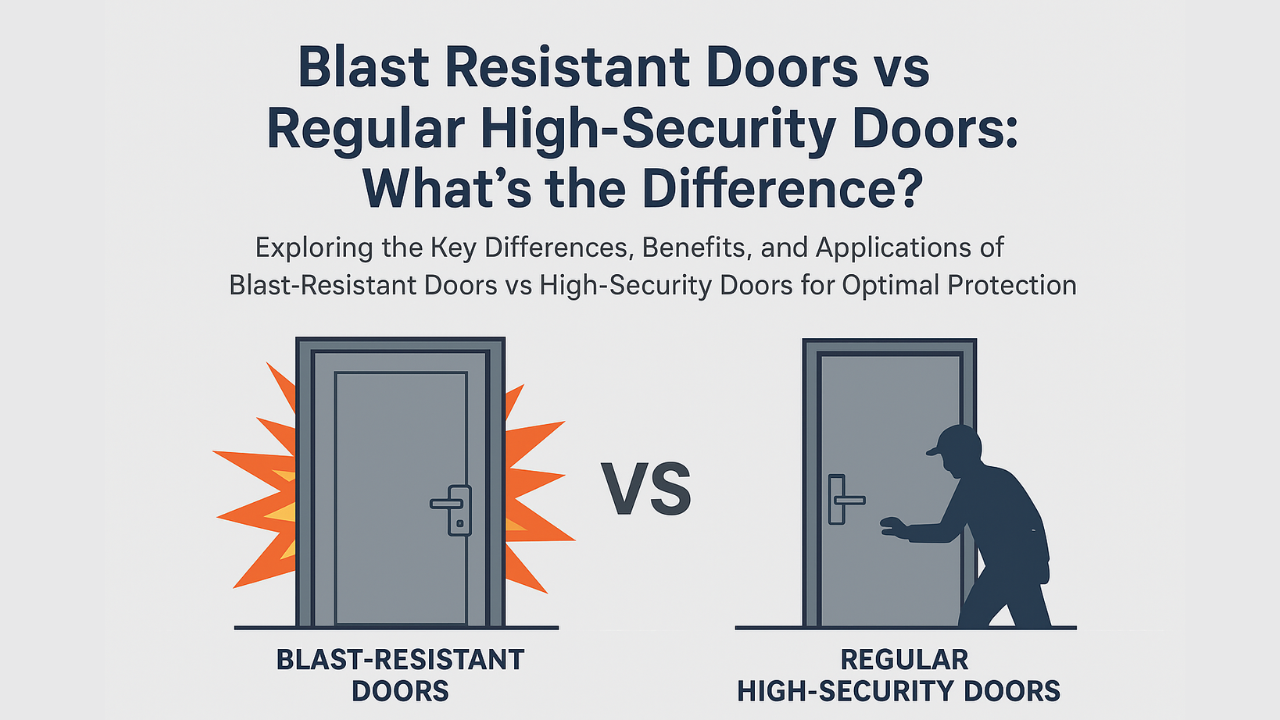
When it comes to securing buildings, especially those with high-risk environments, the type of door you choose plays a critical role. Blast resistant doors and high-security doors are both designed to enhance safety, but each is tailored for different threats. While blast-resistant doors are specifically built to withstand explosions and protect against catastrophic damage, high-security doors focus on preventing unauthorized access, theft, and vandalism. Understanding the key differences between these two types of doors—along with their unique benefits and applications—can help you make an informed decision for your security needs. Whether you’re securing a chemical plant, government facility, or commercial building, choosing the right door can make all the difference in ensuring the safety of both people and property.
Why Blast-Resistant Doors Matter in High-Risk Environments
Blast-resistant doors are specialized doors built to withstand the powerful forces generated by explosions. These doors are engineered to absorb the shockwaves, redirect debris, and prevent the structure from collapsing. They are critical in environments where explosions are a realistic threat, such as:
- Chemical plants and refineries: Where volatile chemicals are processed, and explosions can happen.
- Government buildings: Especially those housing sensitive information or national security interests.
- Oil & gas facilities: Known for their inherent risk of explosions due to the nature of the work.
- Military and defense sites: Where the threat of a blast could come from a variety of sources, including attacks or accidents.
- Critical infrastructure: Such as power plants, research labs, and transportation hubs, which must withstand large-scale incidents.
These doors are specifically engineered to protect against extreme, catastrophic events, rather than everyday security threats. The intense pressure, high temperature, and debris from an explosion can cause significant harm to both people and structures. As a leading Blast Resistant Doors Manufacturer, we design and supply doors that help mitigate this risk, offering robust protection from both the explosion itself and the subsequent structural damage.
Key Benefits of Blast-Resistant Doors
1. Explosion Protection Explosion Protection
The most obvious benefit of a blast-resistant door is its ability to withstand explosive forces. The core design of these doors includes reinforced frames, specialized seals, and shock-absorbing materials to deflect or absorb the force of the blast. This prevents doors from being blown outward, maintaining the safety of individuals inside.
2. Life Safety
Blast-resistant doors are critical in saving lives during explosions. By containing and reducing the effects of the blast, these doors can significantly decrease the likelihood of serious injury or death from flying debris, shockwaves, and fires.
3. Minimization of Structural Damage
A properly installed blast-resistant door can prevent the destruction of a building’s structure. It serves as a buffer, absorbing much of the blast’s pressure and allowing the building’s integrity to be preserved.
4. Regulatory Compliance
Many industries—especially those in the chemical, military, and oil & gas sectors—are required by law to use blast-resistant doors. These doors help organizations comply with national and international safety standards, ensuring that their buildings meet stringent security requirements.
5. Durability in Extreme Conditions
Built to last under the harshest conditions, blast-resistant doors are typically made of reinforced steel or other composite materials. They are designed not only to withstand explosions but also to endure environmental challenges such as extreme temperatures, humidity, and corrosive elements.
Key Benefits of Regular High-Security Doors
As a Blast Resistant Doors Manufacturer India, we specialize in doors designed to withstand extreme scenarios. While blast-resistant doors are engineered for catastrophic events, regular high-security doors are built to protect against more common threats like unauthorized access, vandalism, and burglary. Although not intended to endure explosions, these doors still provide a range of valuable benefits:
1. Intruder Resistance
High-security doors are commonly used in environments where unauthorized access is a major concern. These doors are equipped with high-quality locks, reinforced frames, and anti-pick mechanisms to prevent break-ins, making them ideal for use in high-value areas such as bank vaults, government offices, and warehouses.
2. Fire and Bullet Resistance
Many high-security doors are fire-rated, which means they can withstand extreme temperatures and resist catching fire for a certain period of time. This makes them ideal for buildings that need to meet fire safety standards. Additionally, some high-security doors come with bulletproof glass, providing protection against gunfire in high-risk environments.
3. Versatile Security
High-security doors are suitable for a wide range of applications. They are often used in commercial settings, residential complexes, and industrial facilities to provide an extra layer of protection against common threats such as burglary or unauthorized access. Their versatility means they can be used in a variety of industries to protect valuable assets or secure restricted areas.
4. Cost-Effective
When compared to blast-resistant doors, regular high-security doors are more affordable while still offering an effective level of protection. For many businesses, regular high-security doors provide the necessary security without the high cost associated with blast-resistant models.
5. Durability
These doors are typically constructed from hardened steel, aluminum, or other durable materials. They are designed to resist physical attacks, environmental wear, and extreme conditions, making them a long-term investment in security.
How to Choose Between Blast-Resistant Doors and Regular High-Security Doors
Choosing the right door for your building depends on the specific risks your facility faces and the level of security required. Here are the key factors to consider:
1. Risk of Explosion
If your facility is located in an area prone to explosions, such as near chemical plants, oil refineries, or military bases, blast-resistant doors are a necessity. They offer protection from catastrophic damage that could result from an explosion.
Regular high-security doors, while effective at protecting against intrusion, are not designed to withstand explosions and therefore would not offer the same level of protection in such environments.
2. General Security Needs
If your primary concern is protecting a building from unauthorized access or theft, regular high-security doors are likely sufficient. They provide a high level of protection against break-ins, vandalism, and other common threats.
For facilities dealing with sensitive information or high-value assets (e.g., data centers, banks, and government buildings), high-security doors are the ideal choice.
3. Cost Considerations
Blast-resistant doors are typically much more expensive than regular high-security doors. The advanced materials, specialized construction, and testing involved in manufacturing blast-resistant doors contribute to the higher cost.
Regular high-security doors provide a more cost-effective solution while still offering excellent protection for buildings that don’t face an explosion risk.
4. Regulatory Requirements
Certain industries—particularly those in high-risk sectors—may be required by law to install blast-resistant doors to ensure safety. Before making a decision, it’s important to check local regulations or industry standards to determine if your facility must comply with these safety measures.
5. Maintenance Needs
Both blast-resistant doors and regular high-security doors require routine maintenance to ensure their effectiveness. However, blast-resistant doors may require more frequent or specialized inspections due to their complex construction and the extreme conditions they are designed to withstand.
Comparison Chart: Blast-Resistant Doors vs Regular High-Security Doors
Here’s a helpful comparison chart that breaks down the differences between blast-resistant doors and regular high-security doors:
| Feature | Blast Resistant Doors | Regular High-Security Doors |
|---|---|---|
| Primary Function | Withstand and absorb the force of explosions. | Prevent unauthorized access, break-ins, and general intrusions. |
| Typical Applications | Chemical plants, military bases, government facilities, refineries, oil & gas facilities. | Commercial buildings, residential properties, government offices, data centers. |
| Explosion Resistance | Built to absorb shockwaves and prevent structural collapse. | Not designed to withstand explosions. |
| Intruder Resistance | Moderate; focuses primarily on explosion resistance. | Highly designed to resist forced entry and break-ins. |
| Fire Resistance | Often includes fire-rated protection in addition to blast resistance. | Often fire-rated, but not designed for extreme explosions. |
| Cost | Higher due to specialized engineering and materials. | More affordable and cost-effective for general security needs. |
| Material | Reinforced steel, composite materials, blast-resistant glass. | Hardened steel, ballistic-resistant glass, reinforced frames. |
| Regulatory Compliance | Required for certain industries dealing with explosive hazards. | Optional for general security needs, may be required in high-security areas. |
| Maintenance Requirements | Requires more specialized inspections and maintenance. | Standard security door maintenance. |
Advanced Features of Blast-Resistant and High-Security Doors
Both types of doors can be equipped with advanced features to enhance their effectiveness in securing a building:
1. Blast-Resistant Doors:
Pressure Relief Mechanisms: These doors are designed to handle the intense pressure from an explosion. Many blast-resistant doors come equipped with features that help relieve excess pressure and prevent the door from buckling or detaching during an explosion.
Customizable Glass: Reinforced, blast-resistant glass options allow visibility without compromising security, ensuring occupants can see outside while maintaining structural integrity.
2. High-Security Doors:
Electronic Access Control: Many high-security doors can integrate advanced access control systems, such as biometric scanners, keycards, and smart locks, enhancing the building’s security.
Reinforced Locks and Frames: High-security doors come with tamper-proof locks, reinforced frames, and anti-pick mechanisms to prevent unauthorized access.
Ecotone Systems: Blast-Resistant Doors & Specialized Acoustic Solutions for High-Risk Environments
Ecotone Systems is a leading manufacturer, supplier, and installer of blast-resistant doors, as well as a provider of advanced acoustic solutions tailored for high-risk and sensitive environments. Whether you’re securing chemical plants, government buildings, military facilities, or critical infrastructure, we offer innovative solutions that meet both security and noise control needs. Our blast-resistant doors are engineered with reinforced steel, shock-absorbing materials, and advanced seals to withstand explosive forces, while our range of acoustic products ensures optimal noise reduction and soundproofing for various industries.
Specialized Solutions for Safety and Sound Control
In addition to our expertise in blast-resistant doors, Ecotone Systems offers a comprehensive suite of acoustic solutions designed to control sound and provide a safer, more comfortable environment. These products are ideal for industrial facilities, research labs, military sites, and other spaces where both safety and noise management are critical. Here’s a look at some of the additional services we provide:
Anechoic Chambers: Ecotone Systems designs and installs anechoic chambers—specialized rooms that absorb sound and prevent sound reflections, creating an acoustically isolated environment. These chambers are essential for scientific research, product testing, and noise simulation, ensuring accurate results in sound measurements and providing the ultimate in noise isolation.
Noise Barriers: Our noise barriers are specifically designed to reduce the transmission of sound between spaces. These barriers are ideal for industrial plants, transportation hubs, and any environment where noise pollution is a concern. With high-quality materials and custom designs, Ecotone Systems offers noise barriers that ensure peace and quiet even in the loudest environments.
Acoustic Ceiling Baffles: Ecotone Systems manufactures acoustic ceiling baffles to improve sound control in large open spaces. Whether it’s for office buildings, conference rooms, or industrial settings, our ceiling baffles effectively reduce noise levels, enhance speech clarity, and improve overall acoustics. Designed for both aesthetic appeal and performance, these baffles can be customized to match the aesthetic of any environment.
Acoustic Louvers: To ensure proper ventilation without compromising sound control, our acoustic louvers provide an excellent solution. These specially designed louvers reduce sound transmission while still allowing air to flow freely, making them ideal for HVAC systems, ventilation shafts, and areas where noise control is essential without sacrificing airflow.
Conclusion: Which Door is Right for You?
Choosing between blast-resistant doors and regular high-security doors ultimately depends on the level of risk your facility faces:
If your primary concern is protecting against explosions, such as in military, industrial, or chemical settings, blast-resistant doors are the way to go. These doors offer critical protection against the devastating effects of explosions, ensuring the safety of people and minimizing structural damage.
If you are concerned with general security threats like unauthorized access, theft, or vandalism, regular high-security doors offer a more cost-effective and versatile solution without the need for blast protection.
Both types of doors offer significant security benefits, so understanding your facility’s needs will help you make the right choice.
Trusted by India's Leading Brands
Hover to pause · Logos scroll continuously