Our Clients
Trusted by India's Leading Brands
Hover to pause · Logos scroll continuously
500+
Projects Completed
40+
Years Experience
200+
Happy Clients
15+
States Covered














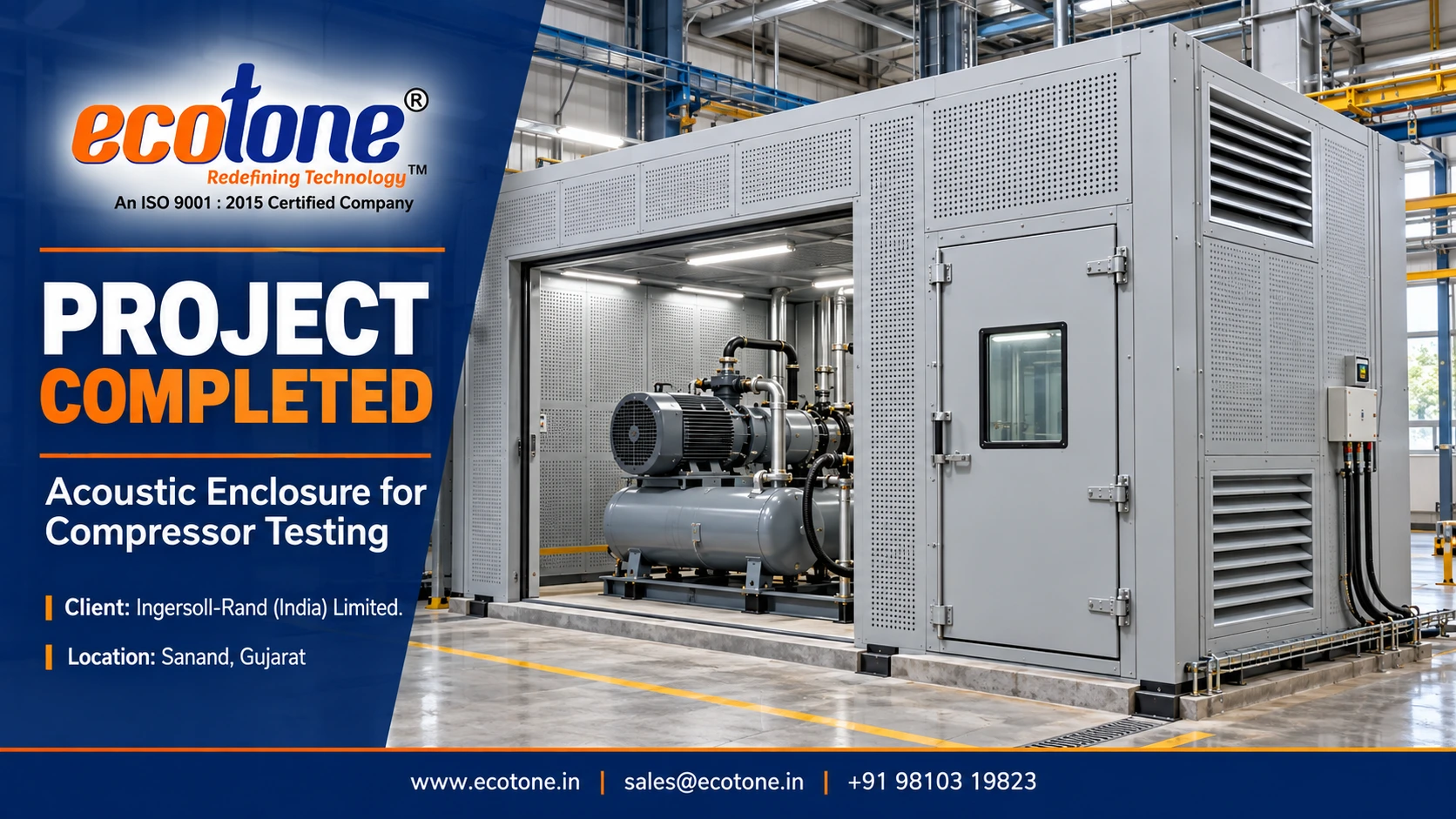
Compressor noise doesn’t behave like the noise from a DG set or a blower. It carries a tonal, high-frequency whine on top of pulsation noise from the compression cycle itself, which makes it harder to absorb with a generic panel spec. For Ingersoll-Rand’s testing operations at Sanand, that meant a standard industrial enclosure wasn’t going to cut it. The facility needed a purpose-built Acoustic Enclosure for Compressor testing, engineered around the machine’s actual frequency profile rather than a catalogue template.
Ecotone Systems’ engineering team started from the compressor’s real operating behaviour, not a fixed panel size. Three factors shaped the final design at this facility:
Panel buildup tuned to frequency. Absorptive materials effective against low-frequency machinery noise often underperform against the higher-frequency tones compressors produce under test. The panel composition here, a dense outer skin over a high-density mineral wool or acoustic foam core, was tuned specifically for that range.
Ventilation sized to actual heat load. Compressors run hot during continuous test cycles, and a ventilation path sized for comfort rather than real thermal output either overheats the unit or opens a straight-line noise leak. The lined, baffled air path was calculated against Ingersoll-Rand’s actual test-cycle heat load.
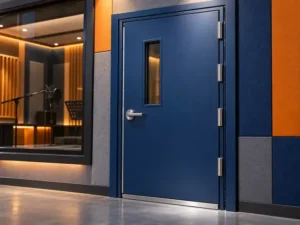
Hardware rated for frequent access. Test facilities cycle units in and out constantly, so doors open far more often than on a typical installed-equipment enclosure. Door and gasket hardware were selected for that duty cycle rather than occasional maintenance access.
Our team typically responds within 24 hours on business days.
Contact UsThe completed enclosure includes a layered composite panel system tuned for compressor-range frequencies, an engineered ventilation path matched to real heat loads, vision panels for monitoring without opening the unit, and door hardware built for frequent use. Every panel and duct run was mapped out in AutoCAD assembly drawings before fabrication, so the enclosure was erected on site exactly as designed, with no adjustments needed during installation.
The enclosure met its target dB(A) reduction on first test at the Sanand facility, with no rework required on ventilation or door sealing after commissioning. Testing operations have continued on schedule, with compressor noise contained to the enclosure rather than spreading across the test floor.
Compressor testing shows that one acoustic enclosure design doesn’t work for every noisy machine. Frequency profile, duty cycle, and access frequency all change the engineering, not just the target dB(A) reduction. Any manufacturer evaluating an Acoustic Enclosure for Compressor testing should ask how the vendor accounts for these three factors specifically, rather than accepting a generic industrial specification. That distinction is exactly what Ecotone Systems designed around on this project, and it’s the same approach applied across every enclosure the company delivers.
Hover to pause · Logos scroll continuously