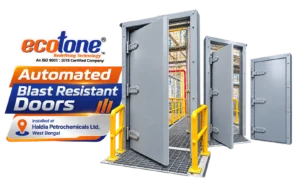

Summary: Choosing a [blast resistant door] manufacturer you can rely on in India is not the same as choosing a standard door supplier. The product carries certified performance obligations, and the wrong choice can result in a door that fails when it matters most.
What Should a Blast Door Manufacturer Checklist Cover?
A blast door manufacturer checklist should verify: documented engineering capability, independent blast test evidence, fire rating certification, quality control traceability, installation supervision capability, and completed project references. A manufacturer unable to provide evidence against these points is a procurement risk regardless of price.
How Do You Choose a Blast Door Supplier Based on Technical Capability?
Knowing how to choose blast door supplier options means looking beyond marketing claims to technical evidence. Ask for structural calculations signed by qualified engineers, not just a pressure figure on a brochure, and whether fire ratings come from furnace test data or extrapolated assumptions.
What Does Sector Experience Tell You About a Supplier?
Relevant sector project experience is one of the most meaningful indicators in any how to choose blast door supplier evaluation, and it applies equally when assessing a blast resistant door manufacturer India. A manufacturer with comparable completed installations understands the regulatory requirements and coordination demands your project will face, not encountering them for the first time on your site.
For Any Inquiries Please Email
Our team typically responds within 24 hours on business days.
Contact UsHow Does the Checklist Apply Across Different Sectors?
For blast resistant doors research lab applications, check whether the manufacturer understands hazard classification under standards such as NFPA 45 and can match door ratings to the laboratory’s specific maximum credible event scenario. A supplier who cannot explain this distinction is likely to provide a generic high blast rating rather than a considered, site-appropriate specification.
For blast resistant doors university lab projects, verify that the manufacturer has direct experience retrofitting into existing campus buildings. Access constraints, anchor limitations in older concrete, and occupied building coordination are challenges that frequently catch inexperienced suppliers off guard, adding delays and costs to a project that should have been straightforward.
For blast resistant doors petrochemical complex installations, confirm that the manufacturer understands API RP 752 building siting principles and can supply fully traceable documentation linking each door to its design specifications, test evidence, and installation records. Thorough traceability is what satisfies both insurer and regulator review during project closeout audits.
The blast resistant door manufacturing process itself is one of the clearest differentiators between suppliers. Ask whether structural fabrication is performed in-house or subcontracted, since quality control traceability is far harder to maintain across a subcontracted chain than within a single controlled facility where the manufacturer oversees every stage directly.
For a cast in frame blast resistant door, verify that the manufacturer provides frame installation supervision during the concrete pour stage, not just delivers the leaf and hardware afterward. Frame alignment errors introduced at the casting stage are irreversible without significant structural remedial work, and this is a stage where inexperienced suppliers frequently disengage.
A blast resistant door installation service delivered directly by the manufacturer, rather than handed off to a third party contractor, ensures the engineer who designed the door is accountable for the installation that follows. This closes the gap between what the certified design specifies and what is actually installed on site.
When the specification requires combined blast and fire performance, verify the manufacturer understands the fire rated door vs blast resistant door distinction and can supply independently tested dual rated assemblies. Claiming fire resistance based on general steel properties without furnace test evidence is a common gap that technical due diligence should surface.
And if a project site involves classified hazardous areas, verify the manufacturer clearly understands the blast resistant vs explosion proof door distinction. A supplier that conflates these two entirely different hazard protection categories cannot reliably specify the correct certified product for each location within the same facility, which is a serious technical risk.
Why Does Ecotone Systems Meet These Criteria?
At Ecotone Systems Pvt. Ltd., over 10 years as a blast resistant door manufacturer India clients across petrochemical, military, power, and research sectors trust means every checklist criterion above is backed by real evidence. Doors are engineered to withstand up to 40 bar peak reflected overpressure, with fire resistance up to 180 minutes under BS 476 Part 20 and 22, manufactured in-house with full quality traceability and supported by supervised installation and documented commissioning.
Conclusion
Choosing the right blast resistant door manufacturer India based facilities can rely on comes down to verifiable technical evidence, sector experience, and end-to-end accountability. Use the blast door manufacturer checklist as the starting framework, not a quoted price, to make a decision the facility safety record can stand behind.
Frequently Asked Questions
Are all blast resistant door manufacturers in India the same?
No. Capability, test evidence, and sector experience vary widely, which is why a technical checklist matters more than price comparison.
Can an Indian manufacturer match international blast door standards?
Yes. Established manufacturers like Ecotone Systems engineer and certify doors against internationally recognised standards including BS 476 and structural blast codes.
How do I verify a manufacturer's blast door rating claims?
Ask for structural calculations signed by qualified engineers and independent test certification, not a pressure rating on a brochure.
Should the manufacturer also handle installation?
Ideally yes. A blast resistant door installation service provided by the manufacturer ensures accountability across design, fabrication, and commissioning.
How long does it take to manufacture and deliver a blast door in India?
ad times vary by specification, but typically range from six to fourteen weeks for standard configurations from an established manufacturer.
Trusted by India's Leading Brands
Hover to pause · Logos scroll continuously