Summary: One decision underestimated during blast door specification is how the frame connects to the surrounding structure. A cast in frame blast resistant door embeds its frame into concrete during construction, transferring blast load through the wall mass rather than fasteners alone, a choice that’s difficult to reverse.
Why Does Frame Mounting Method Matter for Blast Resistant Doors?
The frame is where blast load transfers from the door leaf into the surrounding structure. A poorly anchored frame can pull away under blast loading even if the door leaf survives intact, meaning the assembly fails at its weakest connection point.
What Is a Cast in Frame Blast Resistant Door?
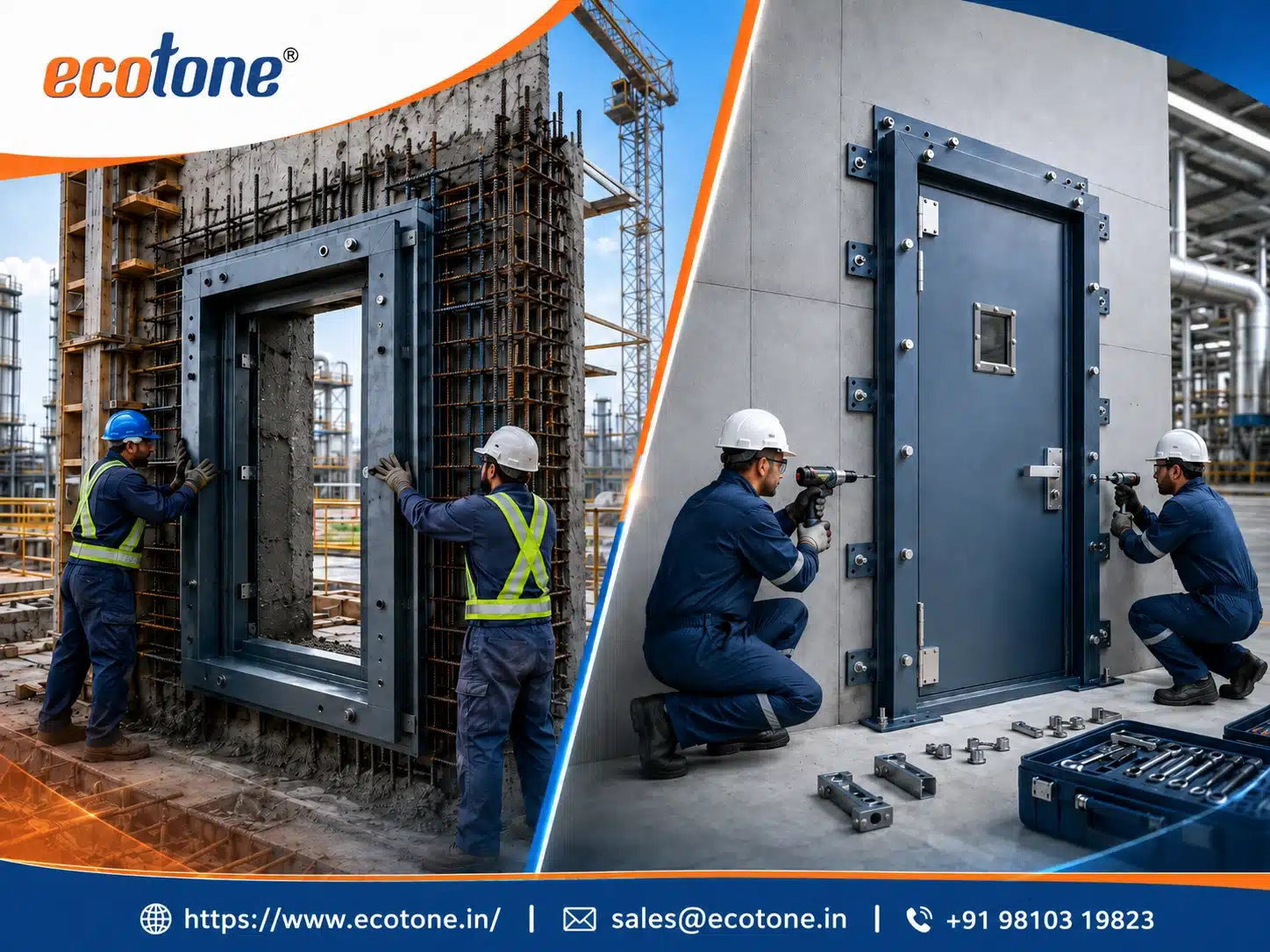
A cast in frame blast resistant door has its frame fixed within formwork before concrete is poured, so the hardened concrete locks it as a continuous embedded unit, eliminating post installed anchors and creating a load path engineers can calculate with greater confidence at higher blast ratings.
What Are the Main Blast Door Frame Mounting Options?
Blast door frame mounting options divide into two approaches: cast in during construction and bolt on after construction is complete. Cast in frames suit new builds, while bolt on frames are the standard choice for retrofits into existing walls where fresh concrete pouring is not feasible.
For Any Inquiries Please Email
Our team typically responds within 24 hours on business days.
Contact UsBolt On vs Cast in Door Frame: Which Should You Choose?
The bolt on vs cast in door frame decision depends on project stage, structural conditions, and blast rating required. At high ratings, embedded cast in anchorage outperforms post drilled fasteners. Bolt on frames suit moderate ratings and retrofit scenarios when engineering verification of anchor capacity is completed.
How Does Frame Choice Apply Across High Hazard Sectors?
For blast resistant doors nuclear power station vital area installations, cast in frames are typically preferred since new construction is common and the structural performance demand is high. The embedded load path through concrete is more defensible than post drilled anchors when regulators and insurers review the installation documentation during licensing.
At blast resistant doors missile launch site projects, frame mounting decisions are often complicated by repeated blast exposure over a facility’s operational life. Cast in frames hold their structural geometry far better under cyclic loading than bolt on connections, which can loosen progressively and compromise the load path between events.
For blast resistant doors ammunition bunker applications, internal detonation can load the frame from the inside as well as the outside. The continuous contact between a cast in frame and the surrounding concrete helps distribute that bidirectional load far more evenly than bolt on anchors positioned at discrete points around the perimeter.
In blast resistant doors research lab environments, bolt on frames are frequently the only option because these installations go into existing buildings rather than new purpose built structures. The installation has to work within the constraints of the existing wall, making proper anchor design and embedment depth verification critical to performance.
Similarly, blast resistant doors university lab installations typically involve retrofitting into existing campus buildings built decades before blast rated doors were part of the brief. A bolt on frame is the only practical option without major structural intervention, so anchor spacing, depth, and edge distance all need independent engineering validation before installation.
The aggressive chemical environment at blast resistant doors petrochemical complex sites means frame material selection and surface treatment need to be built into the frame mounting decision from the start, regardless of whether cast in or bolt on is chosen, since corrosion at the frame to wall interface is a long term risk that affects structural performance.
The entire frame selection process forms a critical part of the blast resistant door manufacturing process. Cast in frames must be fabricated to tighter dimensional tolerances than bolt on frames, because once the concrete has cured around them, no field adjustment is possible and any misalignment has to be solved through costly remedial work.
How Does Ecotone Systems Handle Frame Selection and Installation?
At Ecotone Systems Pvt. Ltd., frame mounting method is determined at the design stage based on structural conditions, blast rating, and project timeline. Both cast in and bolt on configurations are available, engineered to withstand up to 40 bar peak reflected overpressure with fire resistance up to 180 minutes under BS 476 Part 20 and 22.
Conclusion
Choosing between a cast in frame blast resistant door and a bolt on alternative is a structural decision, not a minor installation detail. Selecting the right blast door frame mounting option for your specific project conditions is what separates a genuinely safe installation from one that only appears compliant on paper.
Frequently Asked Questions
Which frame type is stronger for blast resistant doors?
Cast in frames generally provide a more reliable load path at high blast ratings, since embedded anchorage outperforms post drilled fasteners under dynamic blast loading.
Can a bolt on blast door frame be used for new construction?
Technically yes, but cast in frames are preferred for new builds since they provide better structural integration without relying on anchor capacity.
Is a cast in frame harder to replace if a door needs upgrading?
Yes, since cast in frames are permanently embedded, upgrades typically replace the leaf and hardware while retaining the original frame.
What anchor standard applies to bolt on blast door frames?
Anchor design is verified against the specific blast load, typically referencing ACI 318 or an equivalent national structural code.
How does frame type affect blast door certification?
Frame mounting and anchorage are part of the certified assembly, so changing frame type after certification requires full re-evaluation.
Trusted by India's Leading Brands
Hover to pause · Logos scroll continuously