In today’s fast-paced industrial and commercial environments, managing noise is more important than ever. Whether in factories, offices, classrooms, or auditoriums, unwanted sound can interfere with productivity, comfort, and health. Excessive noise creates distractions, raises stress levels, and makes communication difficult. That’s where sound baffles come into play, offering a practical and efficient way to reduce echo and reverberation in any space.
Sound baffles are among the most effective acoustic treatments available. Instead of blocking sound between rooms, they focus on absorbing sound energy within a room, improving its overall acoustic quality. When strategically installed, they can dramatically reduce noise levels, making environments quieter, more pleasant, and more productive.
This blog explores everything you need to know about acoustic hanging baffles, what they are, how they work, their benefits, and how Ecotone Systems helps industries and organizations create peaceful and acoustically balanced spaces through expert design and installation.
What Are Sound Baffles?
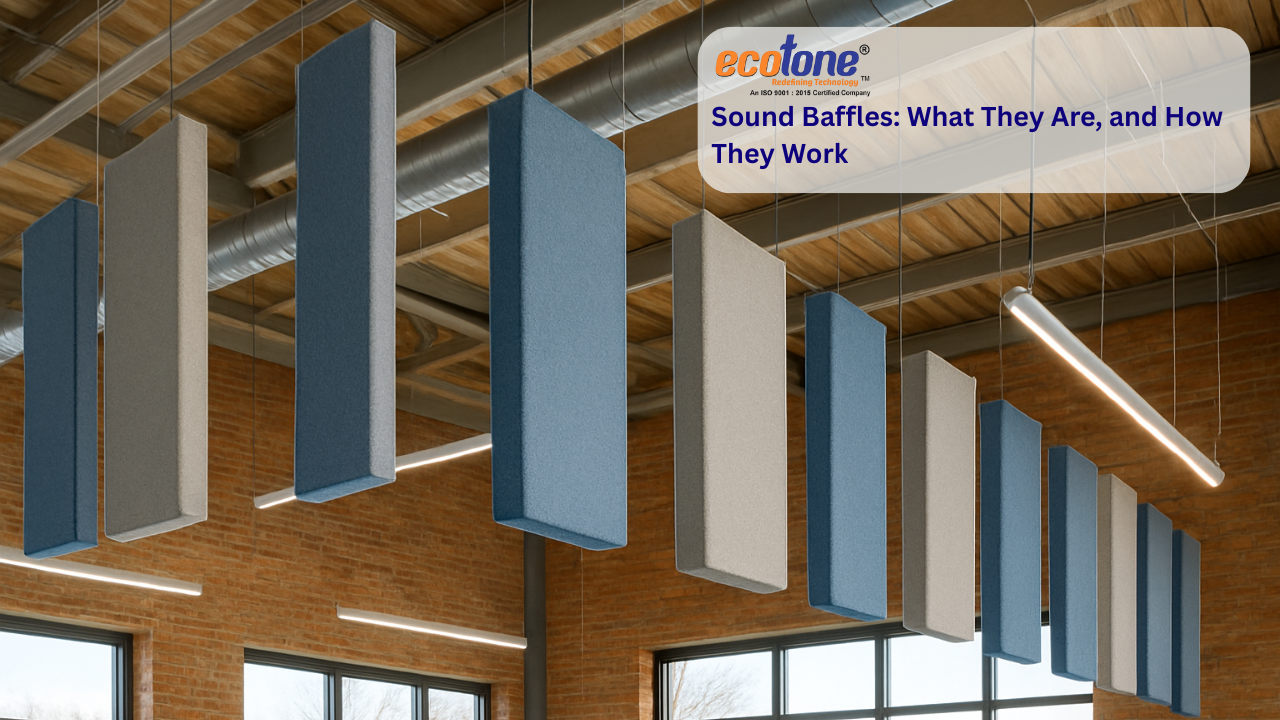
Sound baffles are acoustic panels or elements designed to absorb sound reflections and control reverberation. They are typically suspended from ceilings or mounted on walls, allowing them to capture and dissipate sound energy that would otherwise bounce off hard surfaces.
These baffles are made from sound-absorbing materials such as fiberglass, mineral wool, or acoustic foam. They may also be covered with fabric or perforated metal for added durability and visual appeal. Unlike soundproofing materials that block sound transmission between rooms, acoustic baffles focus on improving the quality of sound within a given space.
Because of their unique suspended design, acoustic hanging baffles are highly effective in large, open, and echo-prone environments like factories, auditoriums, and gymnasiums, where traditional soundproofing methods may not be feasible.
For Any Inquiries Please Email
Our team typically responds within 24 hours on business days.
Contact UsHow Do Sound Baffles Work?
Sound waves naturally reflect off hard surfaces such as walls, ceilings, and floors. These reflections create reverberation, which can make a space sound noisy and unclear. Sound baffles absorb these reflections, reducing echo and overall sound levels.
Here’s how they work step by step:
- Sound waves travel through the air and encounter a baffle.
- The porous surface of the baffle allows the sound to enter.
- The inner acoustic material converts the sound energy into a small amount of heat.
- Reflected sound is greatly reduced, making the environment quieter and clearer.
Because baffles are often suspended from the ceiling, they absorb sound from multiple directions, making them highly efficient even in large open spaces.
Types of Sound Baffles
Sound baffles come in different designs and materials depending on their purpose and location. Below are the most common types:
1. Ceiling-Hung Acoustic Baffles
These are suspended from the ceiling and absorb sound from both sides. They are ideal for factories, gymnasiums, auditoriums, and other large open areas.
2. Wall-Mounted Baffles
Mounted directly on walls, these baffles reduce side reflections and flutter echoes. They’re perfect for offices, studios, and classrooms where sound clarity matters.
3. Industrial Acoustic Baffles
Built for heavy-duty environments like factories, power plants, and workshops, industrial acoustic baffles are designed to withstand heat, dust, and humidity while maintaining excellent absorption.
4. Fabric-Wrapped Acoustic Baffles
Made from high-density sound-absorbing cores wrapped in attractive fabric, these are ideal for commercial and aesthetic spaces such as offices, hotels, and restaurants.
5. Metal or Perforated Baffles
Constructed from perforated metal sheets, these are durable and often used in harsh industrial or outdoor environments to ensure longevity and protection.
Benefits of Sound Baffles
Installing acoustic ceiling baffles brings numerous advantages beyond noise reduction. Some of the most significant benefits include:
1. Superior Noise Reduction
They absorb sound energy, reducing echo and reverberation, which leads to quieter and more comfortable spaces.
2. Improved Speech Intelligibility
By minimizing unwanted reflections, sound baffles make speech clearer in classrooms, offices, and auditoriums.
3. Enhanced Productivity and Comfort
A calm acoustic environment helps reduce fatigue, stress, and distractions, improving concentration and employee well-being.
4. Cost-Effective Acoustic Treatment
Compared to extensive soundproofing renovations, installing baffles is a more affordable solution that can be retrofitted into existing buildings.
5. Aesthetic Flexibility
Modern baffles come in various colors, shapes, and materials that complement any interior design while providing acoustic functionality.
6. Easy Installation and Maintenance
They can be suspended or mounted without major structural changes and require minimal maintenance over time.
Applications of Sound Baffles
Sound baffles are versatile and can be used in many environments where sound control is necessary:
1. Industrial Facilities
In factories and plants, heavy machinery creates high noise levels. Industrial acoustic baffles help reduce noise exposure for workers and comply with safety regulations.
2. Offices and Corporate Spaces
In open-plan offices, baffles help reduce background noise and echo, promoting focus and better communication.
3. Educational Institutions
Classrooms and lecture halls benefit from improved speech clarity and reduced echo, creating a better learning environment.
4. Auditoriums and Theaters
Sound baffles enhance sound quality for performances and speeches by balancing acoustics across the hall.
5. Gyms and Sports Complexes
They absorb the loud noises created by activity and equipment, making these spaces more comfortable for users.
6. Recording Studios and Music Rooms
Sound baffles help achieve accurate sound reproduction and recording by controlling reflections and reverberations.
7. Commercial Buildings and Restaurants
In busy public spaces, baffles improve comfort by reducing noise levels and enhancing customer experiences.
Materials Used in Sound Baffles
The materials used in baffles determine their performance and durability. Common materials include:
- Fiberglass: Excellent for mid to high-frequency sound absorption, lightweight, and durable.
- Mineral Wool: Great for sound absorption and fire resistance, ideal for industrial settings.
- Acoustic Foam: Highly efficient at absorbing sound reflections in studios and small spaces.
- Perforated Metal: Offers protection in harsh conditions without reducing acoustic performance.
- Fabric Coverings: Provide aesthetic customization while maintaining acoustic transparency.
The right material depends on the space, sound levels, and desired acoustic effect.
Design Considerations for Sound Baffles
Designing an effective baffle system involves several factors:
- Room Dimensions: Larger spaces require more baffles for complete coverage.
- Ceiling Height: Influences whether the baffles are suspended vertically or horizontally.
- Material Selection: Must balance between sound absorption, aesthetics, and durability.
- Placement and Spacing: Proper spacing ensures even sound absorption throughout the room.
- Fire and Safety Compliance: All materials must meet relevant fire safety and building standards.
Experts like Ecotone Systems analyze each environment’s acoustic profile to create customized solutions that meet both aesthetic and functional requirements.
Difference Between Sound Baffles and Sound Barriers
Although often confused, sound baffles and sound barriers serve different acoustic purposes.
| Feature | Sound Baffles | Sound Barriers |
|---|---|---|
| Purpose | Absorb sound within a space | Block sound between spaces |
| Material Type | Porous and absorptive | Dense and solid |
| Installation | Hung or mounted inside rooms | Built between rooms or outdoors |
| Ideal For | Reducing echo and reverberation | Preventing noise leakage |
Sound baffles make interiors quieter and more pleasant, while barriers stop sound from traveling between areas.
Installation of Sound Baffles
The effectiveness of sound baffles depends greatly on proper installation. Here are the most common methods:
- Ceiling Suspension: Using cables, rods, or grids to hang baffles in strategic positions for maximum absorption.
- Wall Mounting: Fixing panels on walls using brackets or adhesives to address side reflections.
- Custom Layouts: Designing layouts that combine aesthetics and acoustic efficiency for specific environments.
Professional installation ensures precise placement and compliance with safety standards, leading to optimal performance.
Why Choose Ecotone Systems for Sound Baffles
Ecotone Systems is a trusted leader in acoustic design and engineering, specializing in acoustic baffles and other advanced noise control systems. The company’s expertise lies in crafting customized acoustic environments for industrial and commercial applications.
Key Advantages of Choosing Ecotone Systems:
- Tailor-made industrial acoustic baffles suited for specific noise levels and environments.
- Use of high-quality, fire-safe, and durable materials.
- Comprehensive site assessment and acoustic testing before installation.
- Expert installation teams ensure precision and long-term reliability.
- Sustainable and aesthetically designed solutions that complement modern architecture.
With Ecotone Systems, businesses can achieve superior noise control that enhances comfort, productivity, and compliance with acoustic standards.
Conclusion
Sound baffles are a smart, flexible, and cost-effective way to control noise and improve acoustic comfort in any space. Whether you need to reduce industrial noise or enhance speech clarity in offices or auditoriums, these panels offer proven performance and visual versatility.
By absorbing sound energy and minimizing echo, sound baffles transform noisy environments into calm, productive, and enjoyable spaces. With expert support from Ecotone Systems, organizations can access tailored solutions that deliver real acoustic benefits while maintaining high design standards.
A well-designed acoustic environment isn’t just about reducing noise; it’s about creating spaces that support focus, safety, and comfort. Investing in sound baffles is a step toward a quieter, healthier, and more efficient future.
Trusted by India's Leading Brands
Hover to pause · Logos scroll continuously