Our Clients
Trusted by India's Leading Brands
Hover to pause · Logos scroll continuously
500+
Projects Completed
40+
Years Experience
200+
Happy Clients
15+
States Covered














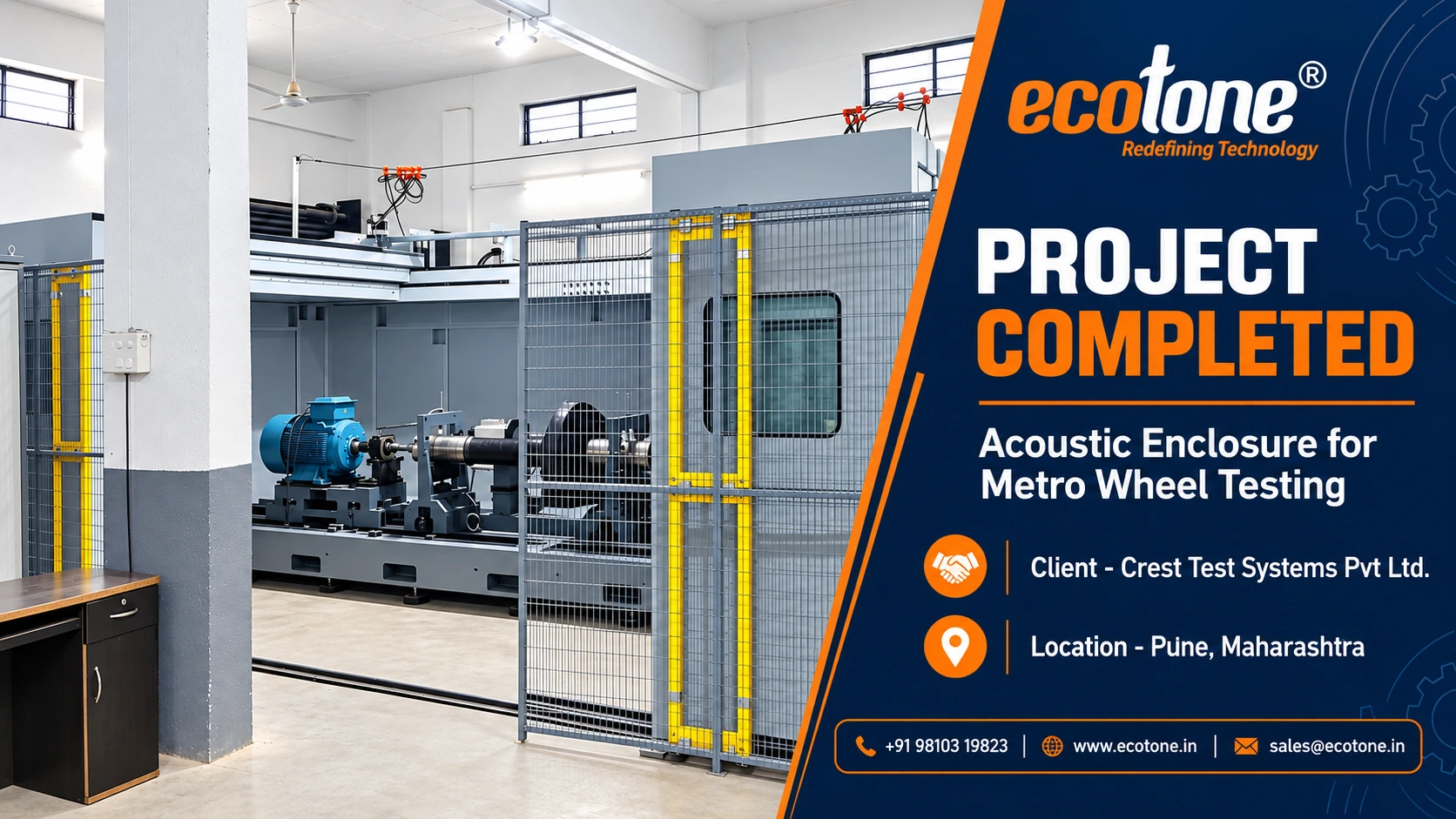
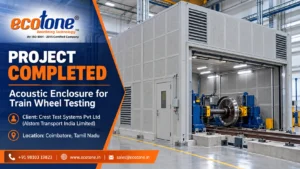
Wheel testing rigs used for metro rolling stock generate high-intensity, continuous noise during load, impact, and endurance cycles. For Crest Test Systems, running these rigs at their Pune facility meant balancing two non-negotiable requirements: keeping noise levels within safe and compliant limits for the surrounding work area, and doing so without interrupting the precision and uptime the test cycles depend on. A standard shed or foam-lined room was never going to hold up under sustained mechanical impact noise of this kind. The equipment needed a purpose-engineered acoustic enclosure, not a generic soundproofing fix.
Metro wheel testing isn’t like housing a DG set or a compressor. The noise profile includes sharp impact peaks alongside continuous rotational and mechanical noise, which means the enclosure has to absorb and block across a wider frequency range than a typical industrial application. On top of that, test labs can’t tolerate heat buildup around sensitive instrumentation, and technicians need frequent, unobstructed access to the rig without compromising the sealed acoustic envelope every time a door opens.
This is where most generic enclosures fail: they’re specified for average noise levels, not peak impact events, and their ventilation is sized for comfort rather than for a test rig’s actual thermal load.
Our team typically responds within 24 hours on business days.
Contact UsEcotone Systems engineered the enclosure around the rig’s real operating conditions rather than a catalogue template:
The enclosure delivered by Ecotone Systems met the required noise reduction target on first test, with no follow-up corrections needed to the door seals or ventilation path — the two areas where most enclosures run into trouble after commissioning. Testing operations at the Crest Test Systems facility have continued without interruption, and noise from the wheel testing process no longer extends beyond the enclosure into the surrounding work area.
Testing environments like this are a good reminder that an acoustic enclosure is only as good as its weakest detail — a duct, a door seal, or a vibration path. Specifying for the equipment’s actual noise and heat profile, rather than a standard template, is what determines whether an enclosure performs on day one and still performs eighteen months later. It’s the same engineering discipline Ecotone Systems applies across every enclosure it builds, from DG sets and compressors to specialised testing rigs like this one.
Hover to pause · Logos scroll continuously