Summary: A blast door earns its rating on paper long before it ever gets tested, but that rating only means something if the actual fabrication matches the engineering. The blast resistant door manufacturing process is where structural calculations become steel, welds, and hardware, and gaps between design intent and shop floor execution are exactly where doors underperform in the field.
What Are the Core Stages of Blast Resistant Door Manufacturing?
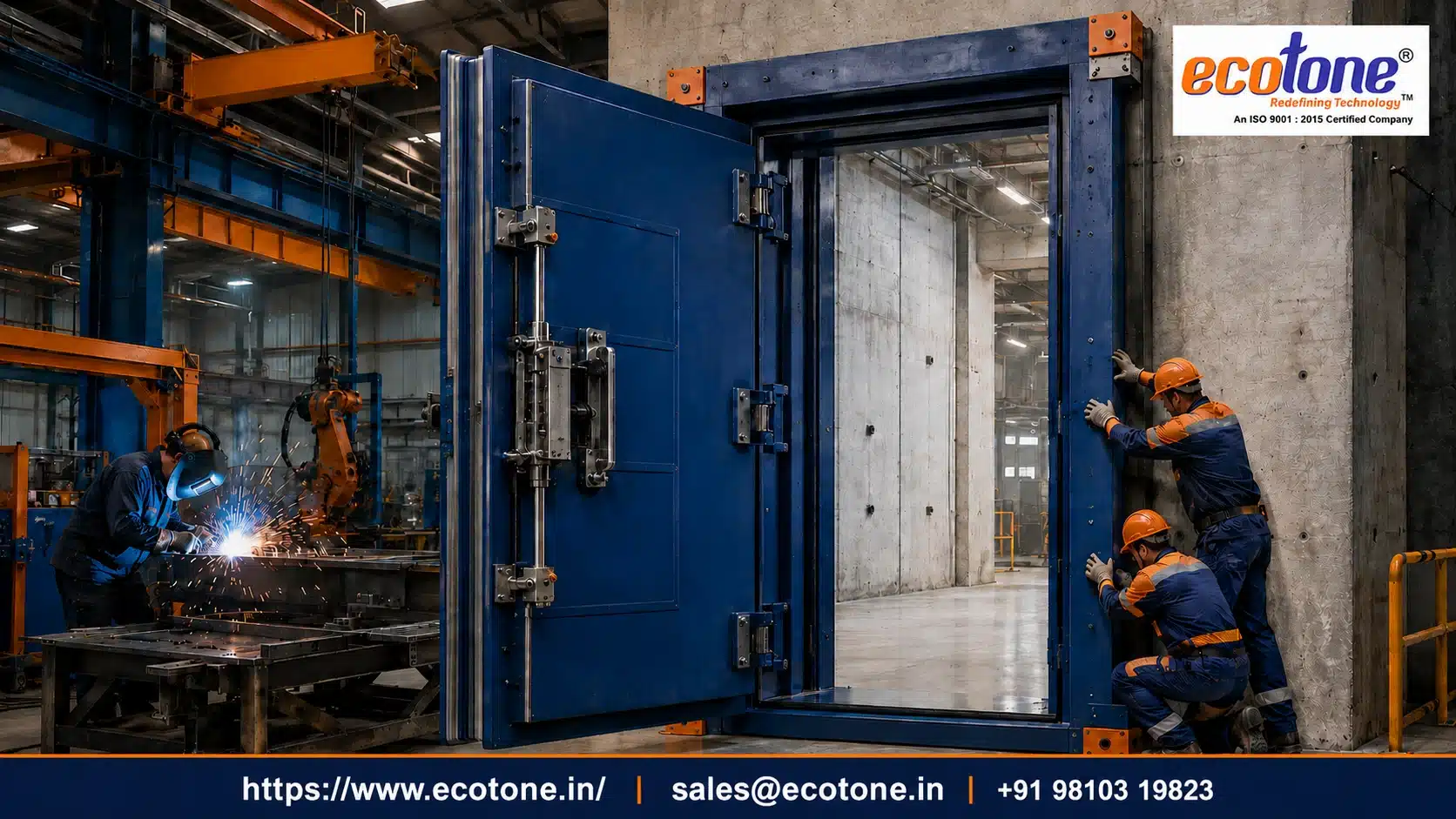
Manufacturing typically moves through structural design verification, material procurement, plate cutting and forming, frame and leaf fabrication, welding, hardware integration, and finishing. Each stage carries its own quality checkpoints, since an error introduced early, an incorrect plate thickness or a missed reinforcement detail, tends to compound through the rest of the build rather than staying isolated.
Why Is a Steel Box Section Blast Door Construction Method Used?
A steel box section blast door uses a hollow, reinforced structural section for the leaf and frame rather than a solid plate alone, distributing blast load more efficiently across the assembly while keeping overall weight manageable. This construction method allows internal stiffeners and reinforcement to be positioned precisely where structural analysis calls for them, rather than relying purely on plate thickness to carry the load.
What Does Fully Welded Blast Door Fabrication Involve?
Fully welded blast door fabrication joins structural components through continuous, inspected welds rather than bolted or riveted connections, which matters because blast loading transfers dynamic stress through every joint in the assembly. Weld quality is typically verified against recognised structural welding codes, and any porosity, undercut, or incomplete fusion becomes a genuine weak point under blast conditions, not just a cosmetic issue.
For Any Inquiries Please Email
Our team typically responds within 24 hours on business days.
Contact UsHow Does Manufacturing Differ Across High Hazard Sectors?
A door destined for blast resistant doors nuclear power station applications typically layers access control hardware into the fabrication sequence early, since retrofitting security integration after welding is far more difficult than building it in.
Doors bound for blast resistant doors missile launch site projects often need fabrication tolerances validated against repeated load cycling, not just a single design event, given how these facilities operate.
For blast resistant doors ammunition bunker installations, fabrication sometimes has to account for wrap around loading paths, meaning welds and reinforcement on more than one face of the assembly get equal scrutiny.
Doors manufactured for blast resistant doors research lab settings need smoother hardware operation built in from the start, since daily usability is checked alongside blast performance during quality inspection.
Doors built for blast resistant doors university lab applications carry the same usability emphasis, since researchers and staff move through these entries constantly during normal operations.
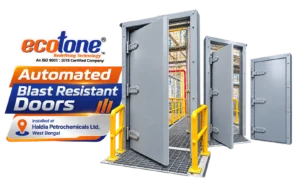
And fabrication for blast resistant doors petrochemical complex projects often includes corrosion resistant coating stages earlier in the sequence, since process environments are harsher on unfinished steel than most other applications.
How Is Quality Controlled During Manufacturing?
Quality control typically includes dimensional inspection against approved drawings, weld inspection using visual and non destructive testing methods, hardware function testing, and final documentation traceability linking each door back to its material certificates and test records. This traceability matters most when a facility’s insurer or regulator later asks for evidence that the installed door actually matches its certified design.
How Does Ecotone Systems Approach Manufacturing and Installation?
At Ecotone Systems Pvt. Ltd., over 10 years of experience across petrochemical, military, and power generation sectors shapes every stage of the blast resistant door manufacturing process. Doors are engineered to withstand up to 40 bar peak reflected overpressure, with fire resistance up to 180 minutes in line with BS 476 Part 20 and 22, built in single wing, double wing, and partition configurations using steel box section and fully welded fabrication methods. Standard sizes of 4ft x 8ft and 8ft x 8ft are available alongside custom dimensions up to 4m x 6m, hatches, access panels, and blow out panels, with manual, pneumatic, hydraulic, or electric operating systems fitted to suit the application, and installation handled with the same precision engineering and quality control applied during fabrication.
Conclusion
The blast resistant door manufacturing process determines whether a door’s certified rating holds up in reality, not just on a datasheet. From steel box section construction through fully welded fabrication and final quality inspection, every stage has to preserve the structural intent behind the original design. Working with a manufacturer that controls this process end to end, through design, fabrication, and installation, is what actually delivers the protection a blast rating promises.
Frequently Asked Questions
Why does welding matter so much in blast door fabrication?
Blast loading transfers dynamic stress through every joint, so weld quality directly affects whether the assembly performs as designed under real pressure.
What is a steel box section blast door?
It’s a door built with a hollow, reinforced structural section rather than solid plate alone, distributing blast load efficiently while managing overall weight.
How is manufacturing quality verified for blast doors?
Through dimensional inspection, weld testing, hardware function checks, and documentation traceability linking the finished door to its material certificates.
Does manufacturing differ for different industries?
Yes, sectors like nuclear, defense, research, and petrochemical often require additional fabrication considerations such as security or usability features.
Can blast resistant doors be manufactured in custom sizes?
Yes, standard sizes cover most openings, but custom dimensions are commonly fabricated for specialised or oversized installations.
Trusted by India's Leading Brands
Hover to pause · Logos scroll continuously