India’s infrastructure development has accelerated at an unprecedented pace. National highways, expressways, railway corridors, and metro rail systems are expanding rapidly to support economic growth and urban mobility. While this progress has improved connectivity, it has also increased environmental noise levels, particularly in densely populated regions. Continuous exposure to traffic and transit noise affects public health, productivity, and overall quality of life. To address this growing concern, the installation of a Noise Barrier has become a critical component of infrastructure planning across India.
Noise barriers are now widely used in highway, railway, and metro projects to control sound transmission and protect nearby residential, commercial, and institutional areas. This article explains where noise barriers are used in India, how they function in different transport environments, and why they are essential for sustainable infrastructure development.
What Is a Noise Barrier?
A Noise Barrier is a specially engineered structure installed along transportation corridors to reduce the level of sound reaching surrounding areas. These barriers function by blocking, absorbing, or reflecting sound waves generated by vehicles, trains, and metro systems. Their effectiveness depends on design parameters such as height, material composition, placement, and distance from the noise source.
In India, noise barriers are manufactured using materials such as concrete panels, metal cassettes with sound-absorbing infill, polycarbonate sheets, and composite acoustic panels. The selection of material and design depends on the noise intensity, location, aesthetic requirements, and long-term maintenance considerations.
Why Noise Barriers Are Essential in India
Noise pollution has emerged as a serious environmental issue in Indian cities. Residential buildings, hospitals, schools, and offices are often located very close to highways and railway tracks. Prolonged exposure to high noise levels can lead to sleep disturbance, stress, cardiovascular issues, and reduced work efficiency.
The use of a Noise Barrier helps mitigate these impacts while ensuring compliance with Central Pollution Control Board norms and environmental clearance conditions. Government agencies such as NHAI, Indian Railways, and metro authorities increasingly mandate noise barriers as part of project specifications, making them an integral part of modern infrastructure design.
Use of Noise Barriers on Indian Highways
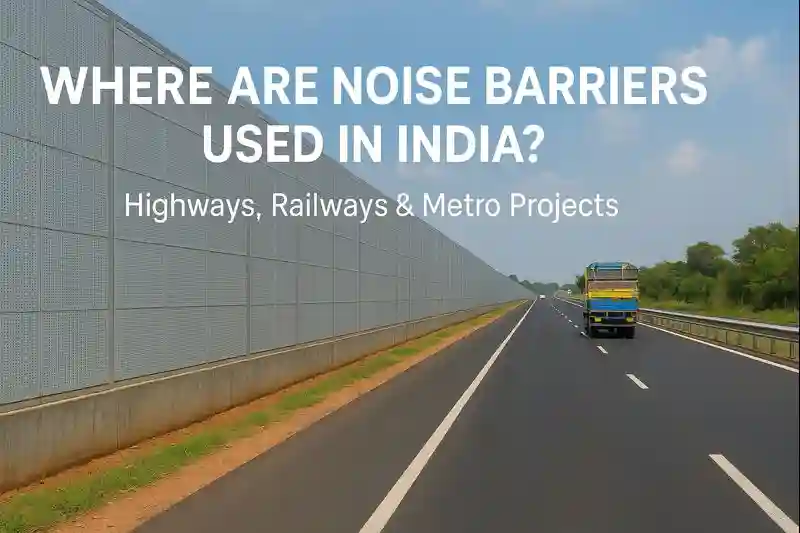
Highways represent the most common application area for noise barriers in India. High vehicle density, increased travel speeds, and heavy commercial traffic contribute to continuous noise generation. A Highway Noise Barrier is typically installed along highway stretches passing near residential colonies, educational institutions, hospitals, and mixed-use developments.
The purpose of installing a noise barrier on highway projects is to reduce noise caused by engines, tire-road interaction, and frequent honking. Properly designed barriers can significantly reduce sound levels reaching adjacent properties, especially during night-time hours.
For Any Inquiries Please Email
Our team typically responds within 24 hours on business days.
Contact UsNoise Barrier on Highway Projects in India
Several major highway and expressway projects across India have incorporated noise barrier systems. Corridors such as the Delhi–Meerut Expressway, Eastern and Western Peripheral Expressways, and urban highway expansions near metropolitan regions use noise barriers extensively. In these projects, the Noise Barrier on Highway sections is designed based on traffic volume, road geometry, nearby land use, and environmental impact assessments.
Urban highways often use transparent or semi-transparent barriers to maintain visibility and avoid visual congestion, while suburban or industrial corridors rely on solid barriers for higher durability and noise reduction performance.
Common Noise Barrier Applications in Indian Infrastructure
The table below provides a clear overview of how noise barriers are used across different transport sectors in India, including design considerations and commonly used materials.
| Infrastructure Type | Noise Barrier Application Area | Primary Purpose | Common Materials Used |
|---|---|---|---|
| National & State Highways | Near residential areas, schools, hospitals | Reduce vehicle and traffic noise | Metal acoustic panels, polycarbonate, concrete |
| Expressways | High-speed corridors and urban outskirts | Control high-intensity traffic noise | Concrete noise barriers, absorptive panels |
| Railway Corridors | Urban and suburban rail tracks | Reduce train and track interaction noise | Metal cassette panels, concrete barriers |
| Metro Rail Projects | Elevated viaducts and station zones | Control wheel-rail and braking noise | Transparent panels, absorptive noise barriers |
| Industrial Transport Routes | Heavy vehicle and freight corridors | Protect surrounding communities | Concrete noise barriers |
Highway Noise Reduction Barrier and Its Advantages
A Highway Noise Reduction Barrier provides long-term benefits for both communities and infrastructure authorities. Reduced noise levels improve living conditions for residents near highways, support better health outcomes, and enhance overall urban comfort. Quieter surroundings also contribute to higher property values and improved land-use compatibility.
From a regulatory standpoint, highway noise reduction barriers help authorities meet environmental clearance requirements and demonstrate responsible planning. As highway networks continue to expand, the role of noise barriers in minimizing environmental impact will become increasingly significant.
Noise Barriers Along Railway Corridors
Railway operations generate significant noise due to engine movement, wheel-rail interaction, braking, and horns. In densely populated areas, railway noise can be particularly disruptive. A Noise Barrier installed along railway tracks helps reduce the transmission of sound into nearby residential and commercial zones.
Railway noise barriers are designed to withstand vibration, wind loads, and long-term exposure to outdoor conditions. They are especially important in suburban rail networks where train frequency is high throughout the day and night.
Noise Barriers in Metro Rail Projects
Metro rail systems play a vital role in urban mobility, but elevated tracks and stations can introduce noise into surrounding neighborhoods. Noise barriers are commonly installed along elevated viaducts and near stations to reduce wheel-rail noise and braking sounds.
In metro projects, the design of a Noise Barrier emphasizes both acoustic performance and aesthetics. Transparent panels are often used to maintain city views and reduce the visual impact of elevated structures while still achieving effective noise control.
Concrete Noise Barrier and Its Use in India
A Concrete Noise Barrier is widely used in locations where high durability and maximum noise reduction are required. These barriers are commonly installed along high-speed highways, freight railway corridors, and industrial transport routes. Concrete barriers offer excellent sound insulation, resistance to harsh weather conditions, and a long service life with minimal maintenance.
In many Indian infrastructure projects, concrete noise barriers are selected for areas exposed to high dust levels, heavy vehicle impact, or limited maintenance access. Modern designs allow concrete barriers to be enhanced with textured finishes or absorptive linings to improve both performance and appearance.
Ecotone Systems: Trusted Noise Barrier Provider in India
Ecotone Systems is a leading provider of high-performance Noise Barrier solutions in India, serving highway, railway, metro, and industrial infrastructure projects. The company specializes in the design, manufacturing, and installation of customized noise barrier systems that comply with CPCB guidelines and international acoustic standards.
Ecotone Systems offers a complete range of solutions, including highway noise barriers, concrete noise barriers, transparent acoustic barriers, and absorptive noise control systems. Each project is engineered based on site-specific noise studies, ensuring optimal noise reduction, structural safety, and long-term durability. With a strong focus on quality, innovation, and turnkey execution, Ecotone Systems supports sustainable infrastructure development across India.
Conclusion
As India continues to expand its transportation infrastructure, managing noise pollution has become a critical priority. Noise barriers have proven to be one of the most effective and reliable solutions for controlling traffic and transit noise across highways, railways, and metro systems.
From a Highway Noise Barrier protecting residential zones to a Concrete Noise Barrier serving high-speed corridors, each application plays a vital role in improving environmental quality. With experienced providers like Ecotone Systems delivering advanced noise barrier solutions, India is moving toward quieter, healthier, and more sustainable urban and transport environments.
Trusted by India's Leading Brands
Hover to pause · Logos scroll continuously