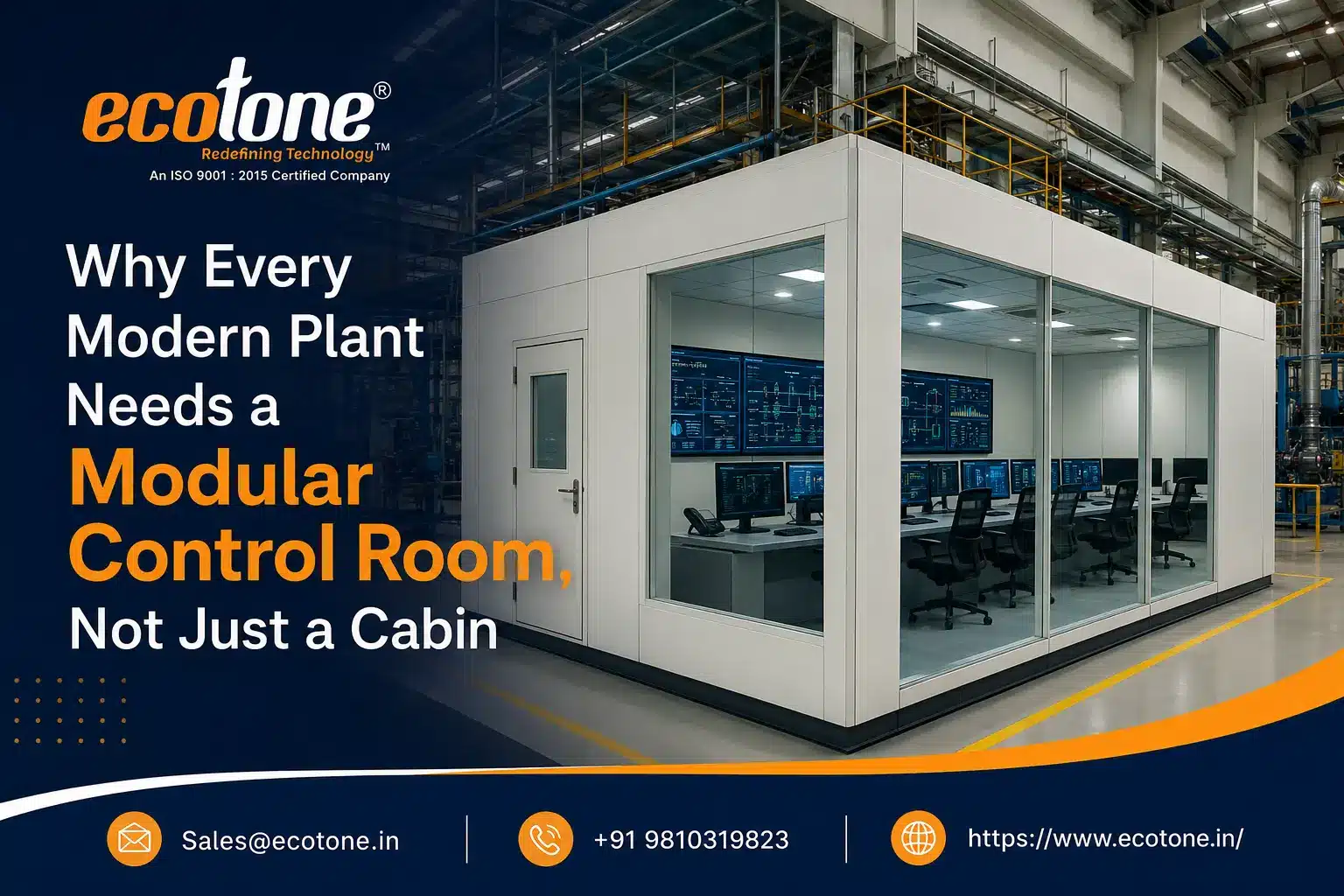
Walk into any steel plant these days and you’ll notice something. That old brick-and-mortar control room — the one that took weeks to build, with civil work dragging on and wiring chaos everywhere — is disappearing fast. In its place? Something quicker, sturdier, and honestly just smarter: the modular control room.
Are you an operations head or a plant engineer wondering if this shift is actually worth the switch? Short answer: yes. Here’s why.
What Makes a Modular Control Room Different
A modular control room isn’t a shrunk-down version of a regular control building. It’s prefabricated. Factory-built. It shows up ready to install, and just like that, you skip months of construction headaches. Picture a command center engineered off-site, quality-checked, then dropped exactly where your operations need it — no guesswork, no delays.
You’ll also hear these called an industrial control cabin, depending on who’s talking. Rolling mill, powerhouse, chemical unit — doesn’t matter. The job stays the same: give operators a safe, elevated spot to watch critical machinery without wandering into a hazard zone.
For Any Inquiries Please Email
Our team typically responds within 24 hours on business days.
Contact UsBuilt to Survive Harsh Industrial Conditions
Heat. Dust. Vibration. Nonstop noise. That’s just Tuesday on a factory floor. A properly built modular control room is made to take that punishment and keep working. Structural steel framing, insulated wall panels, reinforced flooring — all of it keeps the inside stable even when everything outside is falling apart.
This is exactly where steel plant monitoring cabins prove their worth. Set up near furnaces or rolling lines, these units have to fight off extreme heat while still letting operators stay sharp through a long shift. A badly insulated cabin doesn’t just make people uncomfortable — it slows down decisions. And on a plant floor, slow decisions cost money.
Comfort and Visibility Aren't Optional Anymore
Old control rooms treated comfort like an afterthought. Not anymore. Wide glass panels for clear sightlines, ergonomic desks, working HVAC, decent lighting — these are baseline now, not bonus features.
A lot of facilities specifically ask for soundproof cabins as part of the build. Makes sense. Constant machinery noise wears people down — fatigue, poor focus, hearing damage over time. Insulated panels and acoustic treatment inside a modular control room cut that noise way down, so operators can actually think clearly when it matters.
Why Manufacturers Are Moving Toward Modular Builds
There’s a real shift happening toward modular control rooms across steel, cement, and power sectors. Not hard to see why, either. These units can be moved, expanded, or reconfigured as a plant grows — try doing that with a brick building. If the layout changes next year, the cabin just moves with it.
That flexibility explains why more manufacturing teams are seeing rising demand for prefabricated builds, especially in industries that used to rely purely on civil construction. A faster deployment approach means shorter project timelines without cutting corners on strength or safety — a rare combination when schedules are already tight.
Choosing the Right Manufacturer
Here’s the thing: not every fabricator gets the difference between a basic cabin and a properly engineered industrial one. Picking an experienced manufacturer actually matters — visibility angles, insulation grade, electrical integration, load capacity all need to fit your specific plant, not some generic template.
Ecotone Systems has built its name here. Ecotone Systems designs each modular control room around your actual machinery layout, your safety standards, your workflow. Not a copy-paste job. From insulated panels to integrated consoles, every cabin reflects real engineering — not a rushed fabrication run.
For plants battling extreme heat or heavy noise, Ecotone Systems brings its acoustic engineering background into the mix too, pairing soundproofing know-how with solid structural durability. That’s a big part of why industrial teams keep trusting Ecotone Systems when it’s time to move on from makeshift monitoring setups to something built properly.
Final Thoughts
A modular control room isn’t a passing trend. It’s a practical fix for how plants actually run today. Faster to install, easier to move, far more comfortable for the people inside it — it solves problems traditional construction just can’t keep pace with. Still running an outdated setup? Might be time to see what a properly engineered cabin from a name like Ecotone Systems could do for your monitoring efficiency and operator safety.
Frequently Asked Questions
What is a modular control room used for?
It’s a prefabricated, enclosed space where plant operators can safely monitor machinery, production lines, and critical processes in real time.
How is a modular control room different from a traditional control cabin?
It’s factory-built and arrives ready to install, so construction time drops significantly compared to conventional civil work.
Can a modular control room handle high heat and dust environments?
Yes. Insulated panels and rugged steel framing let these cabins hold up in tough conditions like near furnaces or rolling mills.
Do these cabins offer noise reduction for operators?
Most modular units — especially soundproof cabins — include acoustic insulation that cuts machinery noise and helps operators stay focused.
Can the cabin be relocated if the plant layout changes?
Yes. That’s one of the biggest perks of a modular build — it can be relocated, expanded, or reconfigured without major rework.
Trusted by India's Leading Brands
Hover to pause · Logos scroll continuously