
- Serving Industries Across India
Acoustic Louvered Doors - Single and Double Leaf
Single & Double Leaf Acoustic Louvered Doors for Plant Rooms, Generator Rooms & Enclosures
Summary: Acoustic louvered doors are steel doors with built-in acoustic louvers and sound-absorbing infill, so a plant room, generator room, or enclosure can have a personnel door that also lets air circulate while noise is reduced. This guide is designed for plant engineers, EHS managers, HVAC consultants, and facility planners across India who are evaluating acoustic louvered doors for power plants, data centres, HVAC rooms, and industrial enclosures. It explains where single leaf and double leaf acoustic louvered doors work best, how they balance airflow with noise control, and why their acoustic performance differs from a fully solid acoustic door.
- Personnel access and ventilation in one door
- Design, manufacture, installation & commissioning
- ISO 9001:2015 certified manufacturer
Get a project quote
Tell us about your requirement and site. Our team typically responds within 24 hours on business days.
Is This Acoustic Louvered Doors Guide Right for You?
Who It's For
Power plants and substations, data centres, HVAC and plant rooms, manufacturing units, and any equipment room that needs both access and ventilation through the same opening.
When to Use This Guide
Before finalising an acoustic louvered doors manufacturer in India, while comparing STC claims across quotes, or when an existing ventilated door is leaking noise.
What Are Acoustic Louvered Doors?
Acoustic louvered doors, also called acoustic ventilation doors or noise control louvered doors, are steel doors that combine a sound-absorbing door construction with acoustic louvers, angled blades that let air circulate while limiting the sound that passes through. They are used where one opening has to do two jobs: give people access and let equipment breathe. A typical unit has a reinforced steel frame, acoustic infill that absorbs a broad range of noise frequencies, galvanized steel with a painted or powder-coated finish, and optional sealing systems to control leakage. They come as a single leaf or double leaf door, in custom sizes, for indoor or outdoor use. If you needed the one-line definition, that’s it. The sections below cover what actually decides how quiet one of these doors really is.
Why Indian Plants Are Specifying Acoustic Ventilation Doors for Equipment Rooms
Generator rooms, chiller plants, and HVAC rooms need cooling air, and every opening that carries air also carries noise. Door performance is normally expressed as Sound Transmission Class (STC), a single-number rating calculated under ASTM E413 from laboratory transmission loss measurements across 125 Hz to 4000 Hz, with ASTM E1408 covering laboratory sound transmission loss testing of door panels and complete door systems. The catch for louvered doors is that the louver is an intentional acoustic weak point, so a number measured on a solid door says little about the ventilated version. This guide explains how to read an STC claim for a louvered door, and what to check so the opening you cut for airflow does not undo the rest of your noise control.
Specifications, Benefits, Applications & Installation Process
| Parameter | Standard Specification |
|---|---|
| Configurations | Single leaf and double leaf |
| Size | Custom, any size and configuration |
| Construction | Reinforced steel frame with acoustic louvers and infill |
| Material | Galvanized steel |
| Finish | Painted or powder-coated, corrosion resistant |
| Sealing | Optional sealing systems to limit sound leakage |
| Use | Indoor or outdoor, weather and dust resistant |
| Benefit | Impact |
|---|---|
| Noise Reduction with Airflow | Quieter rooms while air keeps circulating |
| Durability | Galvanized steel resists rust, impact, and harsh conditions |
| Custom Fit | Size, colour, finish, and hardware to match the project |
| Low Maintenance | Design minimises upkeep over the product life |
| Weather Resistance | Dust and moisture infiltration is limited |
| Installation Support | Experienced technicians preserve acoustic integrity |
| Environmental Compliance | Manufactured under ISO 14001 environmental management |
| Step | Action |
|---|---|
| 1. Requirement Study | Confirm noise target, airflow need, and door size |
| 2. Design | Choose single or double leaf and louver area |
| 3. Fabrication | Reinforced frame, louvers, and infill manufactured |
| 4. Finishing | Galvanized, painted, or powder-coated finish applied |
| 5. Opening Preparation | Frame opening prepared, level, and plumb |
| 6. Installation | Door hung and sealing systems fitted by technicians |
| 7. Check | Closing, sealing, and acoustic performance verified |
| Step | Action |
|---|---|
| 1. Site survey | Assess ground conditions, noise limits, and access |
| 2. Custom design | Size the container and ventilation to the equipment |
| 3. Fabrication | Build shell, insulation, doors, and exhaust at factory |
| 4. Quality check | Test acoustic seals and ventilation before dispatch |
| 5. Transport | Move container to site using lifting lugs |
| 6. Positioning | Place on skid plates or foundation as designed |
| 7. Commissioning | Connect exhaust, power, and verify noise readings |
Technical Data Sheet
| Property | Value / Standard |
|---|---|
| Product | Acoustic Louvered Door, single leaf or double leaf |
| Construction | Reinforced steel frame, acoustic louvers, acoustic infill |
| Material | Galvanized steel |
| Finish | Painted or powder-coated |
| Sound Insulation Rating | STC, quoted for the complete door assembly |
| STC Classification Reference | ASTM E413, ASTM E1408 (door systems) |
| Sealing | Optional sealing systems for leak control |
| Hardware | Customisable, including heavy-duty locking options |
| Environment | Indoor or outdoor use, corrosion protected |
| Manufacturing | ISO 14001 environmental management system |
| Customisation | Size, colour, finish, hardware, leaf configuration |
How Does an Acoustic Louvered Door Reduce Noise While Letting Air Through?
Short answer: Angled louvers and absorptive infill force sound to bounce through absorbing material on its way through the opening, while the gaps between blades keep air moving.
Single Leaf vs Double Leaf Acoustic Louvered Door: Which One Should You Choose?
Short answer: Choose a single leaf door when one door width gives enough access. Choose a double leaf door when you need a wide opening for equipment, but plan extra attention for the centre joint, which becomes an additional leak path.
The Louver Opening Sets the Ceiling on a Louvered Door's Noise Reduction
A solid acoustic door and a louvered one are not the same product with a vent added. The louver is a deliberate hole in the sound barrier, and when two paths share one door, the weaker path dominates. As an illustrative calculation: suppose the solid part of a door blocks 40 dB and the louvered section, taking up a quarter of the door face, blocks 20 dB. Combining the two by area gives a whole-door reduction of only about 26 dB, only a few decibels better than the louver alone. Improving the solid leaf from 40 dB to 50 dB barely changes that result, while shrinking the louver area or upgrading the louver changes it a lot. This is why the practical design goal is to give the louver only the area the airflow truly needs, and why a quoted STC should always be for the complete louvered door, tested as a system, and not for the solid door panel.
What STC Does Not Tell You About Generator, Compressor, and Chiller Rooms
STC is a single number calculated from transmission loss between 125 Hz and 4000 Hz, a range chosen to represent speech. Equipment rooms do not sound like speech. Diesel generators, large compressors, and chillers often carry strong low-frequency energy, and absorptive louvers and light infill are typically weakest at exactly those low frequencies. Two doors with the same STC can therefore behave differently on the same machine, because STC averages across the band and says nothing about performance below 125 Hz. When a louvered door is going onto a generator room or chiller plant, ask for the full one-third octave transmission loss curve, not only the headline STC, and compare it against the dominant frequencies of your machine. This is also why a louvered door should be treated as part of the room’s noise control plan, alongside acoustic louvers on the room’s other openings, not as a stand-alone fix.
Perimeter Seals and Hardware Decide Whether a Louvered Door Keeps Its Rating
Published acoustic gasketing specifications show door STC ratings ranging from roughly 40 to 49 depending on the head, jamb, threshold, and door bottom components chosen, which shows how much of a door’s performance sits in its seals rather than its leaf. For a louvered door the point is even sharper, because the louver already limits what the leaf can achieve, so every extra gap leaks proportionally more of what remains. That is why sealing systems should be treated as part of the specification, not an optional extra, and why closing hardware matters: heavy-duty locking such as deadlocks, shoot bolts, and mortise locks pulls the leaf evenly onto its seals, and a door that sags or closes loosely stops compressing its gaskets. On a double leaf door, the meeting joint needs particular attention. A door that tests well but is hung out of square, or installed without checking seal compression, will not keep its rated performance in service.
Design and Construction
Each door balances airflow with soundproofing. Every louver is angled to maintain air circulation while minimising sound transmission, and the acoustic infill inside the door absorbs a broad range of noise frequencies. A heavy-duty reinforced steel frame provides strength and durability under high operational stress, optional sealing systems limit sound leakage, and weather-resistant materials prevent dust and moisture infiltration. Corrosion protection treatments extend service life, which suits both indoor and outdoor environments. Each door is fabricated in galvanized steel with painted or powder-coated finishes, and custom sizes, colours, and hardware can be specified. Related products include steel acoustic doors for rooms that need a solid leaf, and sound attenuators for ducted airflow.
How to Choose an Acoustic Louvered Doors Manufacturer in India
Frequently Asked Questions
A steel door with acoustic louvers and infill that reduces noise while allowing airflow.
Generator rooms, HVAC rooms, data centres, plant rooms, and industrial enclosures.
No. The louver opening limits overall noise reduction compared with a solid door.
Double leaf gives wider access but adds a centre joint needing careful sealing.
A single-number rating of sound transmission loss between 125 Hz and 4000 Hz.
The louvered section lets more sound through, so the whole door rates lower.
Yes, perimeter gaps leak sound and reduce the door's real performance.
Yes, weather-resistant materials and corrosion protection suit outdoor use.
Galvanized steel with painted or powder-coated finishes in chosen colours.
Yes, size, finish, hardware, and configuration are built to the project.
Get Expert Assistance for Your Acoustic Louvered Door Requirements
Whether you need a single leaf or double leaf door for a generator room, HVAC plant, data centre, or industrial enclosure, Ecotone Systems designs and installs acoustic ventilation doors sized to your airflow, with sealing and hardware specified as part of the door, not added afterwards.
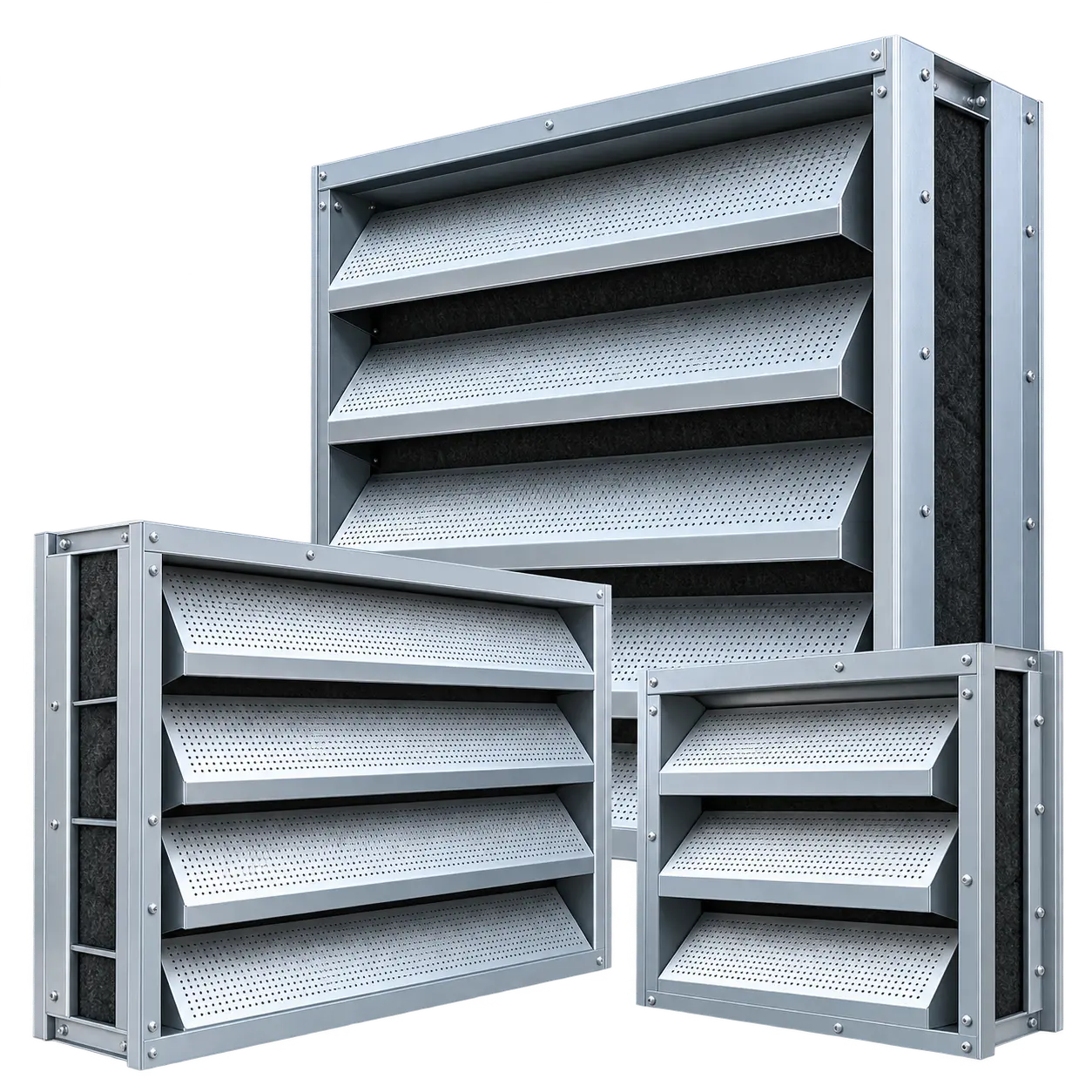
Ventilation louvers that cut noise by up to 20 to 30 dB.
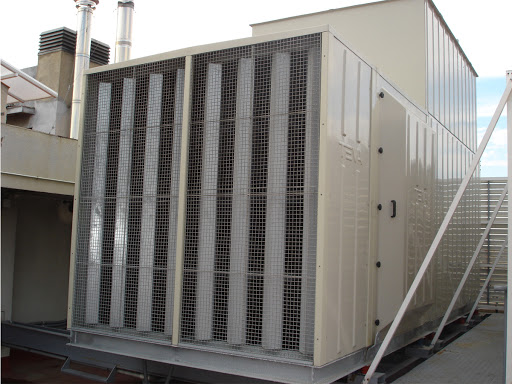
Silencers for ducts, fans, HVAC and DG ventilation.
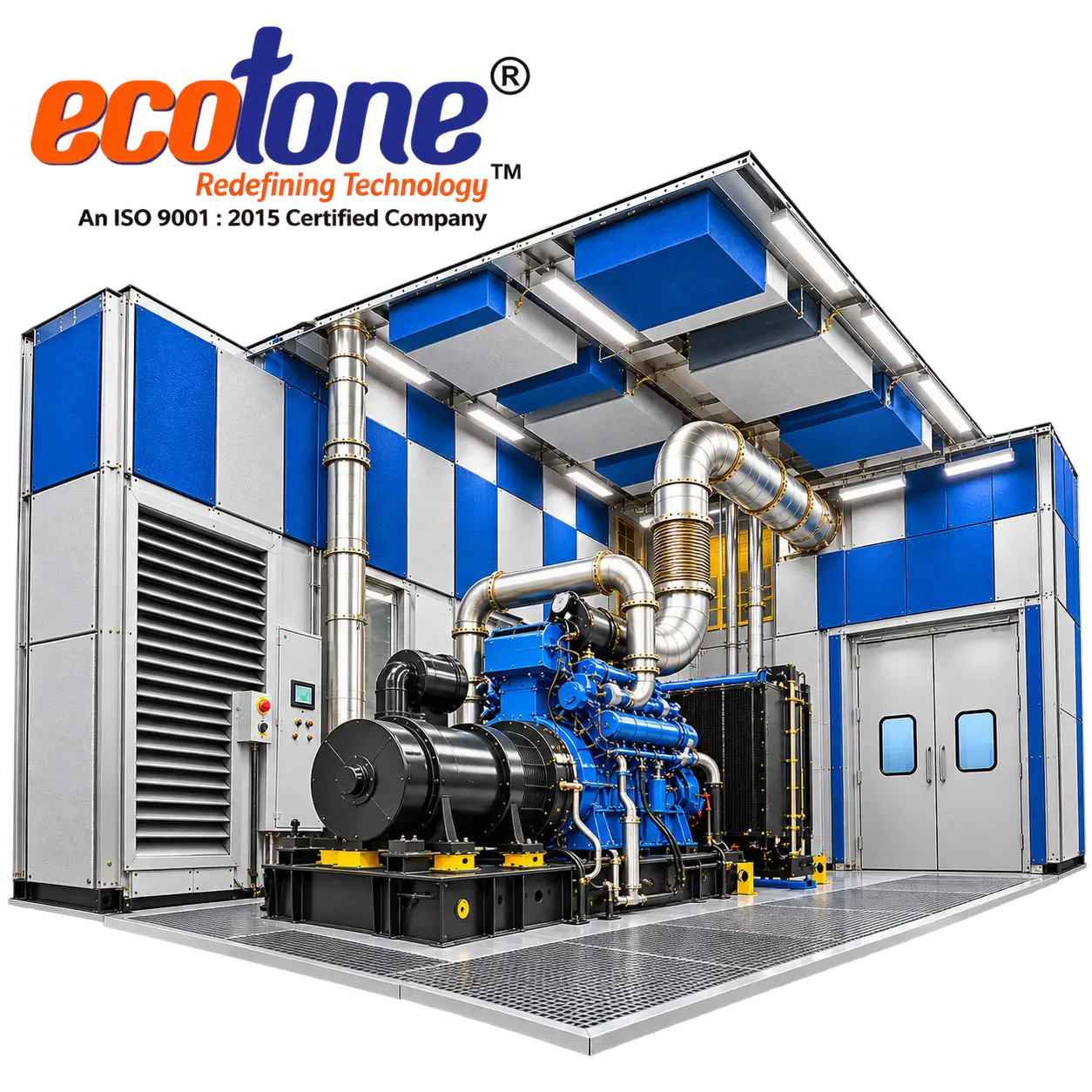
Wall, ceiling and door treatment for high-noise rooms.
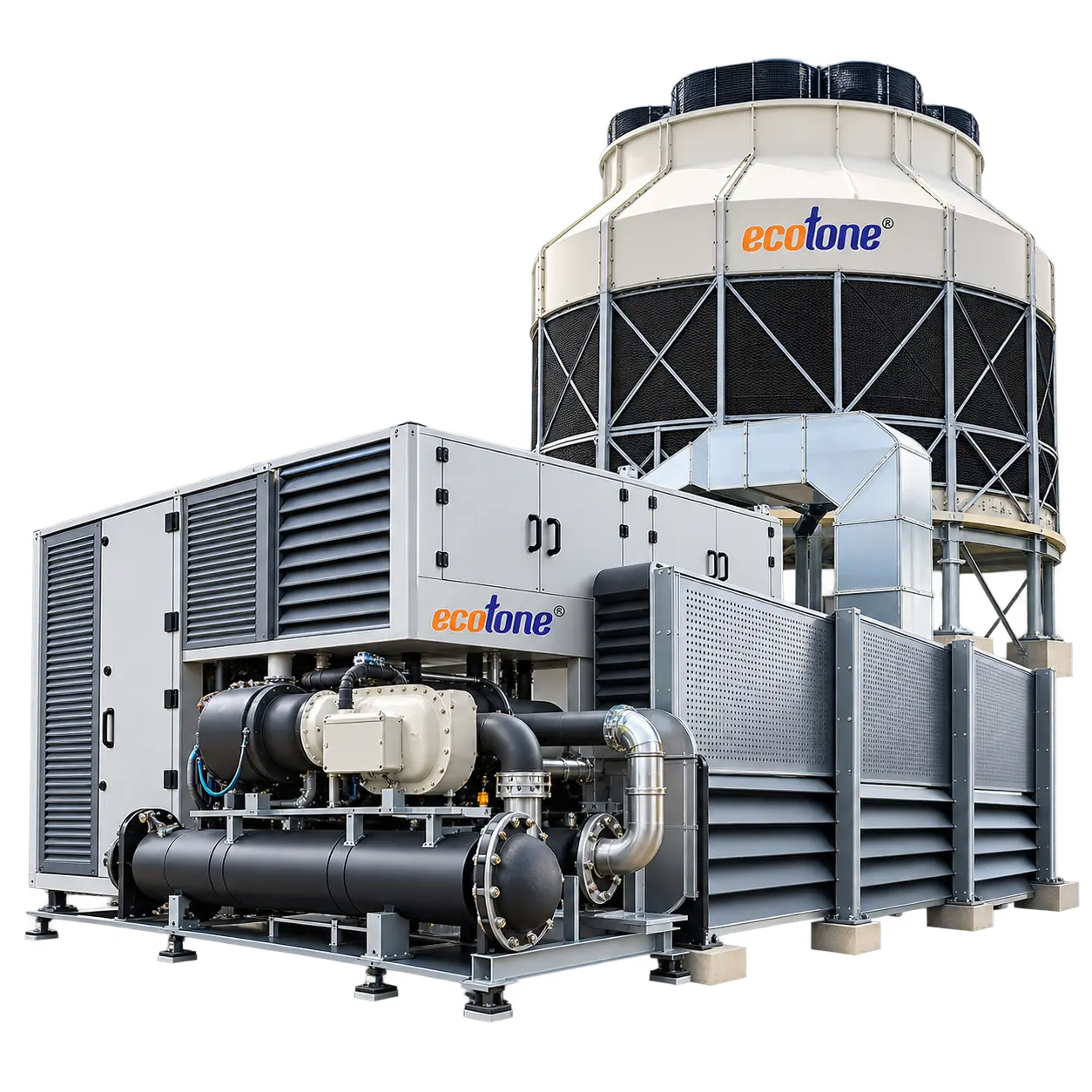
Noise control for chillers and cooling towers.
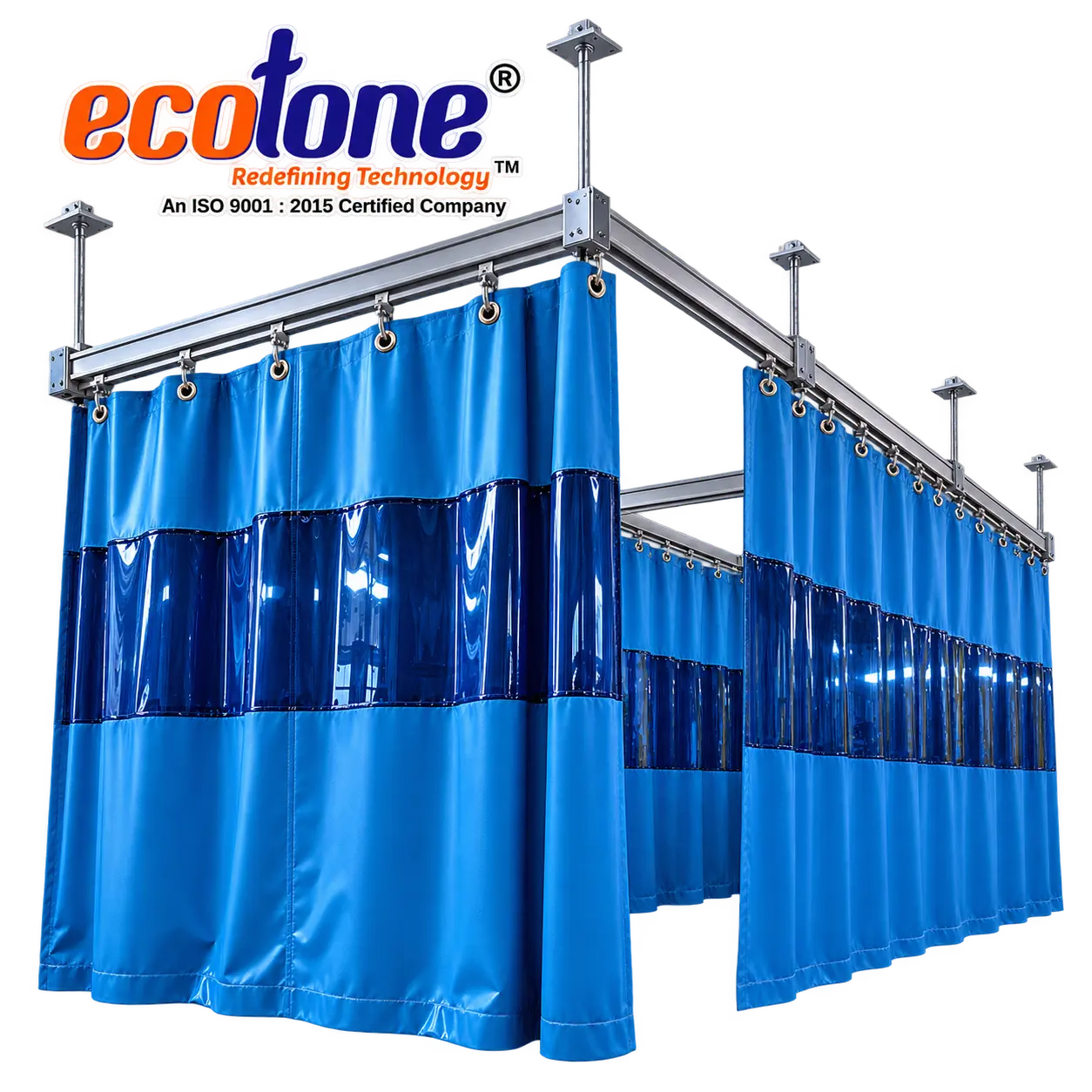
Flexible soundproof curtains for machines and workshops.
Trusted by India's Leading Brands
Hover to pause · Logos scroll continuously