
- Serving Industries Across India
Modular Cleanroom Solutions in India
Prefabricated Modular Cleanrooms for Pharma, Biotech, Electronics, Food & Medical Devices
Summary: A modular cleanroom is a prefabricated, factory-built controlled environment made from insulated sandwich panels, structural frames, and integrated HVAC and filtration systems, engineered to hold a specific ISO 14644-1 particle classification, ISO 5 through ISO 8 in most industrial use, while installing far faster than a site-built cleanroom. This page is written for pharma, biotech, electronics, food processing, and medical device manufacturers in India who are specifying a modular cleanroom, comparing manufacturers, or troubleshooting an existing room that isn’t holding its classification.
- Engineered for ISO 14644-1 classes, ISO 5 to ISO 8
- Design, manufacture, installation & commissioning
- ISO 9001:2015 certified manufacturer
Get a project quote
Tell us about your requirement and site. Our team typically responds within 24 hours on business days.
Is This Modular Cleanroom Guide Right for You?
Who It’s For
Pharmaceutical and biotech manufacturers, electronics and semiconductor units, medical device makers, hospitals, and food processing plants that need a classified, audit-ready controlled environment.
When to Use This Guide
Before finalising a modular cleanroom manufacturer, while comparing panel and filtration specs across quotes, or when an existing cleanroom is failing particle count or pressure differential validation.
What Is a Modular Cleanroom?
A modular cleanroom is a prefabricated, self-contained controlled environment built from standardized insulated wall and ceiling panels, structural frames, and integrated service components, designed to limit airborne particles and regulate temperature, humidity, and air pressure inside. Classification follows ISO 14644-1, the international standard for air cleanliness by particle concentration, where ISO Class 5 permits no more than 3,520 particles of 0.5 microns or larger per cubic metre of air, while ISO Class 8 permits up to 3,520,000, a thousand-fold difference in stringency between the two. Unlike a site-built cleanroom, a modular clean room is manufactured in a controlled factory setting and assembled on-site, which improves dimensional accuracy and cuts commissioning time significantly. If you needed the one-line definition, that’s it. The sections below cover what actually determines whether a modular cleanroom holds its classification in real operating conditions.
Why Indian Manufacturers Are Choosing Prefabricated Cleanroom Systems Over Site-Built Rooms
Contamination control isn’t optional for pharmaceutical, biotech, and electronics manufacturing, it’s a regulatory requirement tied directly to product safety and audit outcomes. Indian pharmaceutical facilities are expected to meet cleanroom conditions consistent with WHO GMP guidelines and India’s own Schedule M requirements for premises and environmental control, which reference the same ISO 14644 classification framework used internationally. A site-built cleanroom depends heavily on on-site workmanship for airtight joints and consistent panel alignment, and inconsistencies here are a common reason rooms fail particle count validation after commissioning. A modular cleanroom system, fabricated with factory-controlled tolerances, removes much of that variability. This guide explains what to check before you commit to a modular cleanroom manufacturer.
Specifications, Benefits, Applications & Installation Process
| Parameter | Standard Specification |
|---|---|
| Cleanroom classification | ISO 5 to ISO 8 (ISO 14644-1) |
| Wall and ceiling system | Insulated sandwich panels |
| Panel thickness | 40mm to 120mm |
| Thermal conductivity | 0.020 to 0.024 W/mK |
| Surface finish | PPGI, stainless steel, or GI sheets |
| Air filtration | HEPA or ULPA filters |
| Fire resistance | As per applicable national standards |
| Benefit | Impact |
|---|---|
| Faster commissioning | Prefabrication cuts construction time significantly |
| Consistent quality | Factory tolerances reduce on-site workmanship variance |
| Scalability | Rooms can be expanded, relocated, or reconfigured |
| Energy efficiency | High-performance insulation lowers HVAC load |
| Hygienic surfaces | Smooth, non-porous panels resist dust accumulation |
| Regulatory readiness | Design supports ISO 14644 and GMP compliance |
| Lower long-term cost | Durable panels reduce maintenance and downtime |
| Application | Typical Industry |
|---|---|
| Sterile fill-finish rooms | Pharmaceutical manufacturing |
| Biosafety and research labs | Biotech and life sciences |
| Semiconductor fabrication areas | Electronics manufacturing |
| Assembly and packaging rooms | Medical device manufacturing |
| Processing and packing areas | Food and beverage production |
| Operating theatres and isolation rooms | Hospitals and healthcare |
| Testing and calibration labs | Precision instrumentation |
| Step | Action |
|---|---|
| 1. Requirement study | Confirm classification target, layout, and workflow |
| 2. Engineering design | Plan panel layout, HVAC, filtration, and pressure cascade |
| 3. Factory fabrication | Panels, frames, and doors manufactured under quality control |
| 4. Site preparation | Flooring, utilities, and structural base readied |
| 5. Modular assembly | Panels, ceiling grid, and doors assembled on-site |
| 6. HVAC and filtration fit-out | HEPA/ULPA units, ducting, and controls installed |
| 7. Validation | Particle count, airflow, and pressure testing before handover |
How Does a Modular Cleanroom Actually Achieve Its ISO Classification?
Short answer: Classification is achieved through a combination of HEPA or ULPA filtration coverage, air change rate, and airtight construction, not panel thickness alone, since the goal is controlling particle concentration in the air, not just insulating the room.
- Filtration: HEPA filters remove particles down to 0.3 microns with high efficiency, ULPA filters go finer still for the most stringent classes.
- Air change rate: Higher classifications need significantly more air changes per hour, ISO 5 environments commonly run around 240 air changes per hour, compared to roughly 30 to 60 for ISO 7 or ISO 8 spaces.
- Airtight construction: Sealed panel joints and gasketed doors prevent unfiltered air from bypassing the filtration system.
- Pressure control: Positive pressure relative to adjoining, less-clean areas stops contaminants from migrating inward.
Why Air Change Rate Determines Classification More Than Panel Thickness
A common misconception among first-time cleanroom buyers is that a thicker, more heavily insulated panel produces a cleaner room. Panel thickness affects thermal performance and structural rigidity, but it has almost no direct bearing on particle classification. What actually determines whether a room holds ISO 5 versus ISO 8 is the air change rate and HEPA or ULPA filter coverage relative to room volume, since classification is a measure of airborne particle concentration, not insulation quality. An ISO 5 cleanroom commonly needs around 240 air changes per hour with near-total ceiling HEPA coverage, while an ISO 7 or ISO 8 space can hold its classification at roughly 30 to 60 air changes per hour with partial filter coverage. A buyer who upgrades to 120mm panels while keeping the same HVAC and filtration package will get a better-insulated room, not a cleaner one.
Technical Data Sheet
| Technical Parameter | Standard Specification Range | Performance Advantage |
|---|---|---|
| Cleanroom classification | ISO 5 to ISO 8 | Controlled particulate levels |
| Wall and ceiling system | Insulated sandwich panels | Structural stability |
| Panel thickness | 40mm to 120mm | Enhanced insulation |
| Core density | 40 ± 2 kg/m3 (typical) | Uniform performance |
| Thermal conductivity | 0.020 to 0.024 W/mK | Energy efficiency |
| Surface finish | PPGI / SS / GI sheets | Hygienic and easy cleaning |
| Air filtration | HEPA / ULPA | High contamination control |
| Fire resistance | As per applicable standards | Improved safety |
The Pressure Cascade Design Mistake That Fails More Cleanroom Audits Than Filtration Choice
Cleanrooms rarely operate as a single room, they operate as a sequence of spaces with decreasing cleanliness moving away from the most critical process area, each held at a slightly different air pressure so airflow always moves from cleaner to less clean space through airtight door openings. A poorly sequenced pressure cascade, where an airlock or gowning room isn’t correctly staged between zones, is one of the most common reasons a cleanroom fails validation or an audit, even when the filtration and panel specification on paper meet the required ISO class. This is a design and commissioning issue, not a hardware issue, and it is far more often the actual root cause of contamination excursions than the filter grade installed.
PUF vs Rockwool Core Panels: The Fire Rating Trade-off Nobody Explains Upfront
Polyurethane foam (PUF) core panels are widely used in cleanroom construction because of their excellent thermal insulation, light weight, and smooth, hygienic surface finish that resists dust accumulation. What often isn’t explained upfront is that standard PUF cores are combustible and require fire-retardant treatment or additional fire protection measures to meet stricter fire safety classifications, which matters significantly for pharma facilities undergoing fire safety audits alongside their GMP inspection. Rockwool (mineral wool) core panels offer genuinely better inherent fire resistance and are often specified where fire code compliance is the priority, but they are heavier, have somewhat lower thermal efficiency, and can be more prone to moisture absorption if the vapour barrier is compromised. Choosing between the two should be a documented decision based on your facility’s fire risk classification, not a default based on which panel is more commonly quoted.
The Role of PUF Panels in Modular Cleanroom Construction
PUF panels, insulated sandwich panels with a rigid polyurethane foam core between metal sheets, are one of the most widely used structural elements in cleanroom walls, ceilings, and partitions. Their thermal insulation properties reduce the load on HVAC systems, improving energy efficiency, while their lightweight, strong construction simplifies installation compared to heavier alternatives. The smooth, non-porous surface finish supports hygiene by resisting dust accumulation and allowing easy cleaning, a critical factor for maintaining classification between validation cycles. As covered above, fire-retardant treatment or an alternative core material should be considered where fire safety classification is a priority.
Compliance With Industry Standards
A modular cleanroom must comply with applicable regulatory frameworks, most commonly ISO 14644 classification and GMP guidelines for pharmaceutical and biotech applications. A properly engineered system ensures airflow patterns, air change rates, and filtration efficiency meet these requirements, supported by airtight panel construction and correctly sequenced pressure cascades. Regular validation and performance testing, particle counts, airflow verification, and pressure differential checks, confirm the room continues to operate within approved limits over time, which is essential both for product quality and for a smooth outcome during regulatory audits and inspections.
Energy Efficiency and Long-Term Value
Because cleanroom environmental parameters must be maintained continuously, energy consumption is a major ongoing operating cost. High-performance insulated panels reduce heat transfer, lowering the HVAC load needed to hold temperature and humidity setpoints. Prefabricated construction also reduces on-site waste and shortens installation schedules compared to site-built alternatives, which lowers project cost and shortens the return-on-investment period. For a fuller comparison, see our guide to choosing a modular cleanroom setup for your budget. Combined with the low maintenance needs of durable insulated panels, a well-specified modular cleanroom system supports long-term operational value, not just faster initial commissioning.
Myth vs Reality
| Myth | Reality |
|---|---|
| Thicker panels always mean a cleaner room | Air change rate and filtration coverage determine classification |
| Any panel core works for pharma fire audits | PUF often needs fire-retardant treatment, rockwool resists better |
| One pressure setting works for the whole facility | Correct cascade sequencing between zones is essential |
| Modular cleanrooms can't meet ISO 5 | Modular systems can meet ISO 5 with proper design |
| Cleanroom compliance is a one-time certification | Regular revalidation is required to maintain classification |
How to Choose a Modular Cleanroom Manufacturer in India
- Ask whether the HVAC and filtration package is sized for your target ISO class's actual air change rate, not just panel thickness.
- Confirm how pressure cascade sequencing is designed between your cleanroom zones and adjoining areas.
- Check panel core material, PUF or rockwool, against your facility's fire safety classification requirements.
- Request validation and testing protocols the manufacturer follows before handover.
- Verify experience with your specific industry, pharma, electronics, or food processing, since layout needs differ.
- Ask about future expansion or reconfiguration support if your production needs may grow.
Frequently Asked Questions
Modular cleanrooms are prefabricated off-site, site-built rooms are constructed entirely on location.
Yes, with correctly sized HEPA filtration and air change rate design.
Significantly faster than site-built construction, often weeks instead of months.
Typically 40mm to 120mm, depending on insulation and structural requirements.
Depends on core material. Rockwool cores offer better inherent fire resistance than PUF.
Yes, modular construction allows reconfiguration or expansion as needs grow.
ISO 5 allows far fewer particles per cubic metre than ISO 8, roughly 1,000 times stricter.
Yes, particle count and pressure testing are required periodically to maintain classification.
Poor pressure cascade sequencing between zones is a common root cause.
Often yes, due to faster commissioning, lower waste, and reduced maintenance needs.
About Ecotone Systems
Ecotone Systems designs and delivers modular cleanroom systems and controlled environment infrastructure across India, alongside its work in acoustic enclosures and industrial noise control. The approach spans consultation, design, factory fabrication, installation, and after-sales support, with an emphasis on precision engineering and adherence to ISO and GMP-aligned standards.
Get a Site-Specific Modular Cleanroom Quote
Whether you're setting up a new ISO-classified facility or upgrading a cleanroom that isn't holding its classification, Ecotone Systems designs and delivers modular cleanroom solutions engineered around your actual air change rate, pressure cascade, and fire safety requirements, not a generic panel package.
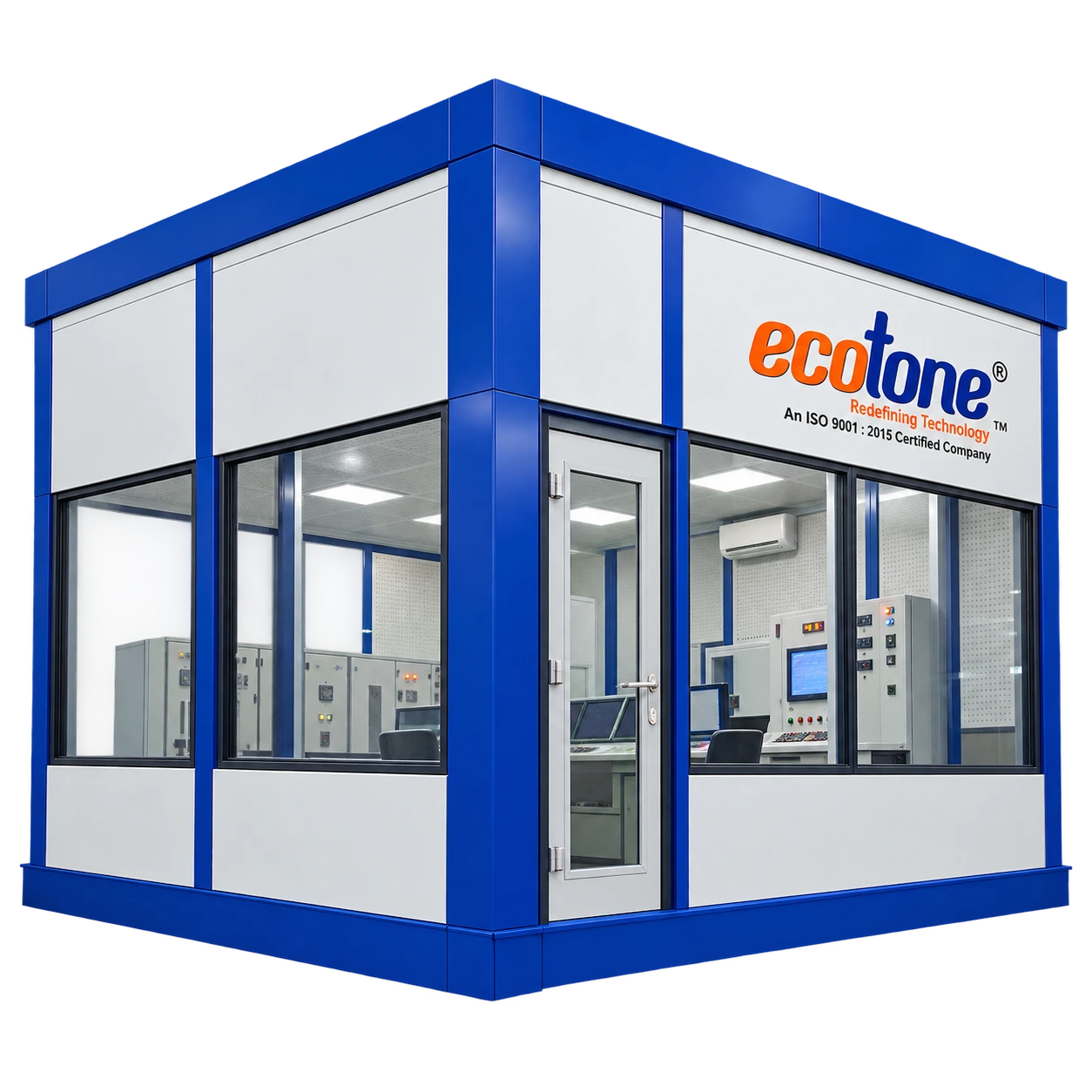
Modular operator and control cabins for heavy industry.

Relocatable soundproof containers for noisy equipment.
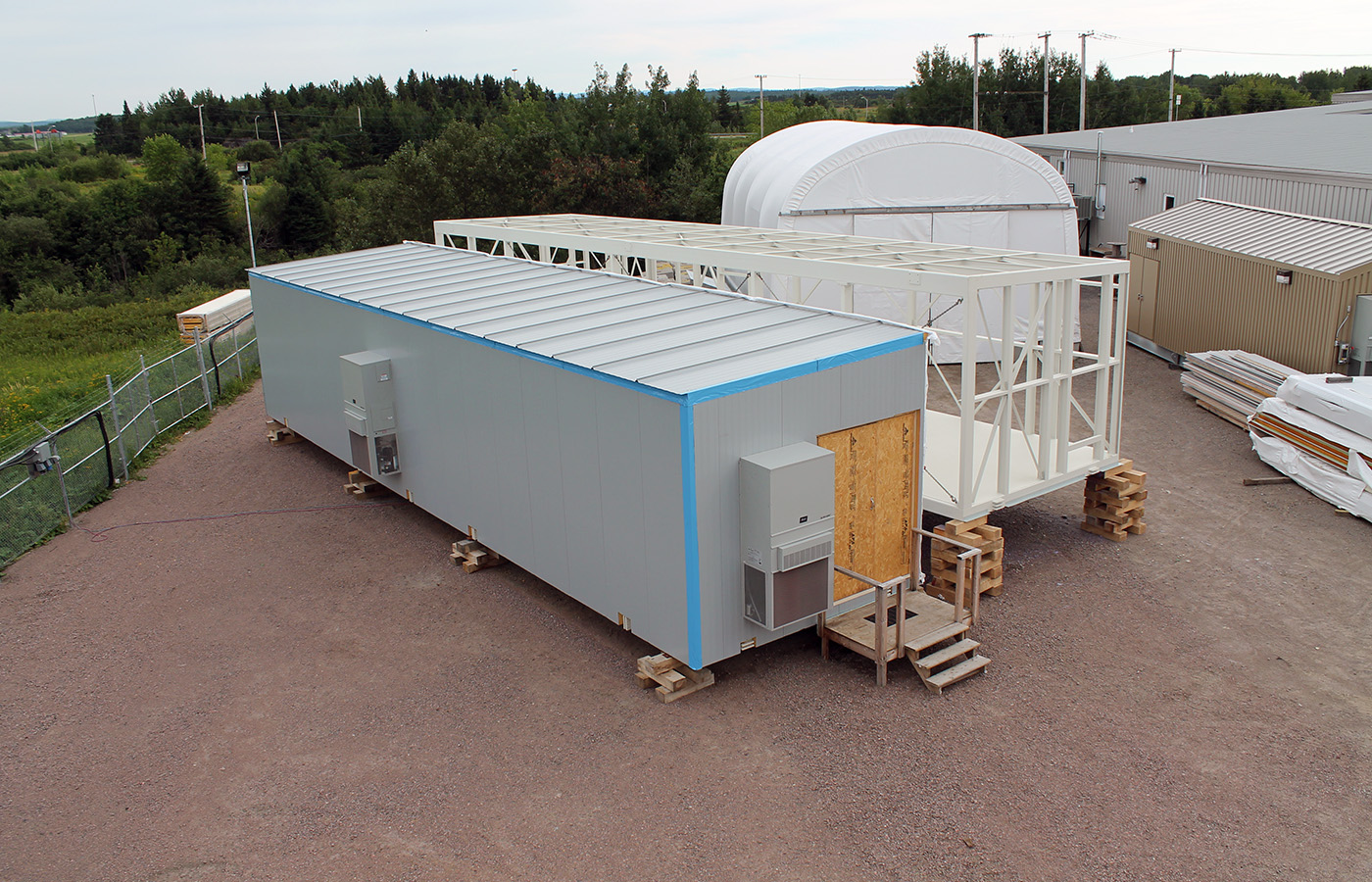
Factory-built e-houses with switchgear, HVAC and fire safety.
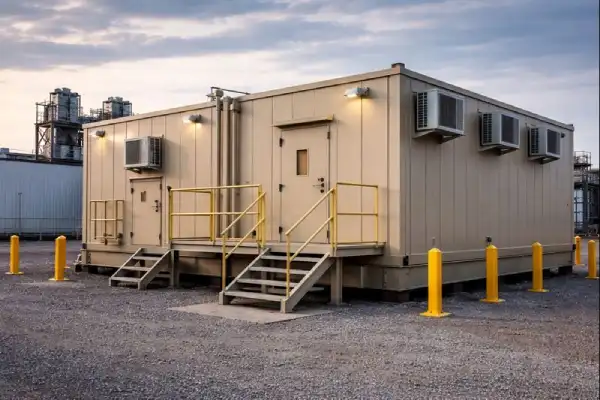
Blast-rated control rooms, MCC rooms and safe havens.
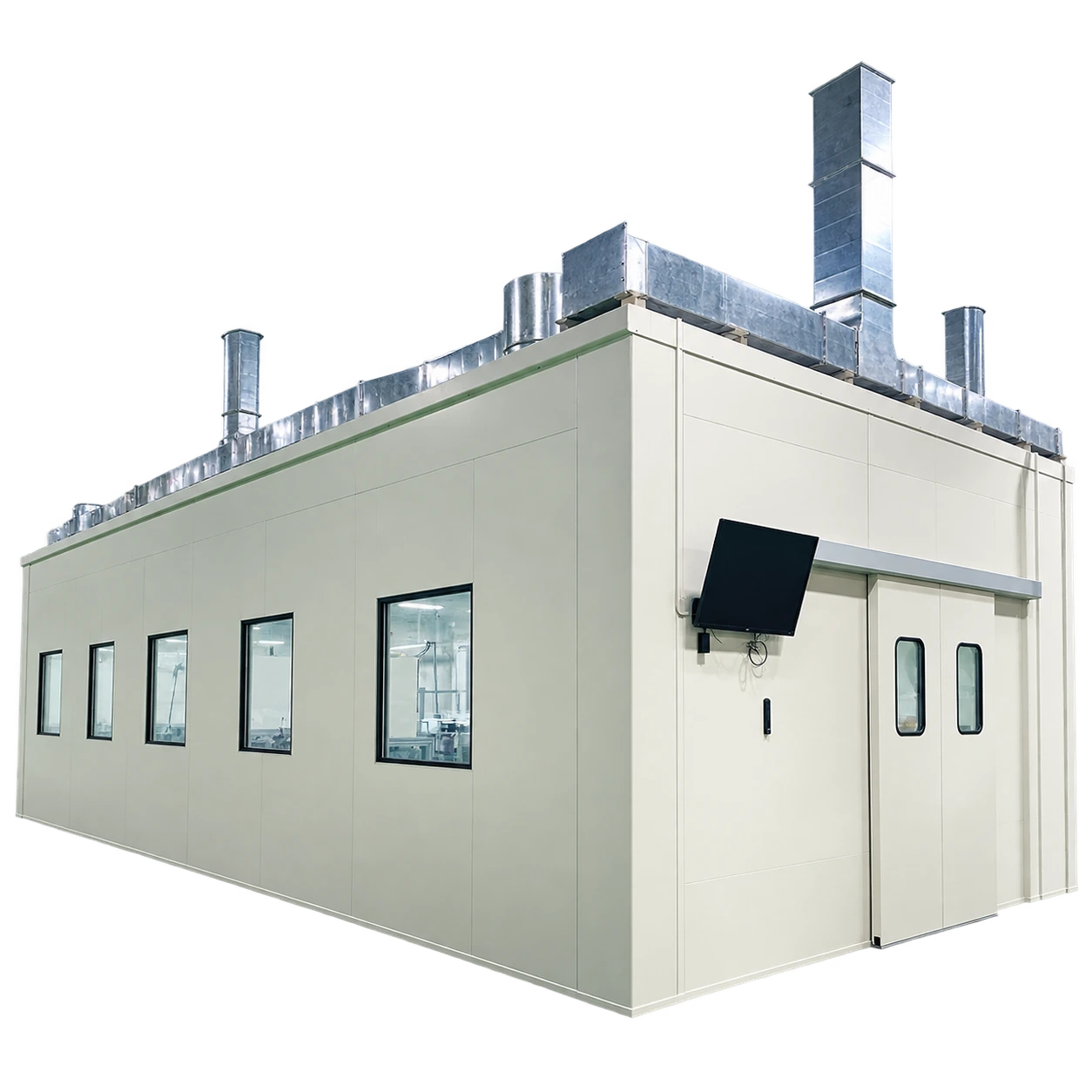
Engineered enclosures that cut machine noise by 25 to 50 dB(A).
Trusted by India's Leading Brands
Hover to pause · Logos scroll continuously