
Acoustic Enclosure Manufacturer in India
Summary: An acoustic enclosure is an engineered box, room, or panel system built around noisy equipment (DG sets, compressors, blowers, turbines, CNC machines) to cut noise by 25 to 50 dB(A) without trapping heat. This page is written for plant heads, EHS managers, procurement teams, and consultants in India who need to shortlist an acoustic enclosure manufacturer, understand real specifications, and avoid the ventilation and warranty mistakes that cause most site failures.
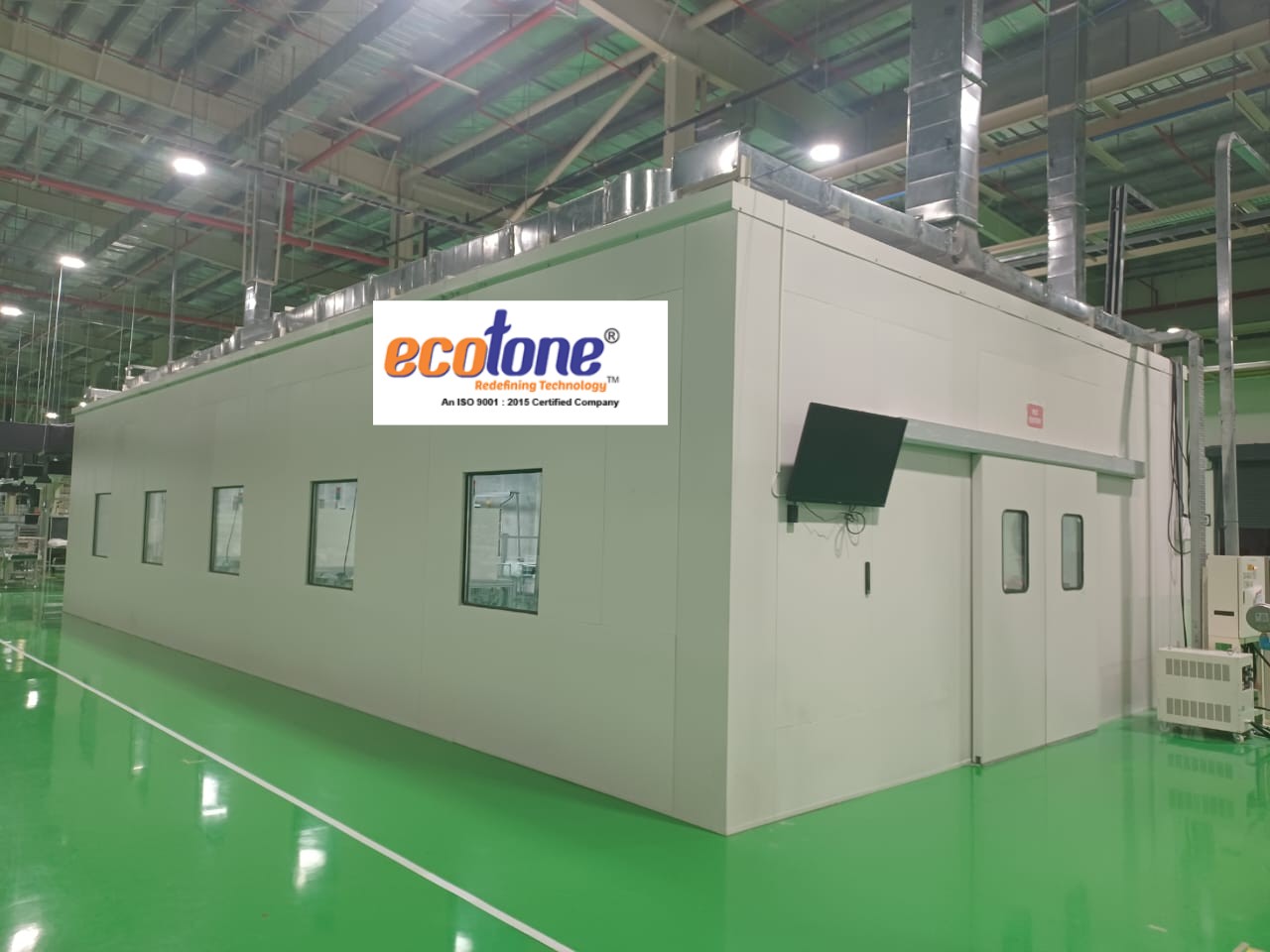

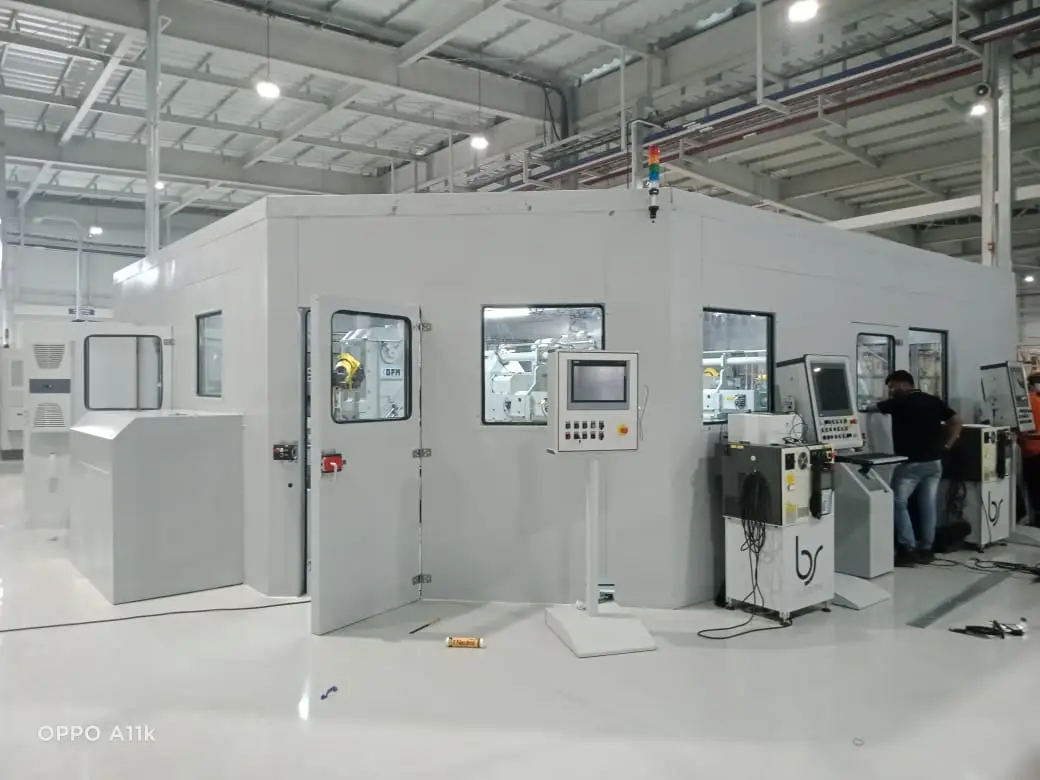
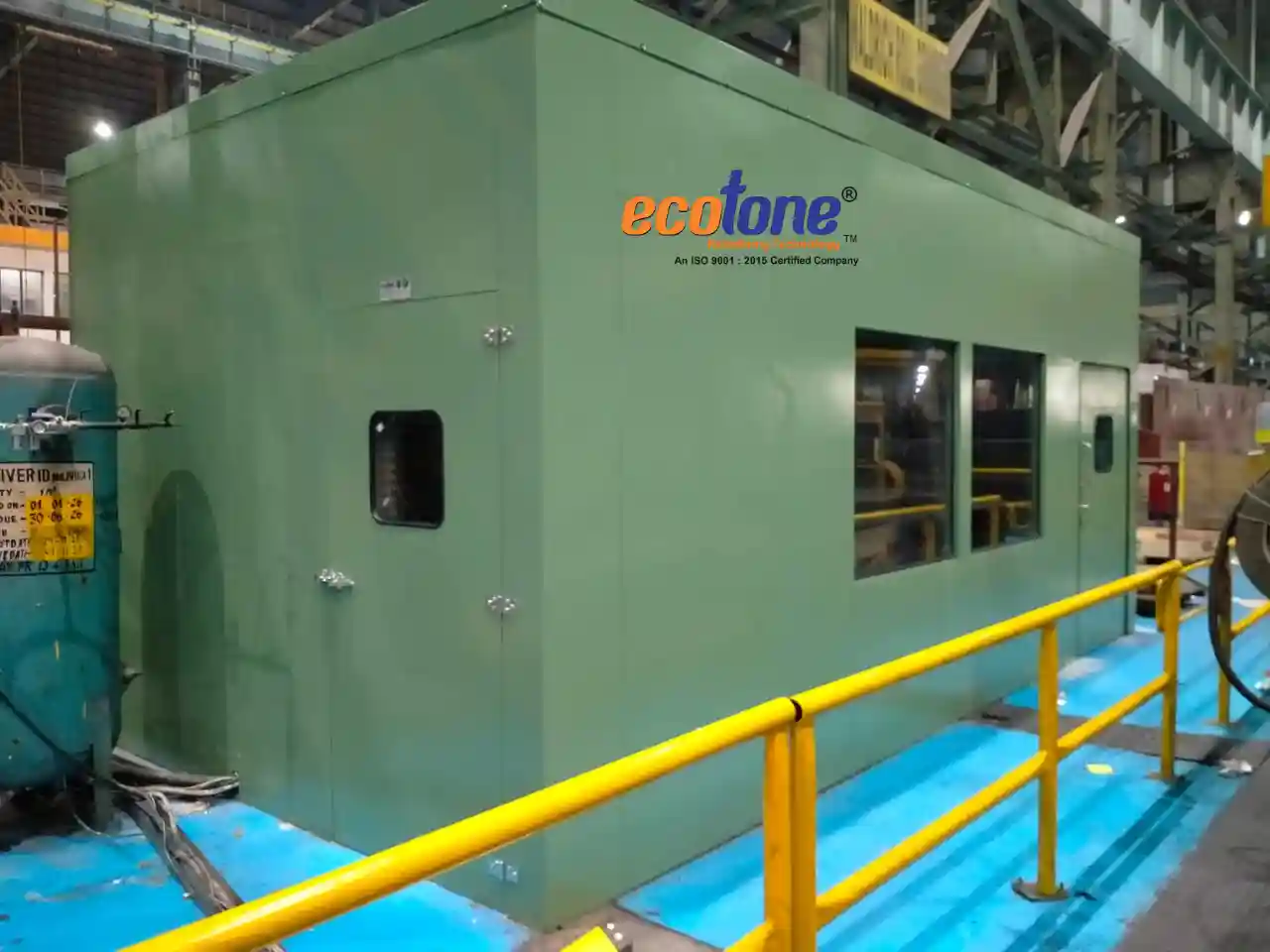
Is This Acoustic Enclosure Guide Right for You?
Who It's For
Manufacturing plants, DG set operators, power houses, pharma and food processing units, testing labs, and commercial buildings dealing with CPCB non-compliance or worker noise complaints.
When to Use This Guide
Before you approach a supplier, when you're comparing quotes, or when an installed enclosure isn't performing as promised.
Proven Track Record
800+ acoustic enclosure projects delivered across power plants, manufacturing units, and processing facilities in India.
What Is an Acoustic Enclosure?
An acoustic enclosure, also called a soundproof enclosure, is a purpose-built structure made of dense, layered panels that surrounds noise-generating equipment to block sound from escaping and, in some designs, to stop external noise from entering. It works through two combined mechanisms: absorption, where foam or mineral wool inside the panel converts sound energy into heat, and blocking, where a heavy composite skin reflects sound waves back rather than letting them pass through. In India, acoustic enclosures are most commonly built for diesel generators, air compressors, blowers, gas turbines, and CNC or punch press machines to meet CPCB noise norms and protect worker hearing. If you searched this term expecting a one-line definition, that’s it. Everything below explains how to specify, evaluate, and install one correctly.
Why Indian Industries Need a Certified Acoustic Enclosure Manufacturer Right Now
India’s noise compliance environment has tightened. The Central Pollution Control Board caps industrial-zone noise at 75 dB(A) in the day and 70 dB(A) at night, and new DG sets up to 1000 kVA must not exceed 75 dB(A) measured at one metre from the enclosure surface. At the same time, OSHA-aligned occupational limits treat sustained exposure above 85 dB(A) as a hearing hazard requiring engineering controls, not just PPE. This is why plants are moving from ad-hoc brick rooms and foam-wrapped sheds to properly tested acoustic enclosure manufacturers who can hand over an STC test certificate, not just a sales brochure. If your current enclosure is undersized, poorly ventilated, or was fabricated by a general steel contractor rather than an acoustics specialist, it will fail an inspection or overheat the machine it protects. This guide is built to help you avoid both outcomes.
Specifications, Benefits, Applications & Installation Process
| Parameter | Standard Specification |
|---|---|
| Panel thickness | 50mm to 100mm composite panel |
| Outer/inner sheet | 16-gauge CRCA or GI perforated sheet |
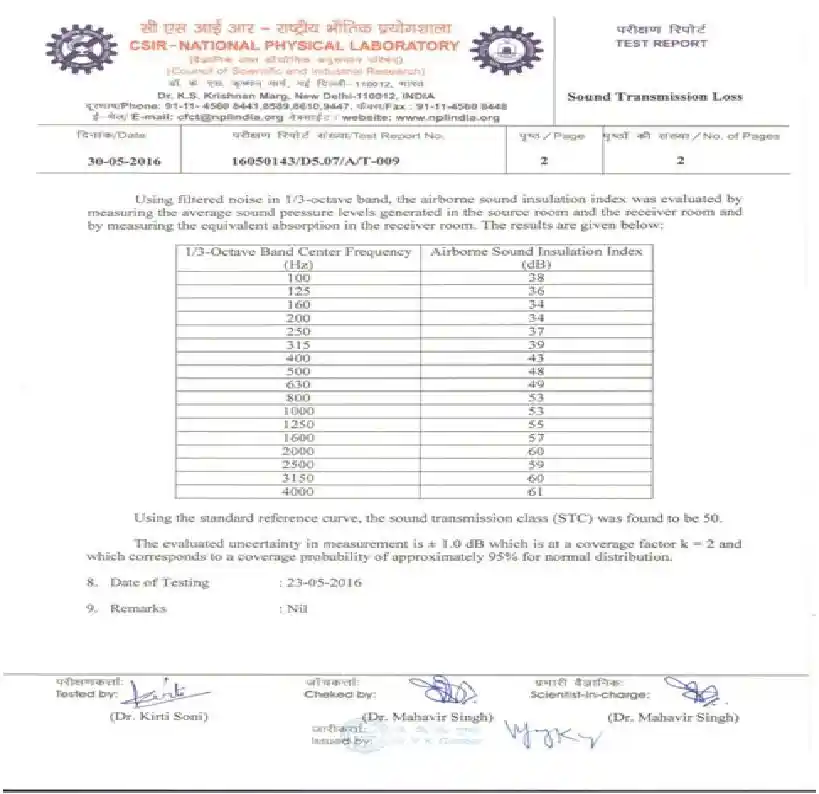
| STC rating | Up to 50 STC per IS-9901 (Part III) |
| Infill material | Mineral wool or acoustic foam, 48 to 96 kg/m3 density |
| Noise reduction | 25 to 50 dB(A) depending on design |
| Coating | 2-layer primer plus automotive-grade paint |
| Illumination | 300 LUX internal lighting |
| Benefit | Impact |
|---|---|
| CPCB and factory-act compliance | Avoids fines and shutdown notices |
| Hearing protection | Cuts worker exposure below 85 dB(A) threshold |
| Equipment protection | Shields machine from dust and weather |
| Higher resale value | Enclosed DG sets retain condition longer |
| Neighbour relations | Prevents community noise complaints |
| Lower insurance risk | Reduces liability from occupational noise claims |
| Site flexibility | Modular units can be relocated or resized |
| Application | Typical Industry |
|---|---|
| DG set and genset rooms | Power backup, real estate, hospitals |
| Air compressor enclosures | Manufacturing, pharma, textiles |
| Gas turbine and blower enclosures | Power plants, refineries |
| CNC and punch press enclosures | Auto components, metal fabrication |
| Glass crusher enclosures | Recycling, glass manufacturing |
| Electrical control room (ECR) enclosures | Substations, process plants |
| Test bench enclosures | R&D labs, hydraulic pump testing |
| Step | Action |
|---|---|
| 1. Site survey | Measure ambient dB, machine dimensions, airflow needs |
| 2. Acoustic design | Select panel STC, ventilation path, door count |
| 3. Fabrication | CRCA/GI sheets pressed, infilled, and coated at factory |
| 4. Foundation prep | Base levelling and cable/duct routing on site |
| 5. Panel erection | Bolted or cam-lock assembly with gasket sealing |
| 6. Ventilation fitting | Acoustic louvers, silencers, exhaust fans installed |
| 7. Testing and handover | On-site dB measurement and STC verification report |
Technical Features of Our Acoustic Enclosures
- Custom-designed solutions: Every enclosure is engineered to ISO 14001 and CPCB noise pollution control norms.
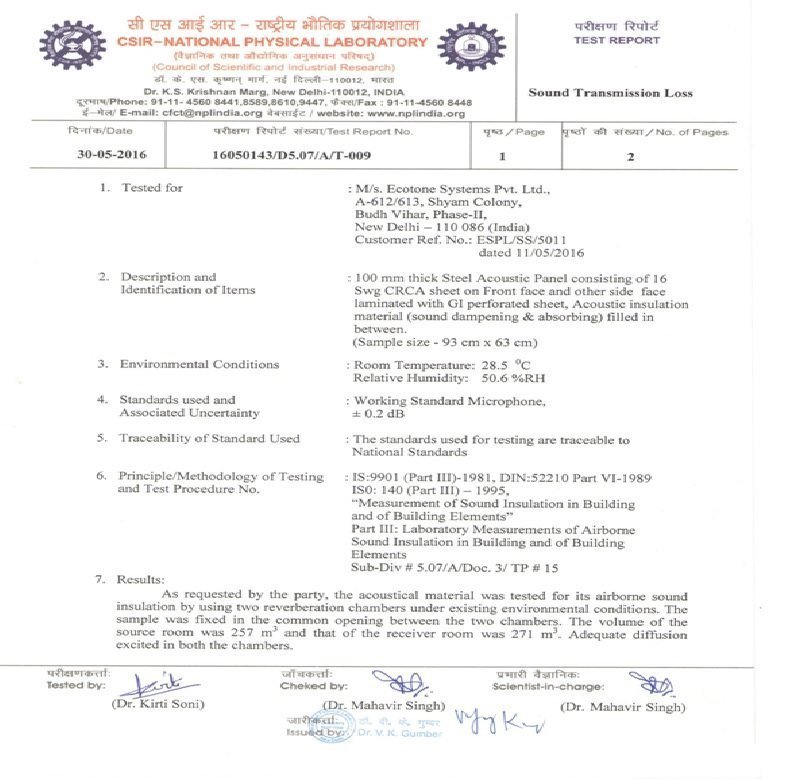
- High STC value panels: Panels achieve up to 50 STC, tested per IS-9901 (Part III) 1981, DIN 52210 Part IV 1984, and ISO 140 (Part III) 1995.
- Durable construction: Built from 16-gauge CRCA or GI perforated sheets for long-term strength.
- AutoCAD-based design facility: Fully detailed, piece-marked assembly drawings for every project, so site erection matches the design without rework.
- Protective coating: Two layers of primer followed by automotive-grade paint for corrosion resistance.
- Optimised illumination: Integrated wiring, switchboards, and lighting maintain 300 LUX inside the enclosure.
- Soundproof glass vision panels: Noise-resistant vision panels for monitoring machinery without opening the enclosure.
STC Test Reports
Every enclosure design is backed by third-party STC (Sound Transmission Class) test reports, not just a catalogue rating. These reports are available on request before you finalise an order, so you can verify the actual lab-tested performance against IS-9901 (Part III), DIN 52210 Part IV, and ISO 140 (Part III) before it becomes a site dispute later.
Recent Project: Acoustic Enclosure for Industrial Equipment
Ecotone Systems recently completed a custom-designed acoustic enclosure to control excessive noise from high-capacity industrial equipment at a manufacturing facility. The brief was to cut noise levels significantly without interrupting machine uptime, while keeping ventilation and maintenance access intact, the same three constraints covered in the field-failure section above. The completed enclosure met the client’s target dB(A) reduction on first test, with no rework needed on ventilation or door sealing.
Additional Specialized Acoustic Solutions by Ecotone Systems
Beyond acoustic enclosures, Ecotone Systems delivers a full range of noise-control solutions for industrial and architectural needs:
- Noise Barriers for outdoor and industrial sound blocking
- Acoustic Doors engineered for high sound isolation
- Soundproof Curtains for flexible, movable noise reduction
- Anechoic Chambers for controlled acoustic testing environments
These solutions are often specified alongside acoustic enclosures on the same site, for example a plant may need an enclosure for its DG set and acoustic louvers for its cooling tower in the same noise-control plan.
Technical Data Sheet
| Property | Value / Standard |
|---|---|
| Product | Acoustic Enclosure / Soundproof Enclosure |
| Wall construction | Double-skin CRCA/GI with mineral wool core |
| Panel thickness range | 50mm, 75mm, 100mm |
| STC rating | 35 to 50 (tested to IS-9901 Part III 1981) |
| Reference standards | IS-9901 (Part III), DIN 52210 Part IV, ISO 140 Part III |
| Fire behaviour | Non-combustible core available on request |
| Ventilation | Acoustic louvers with fresh air inlet and hot air exhaust |
| Access | Hinged/sliding acoustic doors, vision glass panel |
| Coating | Primer + automotive-grade PU paint |
| Compliance | ISO 14001, CPCB noise norms |
| Customisation | Size, colour, door position, cable entry points |
How Does an Acoustic Enclosure Actually Reduce Noise?
Short answer: It combines an absorbing inner layer, a mass-loaded blocking layer, sealed joints, and tuned ventilation so sound energy is trapped, converted to heat, or reflected before it can radiate outward.
- Absorption layer: Mineral wool or acoustic foam inside the panel dissipates sound energy as heat.
- Blocking layer: A dense CRCA or composite skin reflects sound waves rather than transmitting them.
- Sealing: Gaskets and acoustic caulking close every joint, since a 1% unsealed gap can undo a large share of the rated performance.
- Ventilation path: Acoustic louvers and duct silencers let air move without creating a straight-line noise leak.
Where Most Acoustic Enclosure Installations Actually Fail (Field Notes)
Most articles describe enclosures as if performance is guaranteed by the panel spec sheet. In practice, after inspecting dozens of underperforming sites, the failure almost never starts with the panel. It starts with three site conditions that vendors rarely mention upfront.
A 50 STC panel is meaningless if the exhaust duct is a straight, unlined opening. Sound travels through air paths far more easily than through solid panels, so an enclosure with excellent wall panels but a basic louver can still leak 10 to 15 dB(A) through the vent alone. The fix is a lined, baffled silencer path sized for the actual CFM the machine needs, not a generic louver picked off a catalogue.
Panels stop airborne noise. They do very little against structure-borne vibration transmitted through the foundation. DG sets and compressors need anti-vibration mounts or an isolated concrete plinth under the enclosure, otherwise the noise re-enters through the floor and the client blames the enclosure, not the missing isolation pad.
In real operating conditions, the door gasket and cable gland seals are the first components to fail, usually within 12 to 18 months if low-grade EPDM is used instead of a UV-stable, compression-rated gasket. This is the single most common site complaint we field after year one, and it is rarely covered in the original scope.
The STC Rating Trap: Why 50 STC Does Not Mean 50 dB Reduction On Site
STC (Sound Transmission Class) is a lab-tested value measured under controlled conditions with no gaps, no ducts, and no doors. A panel rated at 50 STC in a lab will almost never deliver 50 dB of real-world reduction once it has a ventilation opening, an access door, and cable penetrations. Realistic field performance for a well-built enclosure with proper ventilation is typically 8 to 12 dB lower than the panel’s lab STC rating. Buyers who compare quotes purely on STC number without asking how the vendor’s ventilation and door design compensates for this gap often end up disappointed after commissioning. Ask any acoustic enclosure supplier for their as-built, on-site dB(A) test report, not just the panel’s lab certificate.
Modular Acoustic Enclosure vs Permanent Acoustic Enclosure
A modular acoustic enclosure is built from pre-fabricated, bolt-together or cam-lock panels that can be assembled, disassembled, and relocated without demolition. A permanent enclosure is built in place, typically with masonry or welded steel framing, and cannot be moved once erected.
| Factor | Modular Acoustic Enclosure | Permanent Enclosure |
|---|---|---|
| Installation time | Days | Weeks |
| Relocation | Possible | Not possible |
| Ideal for | Rental DG sets, temporary sites, expansion-prone plants | Fixed power houses, permanent plant rooms |
| Cost over time | Lower long-term, reusable | Higher if site changes later |
Choose modular when the equipment location may change within 3 to 5 years, choose permanent when the installation is tied to fixed civil infrastructure such as a basement plant room.
Acoustic Enclosure vs Soundproof Enclosure: Is There a Difference?
Functionally, no. Soundproof enclosure and acoustic enclosure are used interchangeably in the Indian market and both refer to the same category of engineered noise-control structure. The term “acoustic” is more common in technical specifications and tenders, while “soundproof” is the term most buyers actually search for. A credible acoustic enclosure manufacturer in India will use both terms consistently across their technical documentation so there is no ambiguity during procurement or tendering.
Myth vs Reality
| Myth | Reality |
|---|---|
| Thicker panel always means quieter | Sealing and ventilation matter more than thickness |
| Enclosure blocks 100% of noise | Well-built units cut 25 to 50 dB(A), not silence |
| Enclosures always overheat equipment | Correct louver sizing prevents heat buildup |
| One design fits all machines | Design changes by machine, load, and frequency |
| Cheaper foam works the same | Density and fire rating affect real performance |
How to Choose an Acoustic Enclosure Manufacturer in India
Ask for an on-site dB(A) test report, not just a lab STC certificate.
Confirm the ventilation design is calculated for your machine’s actual heat load, not a standard template.
Check whether panels are CRCA or GI, and at what gauge.
Verify compliance references: ISO 14001, CPCB norms, IS-9901 (Part III).
Ask how many similar installations they have delivered in your industry.
Request photos or a site visit to an existing installation before ordering.
Frequently Asked Questions
Does an acoustic enclosure make a generator overheat?
Only if ventilation is undersized. Correct louver and exhaust sizing prevents heat buildup entirely.
Can I build a soundproof enclosure myself?
DIY works for minor noise. Industrial DG sets need engineered, tested acoustic enclosures.
How much noise reduction does an acoustic enclosure give?
Typically 25 to 50 dB(A), depending on panel thickness, sealing, and ventilation design.
Where should noise be measured, at the enclosure or property line?
Both. CPCB checks property-line dB, while acoustic tests measure at one metre.
What is the difference between acoustic and soundproof enclosure?
None functionally. Both terms describe the same engineered noise-control structure.
Will an enclosure void my generator warranty?
Only if installed without OEM approval. Certified manufacturers coordinate with OEM specs.
How long does acoustic enclosure installation take?
Modular units install in days. Permanent civil-based enclosures take a few weeks.
What material gives the best soundproofing?
Mineral wool with CRCA or GI composite skin performs best for industrial noise.
Can one enclosure design fit any machine size?
No. Design changes with machine dimensions, frequency, and required ventilation.
Is a modular acoustic enclosure reusable at another site?
Yes. Bolt-together modular panels can be dismantled and reinstalled elsewhere.
Get a Site-Specific Acoustic Enclosure Quote
If your current enclosure is failing an inspection, overheating equipment, or you're specifying one for a new installation, Ecotone Systems designs, tests, and installs CPCB and ISO 14001-compliant acoustic enclosures across India, backed by on-site STC verification, not just a catalogue spec sheet.
Trusted by India's Leading Brands
Hover to pause · Logos scroll continuously


