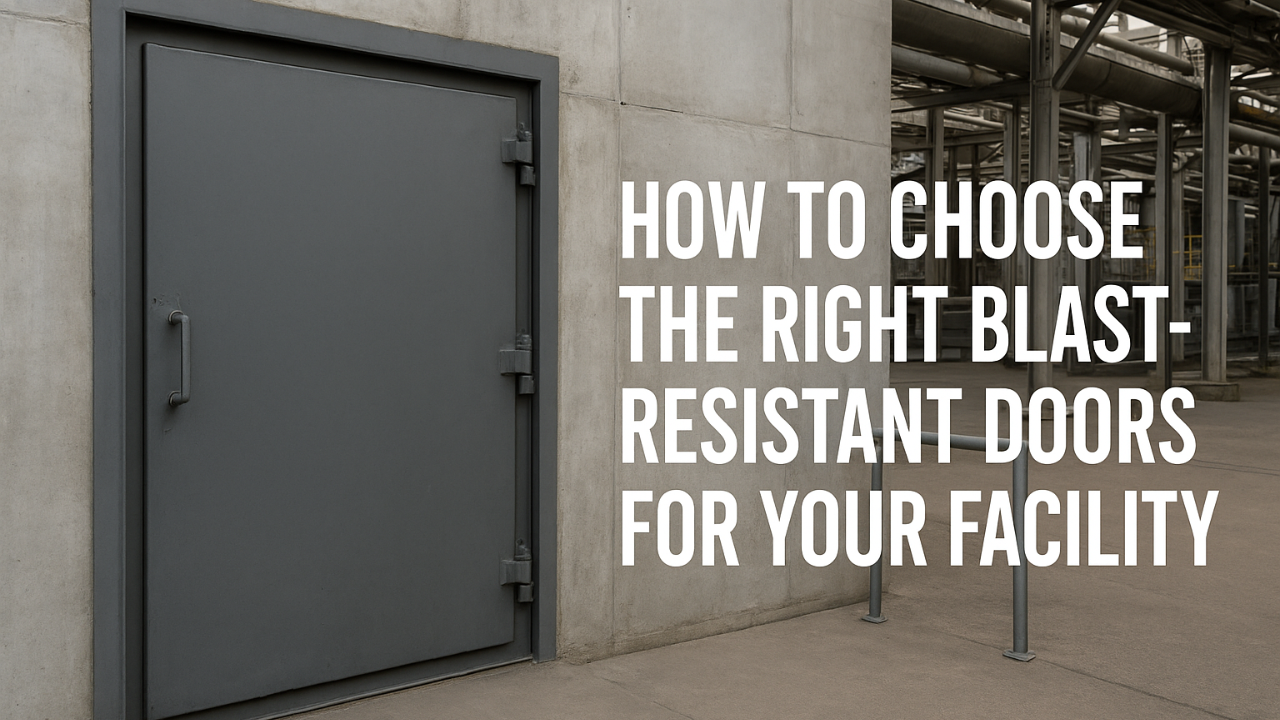
In industrial environments where the risk of explosion or blast impact is high, safety becomes a non-negotiable priority. One of the most crucial components of such safety systems is the Blast Resistant Doors. These doors are designed to protect personnel, property, and critical infrastructure from the devastating effects of explosions, overpressure, and impact forces.
Whether your facility operates in oil and gas, petrochemical, defense, or power generation sectors, choosing the right blast resistant door can significantly improve overall safety and compliance. In many high-security environments, blast resistant doors are often used alongside Bullet Resistant Doors to provide comprehensive protection against multiple threats. In this comprehensive guide, we will explain what blast-resistant doors are, why they matter, and how to choose the right one for your facility.
Understanding Blast Resistant Doors
A blast resistant door is an engineered structure designed to withstand high-pressure shockwaves produced by explosions. Unlike conventional doors, which are built primarily for access and security, blast resistant doors are constructed to absorb, contain, and redirect the energy from explosive forces.
These doors protect human life, minimize property damage, and maintain the structural integrity of buildings during and after a blast event. They are typically used in high-risk environments such as oil refineries, ammunition depots, defense installations, chemical plants, and power stations.
Modern blast resistant doors are the result of detailed engineering, involving rigorous testing, simulation, and quality control to ensure reliability under extreme conditions. Leading Blast Proof Door Manufacturer like Ecotone Systems combines advanced materials, precision fabrication, and international standards compliance to deliver doors that meet both functional and safety requirements.
Why Blast Resistant Doors Are Essential
Explosions can occur unexpectedly due to chemical reactions, gas leaks, industrial accidents, or even deliberate acts of sabotage. The shockwave generated by such events can travel at high speeds, creating an intense pressure differential that damages structures and endangers lives.
Installing blast resistant doors in vulnerable areas helps to:
- Protect Lives: The primary purpose of a blast resistant door is to shield people from flying debris and overpressure injuries.
- Preserve Structural Integrity: These doors prevent secondary collapses by containing blast effects within confined areas.
- Minimize Downtime: A properly designed door ensures that operations can resume quickly after an incident.
- Ensure Regulatory Compliance: Many industries are mandated by local and international safety codes to install blast-rated systems.
- Protect Equipment and Data: Critical control rooms, laboratories, and data centers benefit from additional protection against shock and heat.
In high-risk industries, safety measures such as blast doors are not optional—they are an essential investment in resilience and reliability.
For Any Inquiries Please Email
Our team typically responds within 24 hours on business days.
Contact UsKey Factors to Consider When Choosing Blast Resistant Doors
Selecting the right blast resistant door for your facility requires more than just comparing specifications. You need to evaluate the type of threat, pressure levels, materials, standards, and integration with existing safety systems. Below are the most important factors to guide your decision.
1. Determine the Required Blast Pressure Rating
Every blast resistant door is rated to withstand a specific level of pressure, usually measured in pounds per square inch (psi). The correct pressure rating depends on the potential magnitude of an explosion and the proximity of the door to the source.
- Low-Level Protection (1–5 psi): Suitable for light industrial or commercial buildings where the blast threat is minimal.
- Medium-Level Protection (5–15 psi): Ideal for chemical and fuel storage facilities, testing areas, and power plants.
- High-Level Protection (15–30+ psi): Designed for military installations, ammunition storage, and high-risk industrial environments.
A detailed risk assessment or blast analysis should be conducted by experts to determine the correct specification. Ecotone Systems provides professional consultation and site assessment to ensure that your doors are engineered for the right blast resistance.
2. Material and Construction Quality
The performance of a blast resistant door is largely determined by the materials used and the quality of fabrication. Common materials include:
- Steel: Offers exceptional strength and resistance to deformation.
- Stainless Steel: Combines durability with corrosion resistance, ideal for coastal or chemical environments.
- Reinforced Aluminum: Lightweight and corrosion-resistant, suitable for facilities requiring easier door operation.
- Composite Materials: Provide excellent energy absorption, sound insulation, and fire resistance.
A high-quality door will include reinforced frames, heavy-duty hinges, and specialized locking mechanisms that maintain integrity even during extreme pressure events. Ecotone Systems uses precision fabrication techniques and certified materials to ensure long-lasting protection and performance.
3. Door Configuration and Design Options
Each facility has unique architectural and operational needs. The right design should balance safety, functionality, and accessibility. Common configurations include:
- Single-Leaf or Double-Leaf Doors: Depending on the opening size and frequency of use.
- Manual or Automatic Operation: Automated systems improve ease of use in large or frequently accessed areas.
- Inward or Outward Opening: Determined by the direction of potential blast pressure and evacuation requirements.
- Fire and Acoustic Integration: Some doors combine blast, fire, and sound insulation for comprehensive safety.
Ecotone Systems specializes in custom-engineered blast resistant doors that match your building layout, safety requirements, and operational needs. Each design is tested and validated for both performance and reliability.
4. Compliance with International Safety Standards
Compliance ensures that your doors meet or exceed safety expectations. Reputable manufacturers test their products according to globally recognized standards such as:
- ASTM F2927 / F2247 (USA): Performance standards for blast resistant doors and assemblies.
- EN 13123 / EN 13124 (Europe): Testing standards for explosion-resistant doors and windows.
- UFC 4-010-01 (USA): Department of Defense Anti-Terrorism Building Standards.
- ISO 16934: Testing methods for explosion-resistant structures.
Ecotone Systems manufactures and tests all blast resistant doors according to relevant international standards, providing clients with detailed compliance documentation and third-party certification when required.
5. Ease of Operation and Maintenance
A door that is difficult to operate or maintain defeats its purpose in emergencies. The best blast resistant doors combine safety with functionality.
Features to look for include:
- Smooth, reliable operation even after long periods of inactivity.
- Fail-safe locking and emergency release mechanisms.
- Corrosion-resistant components to reduce maintenance costs.
- Replaceable hardware for easy servicing.
Ecotone Systems designs doors that are user-friendly, low-maintenance, and built to perform under pressure, ensuring quick access during emergencies without compromising safety.
6. Integration with Other Safety Systems
For maximum protection, blast resistant doors should be integrated into a comprehensive facility safety plan. This may include:
- Blast Walls and Pressure Relief Panels to redirect explosion forces.
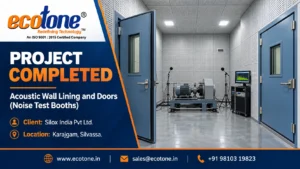
- Acoustic Enclosures for sound isolation in test facilities.
- Fire-Rated Assemblies for enhanced safety against secondary hazards.
- Access Control Systems to maintain operational security.
Ecotone Systems provides turnkey safety solutions that integrate multiple protection layers, ensuring a unified and efficient safety infrastructure.
7. Aesthetic and Architectural Considerations
While safety is the priority, modern facilities also focus on aesthetics. A well-designed blast resistant door should not compromise the visual appeal of a building.
Ecotone Systems offers a range of custom finishes, colors, and panel styles to match architectural themes. Whether you prefer a sleek industrial look or a discreet finish that blends with the structure, customization ensures functionality meets design.
Applications of Blast Resistant Doors
Blast-resistant doors are used across various sectors where explosion risks are high. Common applications include:
- Oil and Gas Refineries: Protects control rooms, substations, and processing areas from accidental gas or vapor explosions.
- Chemical and Petrochemical Plants: Shield workers and equipment from chemical reactions or storage tank ruptures.
- Defense and Military Facilities: Ensures the safety of personnel and sensitive materials during training or combat operations.
- Power Generation Plants: Protects turbines, switch rooms, and control centers from potential blasts.
- Research Laboratories: Secures laboratories handling volatile substances or high-pressure experiments.
- Hazardous Material Storage: Prevents blast propagation from storage areas containing flammable or reactive substances.
Each environment demands a unique level of protection, which Ecotone Systems can tailor to match the specific operational risk and compliance requirements.
Testing and Certification of Blast Resistant Doors
A credible manufacturer will always test and certify their products before installation. Testing typically includes:
- Static and Dynamic Pressure Testing: Simulates the force of real-life explosions.
- Finite Element Analysis (FEA): Virtual modeling to predict how the door reacts under stress.
- Full-Scale Blast Testing: Performed at certified test sites to ensure performance meets design specifications.
- Leak and Fire Resistance Tests: Evaluate sealing performance against gas leaks and heat exposure.
All Ecotone Systems blast resistant doors undergo rigorous testing and are certified for reliability and durability, ensuring compliance with international and client-specific standards.
Why Choose Ecotone Systems for Blast Resistant Doors
Ecotone Systems is a trusted manufacturer and turnkey solution provider for blast resistant and acoustic control systems in India. With decades of expertise in safety engineering, Ecotone delivers doors that combine strength, precision, and innovation.
Key Advantages of Choosing Ecotone Systems:
- Tailored Engineering: Every door is designed according to the facility’s unique blast rating and spatial requirements.
- Advanced Manufacturing: State-of-the-art fabrication ensures precision and consistency.
- Certified Safety: All products meet global standards such as ASTM, EN, and ISO.
- Comprehensive Support: From design consultation to installation and after-sales maintenance.
- Multi-Functional Protection: Integration of blast, fire, and acoustic properties for complete safety coverage.
Ecotone Systems is known for delivering custom-engineered safety solutions that combine performance, reliability, and design flexibility. Each project is handled with meticulous attention to detail, ensuring long-term protection and compliance.
Additional Services by Ecotone Systems
Beyond manufacturing advanced blast resistant doors, Ecotone Systems is a trusted leader in delivering comprehensive acoustic and noise control solutions for industrial, commercial, and research environments. The company’s multidisciplinary expertise ensures safety, efficiency, and superior sound management across various applications.
Trusted by India's Leading Brands
Hover to pause · Logos scroll continuously













1. Anechoic Chambers
Ecotone Systems designs and installs Anechoic Chambers and Semi-Anechoic Chambers for precision sound and vibration testing. These chambers provide controlled acoustic environments with minimal reflection, ideal for product testing, NVH (Noise, Vibration, and Harshness) analysis, and research applications. Each chamber is custom-engineered with advanced sound-absorbing materials and modular designs to meet international standards such as ISO and ASTM.
Applications include:
- Automotive NVH testing
- Loudspeaker and microphone evaluation
- Industrial equipment testing
- Research and development laboratories
2. Acoustic Enclosures
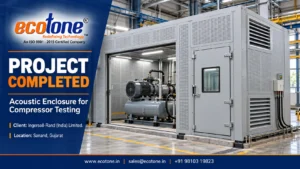
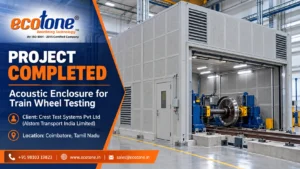
Ecotone Systems is a leading Acoustic Enclosure Manufacturer, offering high-performance noise control enclosures for generators, compressors, turbines, and other industrial machinery. These enclosures are designed to significantly reduce noise emissions while ensuring ventilation, accessibility, and optimal equipment performance.
Each enclosure is engineered with sound-absorbing panels, vibration isolation, and fire-safe materials, providing a durable and efficient solution for industrial soundproofing.
Key benefits:
- Reduces noise levels for worker safety and comfort
- Improves compliance with environmental noise regulations
- Enhances equipment lifespan through controlled acoustic conditions
3. Noise Barriers
Ecotone Systems also specializes in designing and installing Noise Barriers for highways, railways, industrial plants, and urban infrastructure. These barriers effectively block and absorb sound waves, reducing environmental noise pollution and improving community living conditions.
Made from weather-resistant materials such as galvanized steel, aluminum, or composite panels, Ecotone’s noise barriers are built for long-term durability and high acoustic performance.
Types of Noise Barriers:
- Highway and roadside barriers
- Industrial and factory noise walls
- Acoustic barriers for commercial sites
- Transparent acrylic or polycarbonate sound walls
Maintenance and Lifecycle Considerations
Even the strongest door requires regular maintenance to perform optimally. Establishing a maintenance schedule helps in early detection of issues such as corrosion, hinge misalignment, or seal wear.
Best practices include:
- Regular inspection of hinges, frames, and locks.
- Cleaning and lubrication of moving parts.
- Periodic operational testing under controlled conditions.
- Replacement of worn seals and damaged components.
Ecotone Systems offers maintenance and inspection services to ensure that your blast-resistant doors continue to perform effectively throughout their lifecycle.
Conclusion
Selecting the right blast-resistant door is a critical decision that directly impacts your facility’s safety, compliance, and operational continuity. Factors such as blast pressure rating, material quality, compliance standards, and customization must be carefully evaluated before installation.
A well-chosen and properly installed blast-resistant door not only saves lives but also protects infrastructure, equipment, and investments from catastrophic damage. Partnering with a reliable manufacturer like Ecotone Systems ensures that your facility benefits from superior engineering, certified safety standards, and long-term performance.
If you are planning to install or upgrade blast-resistant doors in your facility, contact Ecotone Systems today. Our team of experts will assess your requirements and design a solution that meets both your safety goals and operational needs.
Frequently Asked Questions
A blast-resistant door is a specially designed entryway that protects against explosions or intense shockwaves. These doors are built with materials and construction methods that can absorb and dissipate the force of a blast, minimizing damage and protecting people and structures inside.
The most blast-resistant materials often include steel, reinforced concrete, and composite materials like aramid fibers (Kevlar) or carbon fiber. Steel is particularly common due to its strength, durability, and ability to absorb and disperse blast energy. For extreme cases, a combination of materials may be used to maximize resistance.
Blast doors are so named because they are specifically designed to resist the effects of explosive blasts. These doors are built to withstand high pressure from explosions, preventing debris and shockwaves from entering or damaging the enclosed area. The term “blast door” highlights their primary function: protecting against blasts or explosions.
Blast doors work by absorbing and dissipating the energy from an explosion. They are made from tough, impact-resistant materials that can withstand the intense pressure waves generated by blasts. Many blast doors also feature reinforced frames, shock-absorbing hinges, and seals that help to prevent air and debris from passing through. The design ensures that any force from an explosion is spread evenly, reducing localized damage.
The term blast proof suggests complete protection from any blast, implying that the door will never fail under any explosive force. However, no material or design is truly “blast proof” in all situations. On the other hand, blast-resistant means that the door can withstand certain levels of explosive force, but it may still suffer damage under extreme conditions. In practice, blast-resistant is the more accurate term, as it accounts for varying blast intensities and the fact that resistance can degrade with higher magnitudes of blasts.