Modern infrastructure demands more than just functionality. It must deliver safety, resilience, and long-term protection. Among the most crucial innovations in this direction is the Blast Resistant Building, a specialized structural system designed to withstand high-pressure shockwaves, explosions, and impact-driven events. As industries expand, safety standards become more stringent, and environmental challenges continue to evolve, the need for reliable blast-resistant solutions has grown significantly.
This detailed guide provides an in-depth understanding of Blast Resistant Buildings, their engineering principles, materials, acoustic needs, and the growing relevance of Blast Proof Modular Buildings. It also highlights how technologies such as Acoustic Control in Buildings, Acoustic Building Materials, and advanced Building Acoustics integrate to create safer, more efficient environments. With safety-focused innovations from companies like Ecotone Systems, modern structures are stronger, quieter, and more reliable than ever.
Introduction to Blast Resistant Buildings
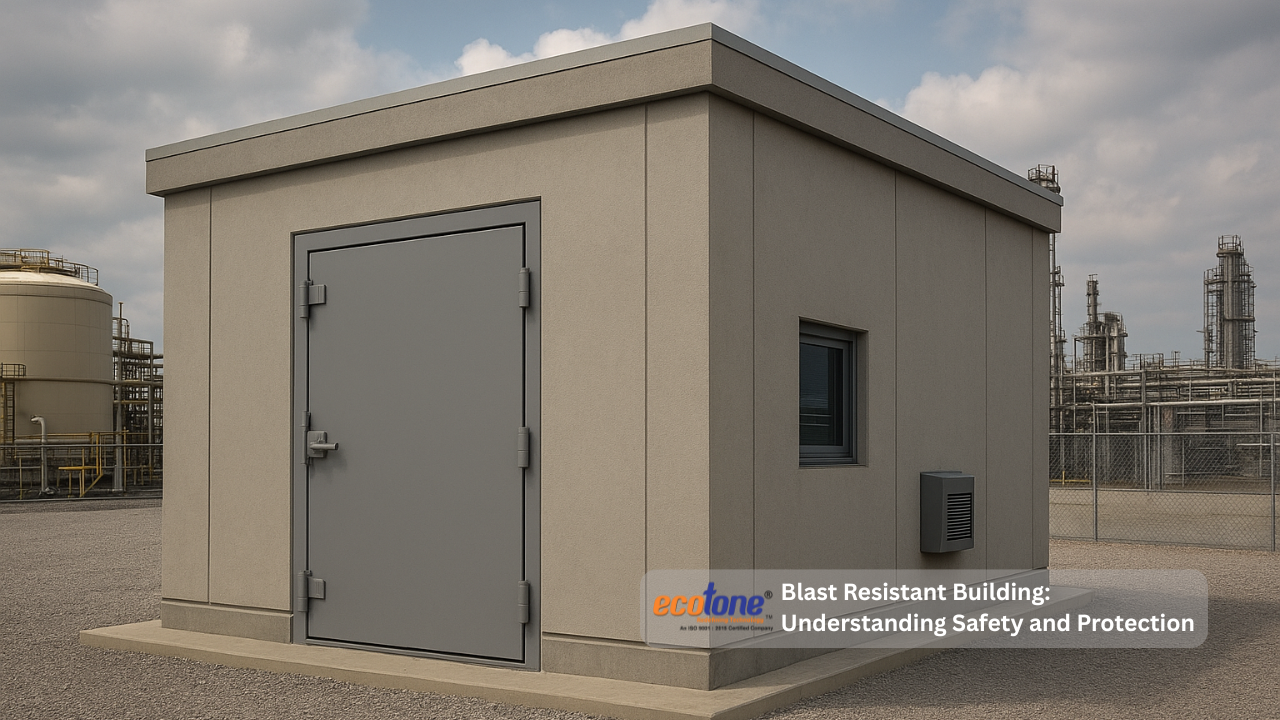
A Blast Resistant Building (BRB) is a specially engineered structure designed to endure explosive pressures and protect occupants from harm. These buildings are commonly used in:
- Petrochemical plants
- Defense zones
- Industrial manufacturing units
- Research laboratories
- Oil and gas plants
- Hazardous material storage areas
Unlike conventional structures, a Blast Resistant Building uses reinforced materials, energy-absorbing designs, and structural isolation techniques to reduce the effects of explosions. In industries where risks exist due to chemicals, machinery, or environmental exposure, BRBs have become essential components of workplace safety standards.
These buildings do more than offer survivability. They provide a controlled, functional space where employees can manage industrial processes safely. As safety standards rise globally, BRBs are now integrated with systems for ventilation, acoustics, climate control, and ergonomic interiors to maintain a comfortable working environment.
For Any Inquiries Please Email
Our team typically responds within 24 hours on business days.
Contact UsWhy Blast Resistant Buildings Are Necessary
A blast explosion generates rapid pressure waves that can shatter glass, collapse walls, deform metal surfaces, or cause catastrophic structural failures. Even small-scale explosions can cause life-threatening injuries if buildings are not adequately protected.
Key reasons why Blast Resistant Buildings are essential include:
Protection of Life and Assets
The primary function is to safeguard workers and expensive industrial equipment from explosive hazards.
Compliance With International Safety Standards
Industries handling chemicals, fuel, or explosive materials are legally required to ensure secure work environments.
Operational Continuity
An explosion can halt production for weeks or months. Blast Resistant Buildings reduce downtime by minimizing structural damage.
Fire and Heat Protection
Many BRBs are built with fire-resistant and heat-absorbing materials that protect occupants during post-explosion fire outbreaks.
Noise and Vibration Reduction
Modern designs integrate Acoustic Control in Buildings to reduce noise from machinery, generators, and industrial processes.
With rising industrial safety awareness, Blast Resistant Buildings have become indispensable across sectors.
How Blast Resistant Buildings Work
The strength of a Blast Resistant Building lies in its engineering design. These structures are developed to absorb blast pressure, disperse energy, maintain structural integrity, prevent internal collapse, and protect mechanical and electrical systems.
To achieve this, engineers use computational blast modeling, load distribution calculations, and advanced material selection. The result is a robust enclosure capable of withstanding extreme pressure spikes.
Engineering Principles Behind Blast Resistant Buildings
1. Strengthened Structural Framework
Materials such as reinforced steel, fiber-reinforced concrete, and heavy-gauge modular steel panels provide rigidity.
2. Pressure-Absorbing Walls
Special wall systems help minimize shockwave impact and deformation.
3. Energy-Deflecting Design
Architectural geometry helps redirect energy away from critical zones.
4. Anchored Foundation
BRBs are anchored deep into the ground to prevent shifting or uplift during explosions.
5. Controlled Internal Layout
Interior design ensures minimal debris risk and protects occupants from falling objects.
These engineering techniques make blast-resistant structures stable even in extreme operational environments.
Comparison of Key Components in a Blast Resistant Building
| Component | Purpose | Material Type | Role in Blast Resistance |
|---|---|---|---|
| Structural Walls | Protect against direct blast impact | Reinforced steel, fiber concrete | Absorb and distribute shockwave pressure |
| Roof System | Prevent collapse and debris fall | Steel plates, composite roofing | Reduces upward blast forces |
| Doors and Windows | Safe entry and visibility | Blast-proof steel frames and laminated glass | Withstand pressure without shattering |
| Ventilation System | Maintain airflow | Heavy-duty dampers and blast-rated ducts | Prevent pressure accumulation and fire spread |
| Acoustic Panels | Reduce internal noise | Acoustic Building Materials | Enhance comfort and minimize vibration |
Materials Used in Blast Resistant Buildings
Choosing the right materials is essential to achieving durability and performance. The most commonly used materials include:
Reinforced Concrete
Offers high compressive strength and excellent blast absorption capability.
High-Strength Structural Steel
Used for frameworks that require flexibility and load distribution.
Composite Panels
Create lightweight yet sturdy panels for modular units.
Blast-Rated Doors and Windows
Provide secure entry and protection against high-impact forces.
Acoustic Building Materials
Used to control internal sound levels and reduce noise pollution.
The integration of acoustics into BRB design improves productivity, communication, and work comfort.
Blast Proof Modular Buildings: A Modern Alternative
Modern industries are increasingly adopting Blast Proof Modular Buildings due to their quick installation, low maintenance, portability, and cost-effectiveness. Modular structures use pre-engineered panels and can be relocated or expanded easily, making them ideal for remote sites or temporary high-risk zones.
Benefits of Blast Proof Modular Buildings include:
- Built off-site, reducing construction time
- Less disruption to existing operations
- High scalability for future upgrades
- Easy integration of acoustic treatment systems
- Efficient HVAC, electrical, and fire control systems
- Suitable for control rooms, laboratories, and storage
Modular BRBs provide flexibility along with high safety performance.
Acoustic Control in Blast Resistant Buildings
Noise control plays an essential role in industrial safety and worker comfort. Even inside a strong Blast Resistant Building, machinery noise and operational vibrations can be disruptive.
Acoustic Control in Buildings ensures that internal environments are comfortable, safe, compliant with regulations, and suitable for long working hours.
Acoustics in BRBs help with:
- Reducing machine noise
- Preventing echo and reverberation
- Improving communication clarity
- Minimizing fatigue and stress
- Supporting concentration in control rooms
Effective acoustic treatment uses panels, insulation, and vibration-absorbing materials designed specifically for industrial environments.
Role of Acoustic Building Materials in Safety
Acoustic materials help balance safety with comfort inside BRBs. They absorb sound waves and prevent excessive echo while ensuring no compromise to the building’s protective performance.
Common acoustic materials include:
- Mineral wool panels
- Fabric-wrapped acoustic boards
- Acoustic ceilings
- Vibration-absorbing flooring
- Perforated wooden panels
These materials are widely used in workstation cabins, observation rooms, laboratory environments, and industrial control centers.
Building Acoustics for Industrial Workspaces
Building Acoustics refers to the optimization of how sound behaves within a built environment. In the case of Blast Resistant Buildings, acoustics ensure a productive and comfortable indoor setting.
Important aspects include:
Sound Insulation
Prevents external industrial noise from entering the interior.
Sound Absorption
Reduces echo and refines sound quality inside the building.
Vibration Isolation
Prevents structural vibrations from affecting sensitive instruments.
External Noise Reduction
Improves communication and privacy. Integrating acoustics ensures that BRBs become efficient work environments rather than just protective enclosures.
Applications of Blast Resistant Buildings
Blast Resistant Buildings are used across many industrial and commercial applications. Common uses include:
- Control rooms
- Material testing labs
- Chemical laboratories
- Personnel shelters
- Process monitoring stations
- Storage units for hazardous materials
- Data centers in high-risk zones
- Oil and gas workstations
Industries choose BRBs to ensure work continues smoothly in hazardous or unpredictable environments.
How Ecotone Systems Supports Blast Resistant Infrastructure
Ecotone Systems specializes in advanced architectural and industrial acoustic solutions. In modern Blast Resistant Buildings, acoustic integration is as important as structural safety. Ecotone Systems supports industries by offering high-performance acoustic panels, noise-control systems, soundproofing materials, and vibration-control solutions.
These features improve comfort, communication, and productivity inside BRBs.
Maintenance and Inspection for Blast Resistant Buildings
Regular maintenance ensures long-term performance and occupant safety.
Structural Inspections
Check for cracks, corrosion or deformation.
Door and Window Sealing
Ensure blast-rated frames remain secure and airtight.
HVAC and Ventilation Testing
Confirm that ducts and dampers are operating correctly.
Acoustic Panel Condition
Replace damaged or moisture-affected materials.
Foundation Stability
Monitor settlement or ground movement. Routine inspection ensures the building performs reliably over its entire life cycle.
Future Trends in Blast Resistant Building Technology
Technological advancements continue to improve the efficiency and performance of Blast Resistant Buildings.
Smart Monitoring Systems
Sensors track structural movement, pressure changes, and temperature fluctuations.
Advanced Composite Materials
New materials offer lightweight yet stronger performance.
Integrated Acoustic Systems
Acoustics built directly into wall panels provide dual protection.
Modular Expansion Techniques
Allow easy scalability and future upgrades. The future of BRBs combines safety, efficiency, intelligent design, and sustainability.
Conclusion
A Blast Resistant Building is more than a protective structure. It is an essential environment that ensures operational continuity, worker safety, and long-term efficiency. By combining strong materials, engineering innovation, acoustic optimization, and modular construction methods, industries can build secure and functional workspaces in high-risk areas.
The integration of Acoustic Control in Buildings, Acoustic Building Materials, Building Acoustics, and advanced modular systems is shaping the next generation of industrial safety. With reliable solutions from Ecotone Systems, industries today can create built environments that are strong, quiet, and prepared for future challenges.
Trusted by India's Leading Brands
Hover to pause · Logos scroll continuously