
Sound Barrier vs Acoustic Enclosure: Key Differences Explained
Noise pollution has become a critical challenge in today’s rapidly developing infrastructure and industrial environments. With expanding highways, increasing vehicle density, and large-scale industrial operations, controlling noise is no longer optional but a regulatory and social responsibility. Among the most effective noise control solutions, Sound Barrier systems and Acoustic Enclosure structures are often compared. While both are designed to reduce noise, they serve different purposes and operate in different ways.
Understanding the difference between Sound Barrier vs Acoustic Enclosure is essential to selecting the right solution for your project. Choosing the wrong approach can lead to inadequate noise reduction, compliance issues, and unnecessary costs. This blog explains how each system works, where it is best applied, and how to determine which option suits your noise control requirements.
Understanding Noise Control in Modern Infrastructure
Noise is not merely an environmental inconvenience; it directly impacts human health, productivity, and quality of life. Prolonged exposure to high noise levels can cause stress, sleep disturbances, and long-term hearing problems. Because of this, authorities have introduced strict noise regulations for highways, industrial zones, and urban developments.
To meet these regulations, developers and industries rely on engineered noise control systems. Two of the most widely implemented solutions are sound barriers and acoustic enclosures. Although both reduce noise, they differ significantly in design, performance, and application.
What Is a Sound Barrier?
A Sound Barrier is a structure designed to block or reduce the transmission of sound from a noise source to a receiver by interrupting the sound path. Unlike enclosed systems, a sound barrier does not surround the noise source. Instead, it acts as a shield that reflects and absorbs sound waves, reducing the amount of noise that reaches nearby areas.
Sound barriers are predominantly used in outdoor environments and are most commonly associated with traffic noise control. A properly designed sound barrier creates an acoustic shadow zone behind the structure, resulting in noticeably lower noise levels for residential and commercial areas.
How a Sound Barrier Works
Sound travels in waves, and when these waves encounter a solid obstacle such as a sound barrier, part of the sound is reflected back toward the source, part is absorbed by the barrier material, and the remaining sound diffracts over the top edge. The effectiveness of a Sound Barrier depends on its height, length, surface treatment, and material density.
Modern sound barriers often incorporate sound-absorbing panels on the noise-facing side to prevent reflected noise from contributing to overall sound levels. Structural strength and weather resistance are also critical, as sound barriers are exposed to wind loads, rain, temperature variations, and long-term outdoor conditions.
Applications of Sound Barrier Systems
Sound barriers are widely used where noise sources are spread over large areas and cannot be enclosed. The most common application is the Highway Noise Barrier, which is installed along expressways, flyovers, and major roads to reduce traffic noise affecting nearby communities. A Noise Barrier on Highway plays a vital role in protecting residential areas, hospitals, schools, and commercial developments.
In addition to highways, sound barriers are used along railway tracks, metro corridors, industrial boundaries, power plants, and large construction sites. In each case, the sound barrier provides an effective solution for community noise control without disrupting operations.
Highway Noise Barrier and Urban Noise Control
As cities expand, highways increasingly pass through densely populated areas. This has made Highway Noise Reduction Barrier systems a necessity rather than a choice. Traffic noise generated by engines, horns, and tire-road interaction can significantly affect living conditions if left uncontrolled.
A well-designed highway noise barrier can reduce noise levels by several decibels, leading to a clear improvement in environmental comfort. Today’s highway noise barriers are engineered not only for acoustic performance but also for visual appeal, durability, and safety, ensuring they blend seamlessly into urban landscapes.
What Is an Acoustic Enclosure?
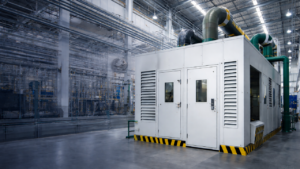
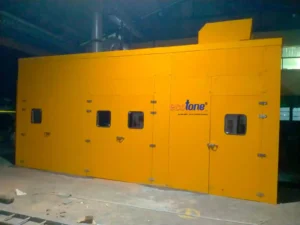
An Acoustic Enclosure is a fully enclosed structure built around a specific noise-generating source. Unlike a sound barrier, an acoustic enclosure surrounds the equipment on all sides, including the roof, to contain noise at its origin.
Acoustic enclosures are primarily used in industrial environments where machinery produces high noise levels that must be controlled to protect workers and meet statutory limits. By enclosing the source, acoustic enclosures provide higher noise reduction compared to open noise control systems.
How an Acoustic Enclosure Controls Noise
An acoustic enclosure reduces noise through a combination of sound blocking, absorption, and isolation. The enclosure panels are constructed using high-density materials that prevent sound transmission, while internal linings absorb reflected noise within the enclosure.
Special attention is given to doors, ventilation openings, and service penetrations to ensure minimal sound leakage. Ventilation systems are integrated with acoustic silencers to maintain airflow without compromising noise reduction performance.
Industrial Applications of Acoustic Enclosures
Acoustic enclosures are ideal for localized and fixed noise sources. They are widely used for diesel generator sets, compressors, blowers, turbines, pumps, and heavy industrial machinery. In manufacturing plants, acoustic enclosures play a critical role in protecting workers from prolonged noise exposure and improving overall working conditions.
In many cases, acoustic enclosures are essential for meeting occupational noise standards and environmental compliance requirements.
Sound Barrier vs Acoustic Enclosure: A Practical Comparison
Understanding the practical difference between Sound Barrier vs Acoustic Enclosure helps in selecting the right noise control solution for a project. The table below highlights the key distinctions between the two systems.
Comparison Between Sound Barrier and Acoustic Enclosure
Aspect | Sound Barrier | Acoustic Enclosure |
Primary Purpose | A Sound Barrier reduces noise transmission by blocking the sound path without enclosing the source. | An Acoustic Enclosure contains noise by fully enclosing the sound-generating equipment. |
Noise Control Method | Controls noise along the transmission path through reflection and absorption. | Controls noise directly at the source through complete containment. |
Typical Installation | Outdoor installations along highways, railways, and industrial boundaries. | Installed around specific machines in industrial or utility environments. |
Common Applications | Highway Noise Barrier, Noise Barrier on Highway, metro corridors, and perimeter noise control. | Generator sets, compressors, turbines, and industrial machinery. |
Coverage Area | Suitable for large, linear noise sources. | Suitable for localized, fixed noise sources. |
Noise Reduction Level | Moderate to high, depending on design and dimensions. | High noise reduction due to full enclosure. |
Space Requirement | Requires space along the noise path but no enclosure volume. | Requires sufficient space to fully surround the equipment. |
Maintenance | Low maintenance with periodic structural checks. | Moderate maintenance due to doors, ventilation, and access systems. |
When to Choose a Sound Barrier
A sound barrier is the right solution when noise originates from a large or distributed source that cannot be enclosed. This is particularly true for highway traffic, rail movement, and large outdoor industrial areas. In such cases, installing a Sound Barrier or Highway Noise Barrier provides effective noise reduction while allowing uninterrupted operations.
Sound barriers are especially suitable for community noise control, where the goal is to protect nearby residential and public spaces from excessive noise.
When an Acoustic Enclosure Is the Better Choice
An acoustic enclosure is the preferred solution when noise originates from a specific piece of equipment and high noise reduction is required at the source. Acoustic enclosures are ideal for industrial settings where worker safety, compliance, and operational efficiency are priorities.
When space permits and access requirements can be managed, acoustic enclosures deliver predictable and high-performance noise control.
The Growing Importance of Highway Noise Reduction Barriers
With rising vehicle numbers and increased traffic speeds, highway noise levels continue to escalate. This has made Highway Noise Reduction Barrier systems an essential component of sustainable infrastructure development. Installing a noise barrier on highway projects not only improves environmental quality but also enhances public acceptance and long-term project viability.
Modern sound barriers combine acoustic efficiency with structural durability and aesthetic design, ensuring long-lasting performance in demanding outdoor conditions.
Ecotone Systems: A Leading Manufacturer of Sound Barrier Solutions
Ecotone Systems is a top manufacturer of Sound Barrier solutions, offering high-performance noise control systems for infrastructure and industrial projects. With strong engineering capabilities and a deep understanding of acoustic science, Ecotone Systems delivers sound barriers that meet stringent regulatory and environmental requirements.
Their expertise in designing highway noise barrier systems ensures reliable performance, durability, and effective noise reduction across diverse applications.
Comprehensive Acoustic Solutions by Ecotone Systems
In addition to sound barriers, Ecotone Systems provides a wide range of advanced noise control solutions. These include Blast Resistant Doors for critical industrial environments, precision-engineered Anechoic Chamber installations for acoustic testing, high-performance Acoustic Enclosure systems for machinery noise control, and Reverberation Chamber solutions for sound measurement and research applications.
This comprehensive portfolio allows clients to address multiple acoustic challenges through a single, trusted partner.
Conclusion
Choosing between a Sound Barrier vs Acoustic Enclosure depends on the nature of the noise source, environmental conditions, and performance requirements. Sound barriers are ideal for highways and large outdoor noise sources, while acoustic enclosures are best suited for controlling noise from individual machines and equipment.
By understanding these differences and working with an experienced manufacturer like Ecotone Systems, you can implement a noise control solution that delivers effective, compliant, and long-term results while enhancing environmental quality and project value.