
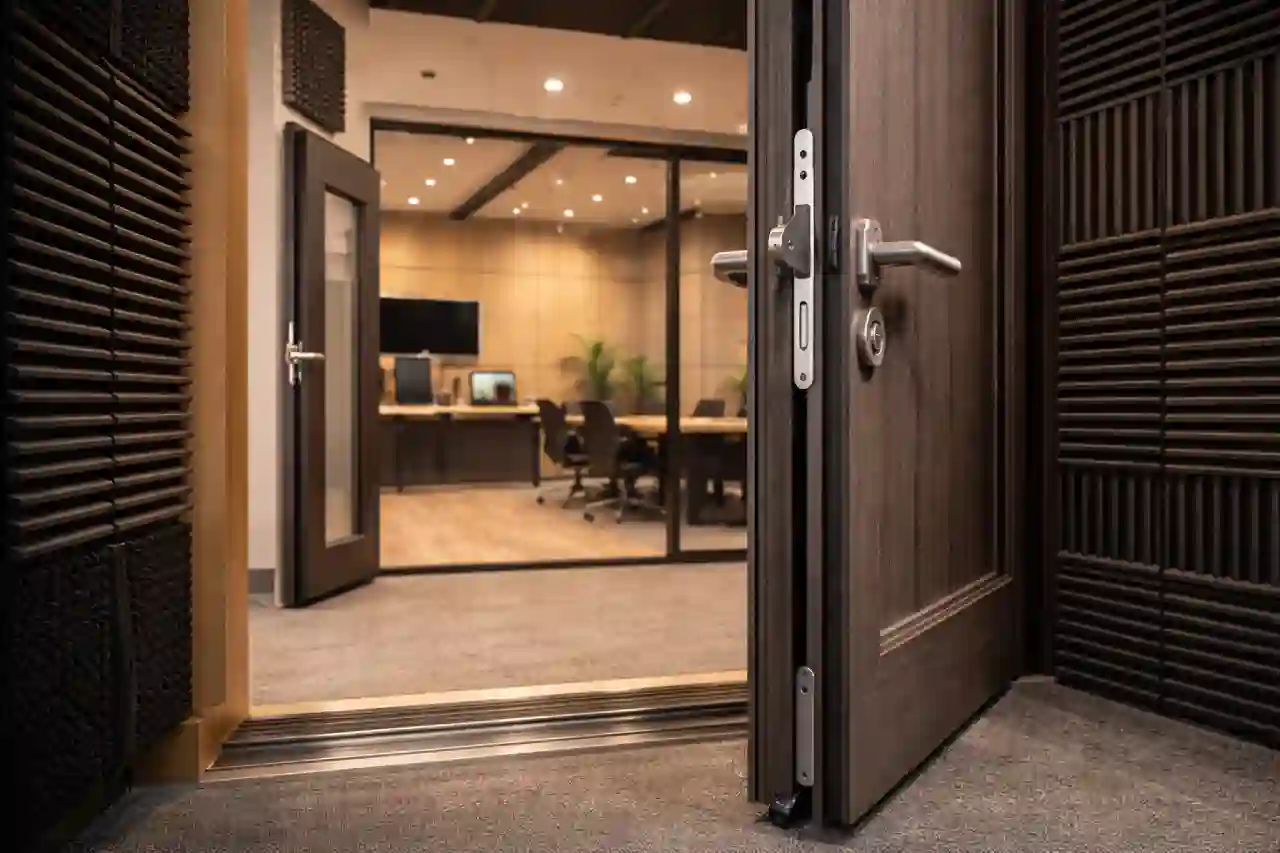
Separating Myths from Facts in Modern Soundproof Door Technology
Noise has become one of the most underestimated challenges in modern buildings. From busy offices and commercial spaces to industrial facilities and residential projects, unwanted sound affects productivity, comfort, privacy, and even health. As a result, Soundproof Door is increasingly being adopted as a reliable solution for controlling noise transmission.
Despite their growing popularity, there are still many myths surrounding Soundproof Doors that often mislead buyers. These misconceptions create unrealistic expectations and sometimes result in poor investment decisions. Understanding what is true and what is not is essential before selecting an Acoustic Door or Acoustical Door for any application.
This blog addresses the most common myths about Soundproof Doors and explains how they actually work, helping you make informed and confident decisions.
Understanding Soundproof Doors
Soundproof Doors are specially engineered doors designed to reduce the transfer of airborne sound between two spaces. Unlike standard doors that focus mainly on appearance and access, soundproof doors are built using dense materials, advanced internal cores, precision sealing systems, and specialized construction techniques. Their primary purpose is to control noise leakage and improve acoustic isolation.
An Acoustic Door is commonly used to limit sound transmission in offices, conference rooms, studios, and commercial environments. An Acoustical Door, while similar, often addresses both sound isolation and internal acoustic behavior, making it suitable for technically sensitive spaces.
Why Myths About Soundproof Doors Are So Common
Most myths surrounding Soundproof Doors arise from a lack of understanding about how sound behaves. Soundproofing is a technical field involving physics, material science, and engineering. Marketing oversimplification also plays a role, where claims promise total silence or instant results without explaining real-world limitations. When expectations are not aligned with reality, disappointment follows.
Myth One: Soundproof Doors Completely Eliminate Noise
One of the most common misconceptions is that Soundproof Doors can block 100 percent of sound. This belief often leads to unrealistic expectations, especially in high-noise environments.
In reality, no Soundproof Door can eliminate sound entirely. Soundproofing works by reducing sound energy, not removing it completely. High-quality Soundproof Doors are designed to significantly lower noise levels, making sound less noticeable and more manageable. Performance is measured using sound transmission ratings, which indicate how much sound is reduced.
Myth Two: Thicker Doors Always Perform Better
Many people believe that increasing door thickness automatically results in better soundproofing. While mass plays an important role in sound isolation, thickness alone does not determine performance.
A well-engineered Soundproof Door relies on a balance of density, internal damping, layered construction, and airtight sealing. Without proper seals and internal design, even a thick door may allow sound leakage. A professionally designed Acoustic Door always performs better than a poorly designed heavy door.
Myth Three: Soundproof Doors Are Only for Studios
Soundproof Doors are often associated with recording studios, leading to the belief that they are unnecessary elsewhere.
In modern architecture, noise control is essential across many sectors. Offices require speech privacy, hospitals need quiet environments, hotels must reduce corridor noise, and industrial facilities must protect workers from excessive sound. Soundproof Doors are now widely used across commercial, institutional, and residential projects.
Myth Four: Acoustic Doors Are the Same as Regular Doors
A regular door and an Acoustic Door may look similar, but their performance is very different. Standard doors are not designed for noise reduction and usually contain lightweight or hollow cores.
An Acoustic Door or Acoustical Door uses specialized materials, internal insulation, and engineered seals to minimize sound transmission. These doors are tested for acoustic performance, ensuring predictable and reliable results.
Myth Five: One Soundproof Door Fits All Applications
Another common misconception is that one type of Soundproof Door can work in every situation. In reality, noise conditions vary significantly.
Factors such as sound intensity, frequency range, usage pattern, and regulatory requirements influence door selection. An Acoustic Door used in an office environment is different from an Acoustical Door designed for industrial or testing facilities.
Myth Six: Installation Quality Does Not Matter
Even the best Soundproof Doors can fail if installed incorrectly. Poor alignment, gaps around frames, or weak seals can allow sound to pass through easily.
Professional installation ensures airtight performance, correct alignment, and maximum noise reduction efficiency.
Myth Seven: Soundproofing and Acoustics Mean the Same Thing
Although closely related, soundproofing and acoustics are not the same. Soundproofing focuses on preventing sound from entering or leaving a space, while acoustics deals with how sound behaves within a room.
An Acoustical Door often works alongside other acoustic treatments to achieve balanced sound performance.
How Soundproof Doors Actually Function
Soundproof Doors function through a combination of mass, damping, and sealing. Heavy materials block sound waves, internal layers absorb vibration, and precision seals eliminate air gaps that allow sound leakage. Together, these elements deliver effective sound isolation.
Comparison Between Regular Doors and Soundproof Doors
Feature | Regular Door | Soundproof Door |
Core Material | Hollow or lightweight | Dense, multi-layered core |
Sound Reduction | Minimal | High noise isolation |
Sealing System | Basic or none | Advanced acoustic seals |
Testing & Ratings | Not tested | Acoustically tested |
Applications | General access | Noise-sensitive spaces |
Choosing Between an Acoustic Door and an Acoustical Door
Selecting between an Acoustic Door and an Acoustical Door depends on project goals. An Acoustic Door is typically used for sound isolation, while an Acoustical Door supports both isolation and internal acoustic control. Expert guidance ensures optimal performance.
Supporting Noise Control Solutions for Better Performance
Soundproof Doors perform best when supported by complementary systems such as reverberation chambers for testing, sound barriers for industrial noise control, sound attenuators for HVAC systems, and flexible soundproof curtains for adaptable noise management.
Why Ecotone Systems Is a Leading Manufacturer
Ecotone Systems is widely recognized as one of the best manufacturers of Soundproof Doors, offering engineered solutions for demanding applications. The company specializes in Acoustic Door and Acoustical Door systems designed to meet international standards.
In addition to Soundproof Doors, Ecotone Systems provides reverberation chambers, sound barriers, sound attenuators, and high-performance soundproof curtains, making them a complete noise control solutions provider.
Final Thoughts
Understanding the truth behind common myths helps unlock the real value of Soundproof Doors. When designed, installed, and supported correctly, they deliver reliable noise reduction, improved comfort, and enhanced productivity.
Choosing the right Acoustic Door or Acoustical Door from an experienced manufacturer like Ecotone Systems ensures long-term performance and effective sound control.