Modern industrial and commercial buildings require efficient airflow management while also maintaining a comfortable and quiet environment. Ventilation systems play a critical role in ensuring proper air circulation, but they can sometimes allow noise to travel easily through openings in walls or equipment rooms.
This is where louvers come into play. Louvers are commonly used in HVAC systems, generator rooms, data centers, and mechanical facilities to allow airflow while protecting interiors from weather elements such as rain and dust. However, not all louvers are designed for the same purpose.
While standard louvers focus mainly on airflow and protection, specialized systems like Acoustic Louvers are engineered to reduce noise while maintaining ventilation performance. Understanding the differences between these two types of louvers is essential for engineers, architects, and facility managers when designing efficient and compliant infrastructure.
In this guide, we will explore how both types work, their structural differences, typical applications, and when each solution should be used.
Introduction to Louvers in Building Design
Louvers are architectural components that consist of angled slats designed to allow air to pass through while blocking water, debris, and direct sunlight. They are widely used in industrial buildings, commercial structures, power plants, and infrastructure projects.
In most facilities, louvers are installed in external walls or ventilation shafts to maintain airflow for HVAC equipment, generators, compressors, or mechanical systems. Without proper ventilation, equipment can overheat and indoor air quality can deteriorate.
However, ventilation openings can also become pathways for sound to escape or enter a building. Machinery noise, generator sounds, and HVAC operations can travel through these openings and create environmental noise pollution.
To solve this problem, specialized ventilation solutions such as Acoustic Louvers are used to combine airflow management with sound attenuation.
What Are Standard Louvers?
Standard louvers are the most common type of ventilation louver used in building construction. Their primary purpose is to facilitate airflow while providing protection against rain and environmental elements.
These louvers typically consist of angled blades mounted within a frame. The blade design allows air to pass through while deflecting rainwater and preventing debris from entering the building. Standard louvers are often manufactured using materials such as aluminum, galvanized steel, or stainless steel depending on the project requirements.
They are widely used in commercial buildings, parking structures, HVAC ventilation systems, and industrial facilities where airflow is the primary concern. In many cases, they are also installed to conceal mechanical equipment while maintaining ventilation.
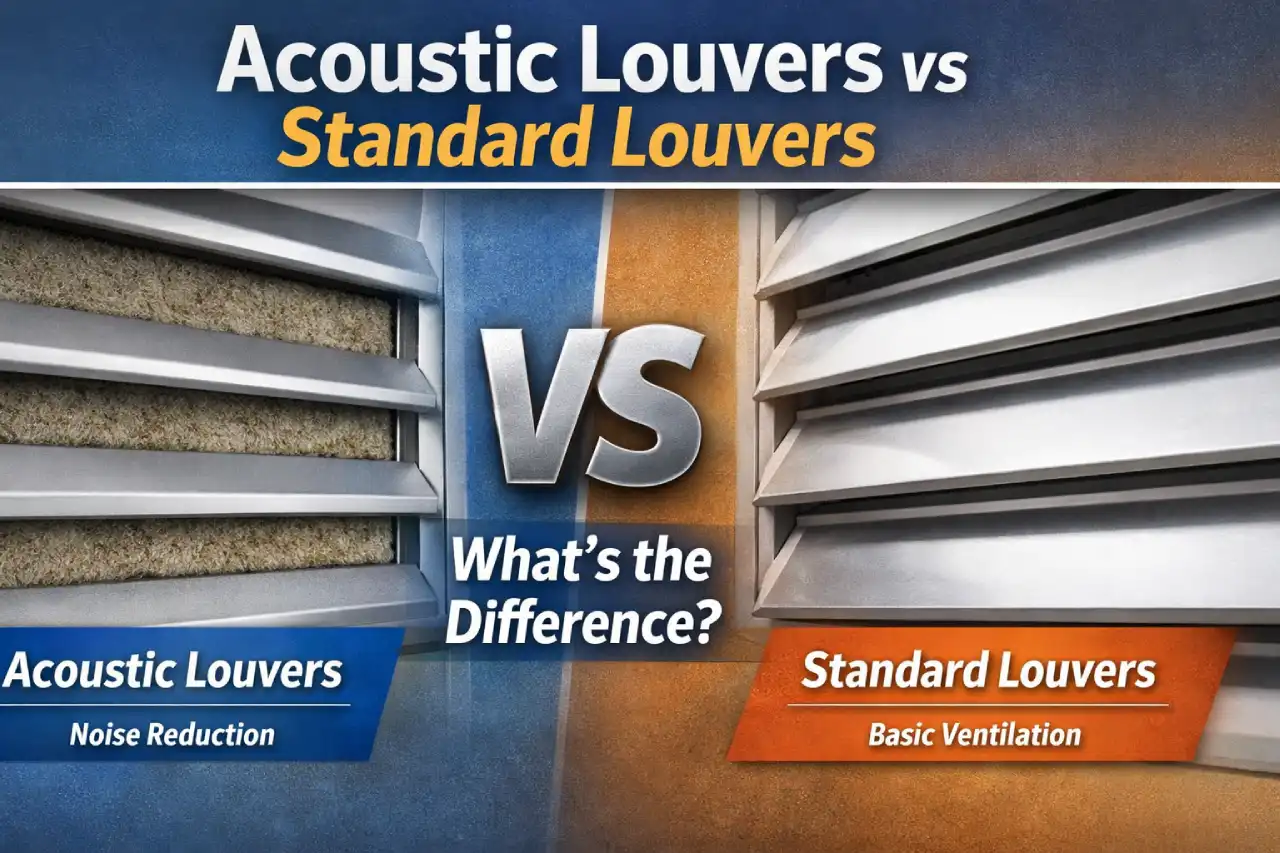
While standard louvers are effective for airflow and weather protection, they do not provide significant noise reduction. Sound waves can easily travel through the openings between the blades, which means noise generated by machinery or mechanical systems may pass through without much resistance.
For facilities located near residential zones or noise-sensitive areas, this limitation can become a significant challenge.
What Are Acoustic Louvers?
Acoustic Louvers are specially engineered ventilation systems designed to reduce noise transmission while allowing air to flow freely. Unlike standard louvers, these systems incorporate sound-absorbing materials and internal baffle designs that help attenuate noise.
The internal structure of these louvers usually includes acoustic insulation materials such as mineral wool or fiberglass, which absorb sound waves as they pass through the louver channels. The blades are designed in a way that forces sound waves to travel through multiple acoustic surfaces, reducing their energy before exiting the opening.
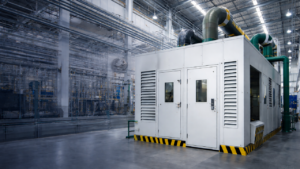
Because of this design, Acoustic Louvers are widely used in facilities where both ventilation and noise control are required. They are commonly installed in generator rooms, compressor rooms, HVAC plant rooms, and industrial buildings located near residential or commercial areas.
By combining ventilation and sound attenuation, these systems help organizations comply with environmental noise regulations while maintaining proper airflow for equipment operation.
How Noise Travels Through Ventilation Openings
To understand the importance of noise-reducing louvers, it is helpful to understand how sound travels through ventilation openings.
Sound moves through air in the form of waves. When a mechanical system such as a generator or HVAC unit operates, it produces sound waves that spread in all directions. If there is an open ventilation pathway, those sound waves can easily escape through it.
Standard ventilation openings offer very little resistance to sound transmission. As a result, the noise generated by machinery can travel outside the building and affect surrounding areas.
Specialized ventilation solutions like Acoustic Louvers reduce this issue by forcing sound waves to interact with sound-absorbing materials inside the louver structure. As sound energy passes through these materials, it gradually dissipates and becomes less audible outside the building.
Key Differences Between Acoustic Louvers and Standard Louvers
Although both types of louvers serve ventilation purposes, their design and functionality differ significantly.
Feature | Standard Louvers | Acoustic Louvers |
Primary Function | Airflow and weather protection | Ventilation with noise reduction |
Internal Design | Simple angled blades | Sound-absorbing baffles and insulation |
Noise Control | Minimal | Significant sound attenuation |
Airflow Resistance | Lower | Slightly higher due to acoustic design |
Typical Applications | Commercial buildings, parking structures | Generator rooms, HVAC plants, industrial facilities |
The most noticeable difference lies in the internal construction. While standard louvers simply guide airflow, Acoustic Louvers include acoustic treatment that helps reduce noise transmission.
When Should You Use Acoustic Louvers?
Not every building requires specialized acoustic ventilation systems. However, certain situations make them highly beneficial.
For example, facilities that house noisy equipment such as generators, compressors, or heavy HVAC units often require noise mitigation solutions. When these facilities are located near offices, hospitals, residential areas, or educational institutions, controlling noise becomes even more important.
In such cases, Acoustic Louvers provide an effective solution because they allow ventilation while preventing excessive noise from escaping the building.
They are also commonly used in infrastructure projects such as power plants, metro stations, and industrial manufacturing units where environmental noise regulations must be followed.
Common Applications in Industrial Facilities
Ventilation systems with noise control features are widely used in several industries. Facilities that rely heavily on mechanical equipment often require specialized solutions to balance airflow and sound attenuation.
Some common applications include:
Generator rooms in commercial buildings
HVAC plant rooms in large infrastructure projects
Industrial manufacturing units
Data centers and server rooms
Compressor rooms in factories
Power generation facilities
In these environments, Acoustic Louvers help reduce noise emissions while ensuring that equipment receives adequate airflow for cooling and safe operation.
Benefits of Installing Acoustic Louvers
Organizations that install advanced acoustic ventilation solutions can experience several operational and environmental advantages.
One major benefit is improved compliance with environmental noise regulations. Many urban areas now have strict limits on industrial noise levels, particularly near residential communities.
Another benefit is improved workplace comfort. Reducing excessive machinery noise can help create a more comfortable environment for employees working in or around mechanical rooms.
Facilities also benefit from integrated functionality. Instead of installing separate soundproofing systems and ventilation openings, Acoustic Louvers provide both functions within a single engineered solution.
Additionally, these systems are designed to withstand harsh industrial environments and can be customized based on airflow requirements, sound reduction targets, and building architecture.
Additional Services from Ecotone Systems
In addition to ventilation noise control solutions, Ecotone Systems provides a wide range of advanced acoustic products designed for industrial and infrastructure projects.
Noise Barrier Solutions
Noise barriers are widely used along highways, railways, and industrial sites to reduce environmental noise pollution. These barriers help protect nearby residential and commercial areas from excessive sound generated by traffic or industrial machinery.
Ecotone Systems designs and manufactures high-performance noise barriers that combine durability, acoustic efficiency, and long-term reliability.
Acoustic Enclosures
Acoustic enclosures are specialized structures designed to contain noise produced by heavy machinery such as generators, compressors, turbines, and industrial equipment.
These enclosures are engineered using sound-absorbing materials and advanced acoustic design techniques to significantly reduce noise levels. By enclosing noisy equipment within controlled structures, facilities can maintain compliance with environmental standards while protecting workers and nearby communities.
Together with Acoustic Louvers, these solutions create a complete noise control ecosystem for industrial and commercial environments.
Conclusion
Ventilation systems are essential for maintaining proper airflow and equipment performance in modern buildings. However, ventilation openings can also allow noise to travel freely, especially in facilities that house mechanical equipment.
While standard louvers are suitable for general ventilation purposes, they provide little to no sound reduction. In contrast, Acoustic Louvers are specifically engineered to balance airflow with effective noise attenuation.
For industries operating near populated areas or noise-sensitive environments, choosing the right ventilation solution is critical. By integrating sound-reducing ventilation systems into building design, organizations can improve environmental compliance, protect surrounding communities, and create more comfortable workspaces.
As industrial infrastructure continues to expand, advanced acoustic solutions will play an increasingly important role in ensuring both operational efficiency and environmental responsibility.