Industrial plants are driven by performance. Machinery operates day and night. Processes are designed for high output. But amidst all this activity, one persistent challenge remains: noise. Industrial noise affects worker well-being, operational safety, regulatory compliance, and the overall plant environment. While many industries rely on temporary solutions such as barriers or ear protection, a more effective and engineered solution is required for long-term noise control. At the forefront of this solution is the acoustic enclosure, a robust system designed to reduce noise at its source and transform noisy workspaces into safe, compliant, and productive environments.
Understanding Industrial Noise in Manufacturing Facilities
Industrial noise refers to the unwanted sound generated during manufacturing and plant operations. Unlike noise in residential or office environments, industrial noise is often continuous, high in intensity, and composed of low-frequency sound components that travel easily through structures and space. Heavy machines such as presses, compressors, turbines, and DG sets operate at high decibel levels, creating a persistent acoustic burden on workers and systems. These sound levels can exceed permissible exposure limits, leading to health risks and reduced operational comfort.
The human ear is sensitive to sound variations, but prolonged exposure to industrial noise has long-term physical and mental impacts. For this reason, addressing industrial noise must be a priority for safety officers, plant managers, and engineering teams.
Why Noise Control Is Essential in Industrial Plants
Effective noise control in industrial plants is not only about comfort; it is about health protection, workplace safety, and regulatory compliance. Government authorities across regions define strict limits for workplace noise exposure and environmental noise emissions. Exceeding these limits can result in legal penalties, operational restrictions, and financial liabilities.
From a human perspective, excessive noise leads to fatigue, stress, hearing damage, and communication failures on the shop floor. When workers cannot hear alarms, instructions, or warning signals, the risk of accidents rises sharply. Noise also impacts productivity and employee morale, as constant exposure creates physical and mental strain. Operational efficiency suffers when equipment, alarms, and human communication compete against overwhelming background noise.
Common Noise Problems Found in Industrial Plants
One of the most common sources of industrial noise is heavy machinery. Equipment such as hydraulic presses, CNC machines, and milling machines generate high-decibel sound due to mechanical actions involving friction, impact, and high-speed movement. These machines typically run continuously, allowing noise to spread across large areas of the plant.
Generators and DG sets are also major contributors to industrial noise. Whether operating as backup power systems or primary energy sources, diesel generators produce significant engine noise and exhaust noise. Without proper noise control measures, generator noise spreads rapidly, affecting nearby departments and surrounding areas.
Compressors and blowers are essential in many industrial processes, but their continuous operation creates constant acoustic discomfort. Noise from these sources often combines with structural vibrations, allowing sound to travel through floors, walls, and steel frameworks, making the entire plant louder than expected.
Open production floors further amplify the problem. Hard surfaces such as concrete walls, metal roofing, and large open spaces cause sound to reflect and reverberate, increasing overall noise levels. This echo effect heightens acoustic stress and reduces the clarity of safety communications.
How Industrial Noise Affects Workers and Operations
The impact of excessive noise extends far beyond discomfort. Workers exposed to high noise levels for extended periods often experience hearing impairment, elevated stress, and chronic fatigue. These health issues directly reduce work efficiency and increase long-term healthcare risks.
Noise also compromises workplace safety. Alarms, sirens, and verbal instructions may become muffled or unclear in noisy environments, increasing the likelihood of accidents and emergency incidents. Tasks requiring precision, attention, and concentration become significantly riskier when background noise overwhelms focus. As a result, noise control becomes a core element of operational integrity and employee protection.
What Is an Acoustic Enclosure?
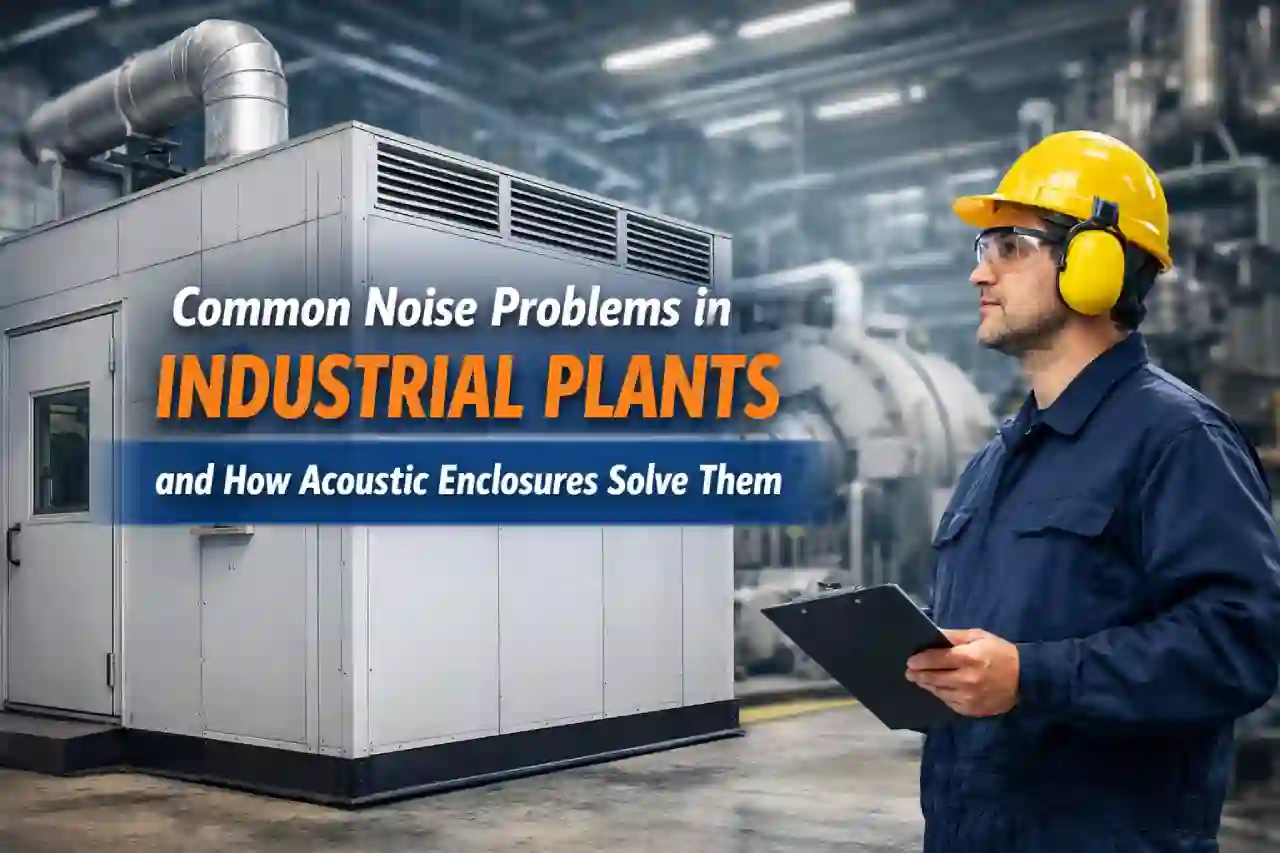
An acoustic enclosure is a specially engineered structure designed to surround noise-generating equipment and contain sound at its source. Unlike temporary noise barriers, acoustic enclosures are purpose-built using advanced sound-absorbing and sound-blocking materials optimized to reduce noise transmission.
These enclosures are custom-designed to suit specific machines while considering ventilation, maintenance access, and operational requirements. Properly engineered acoustic enclosures absorb sound energy internally and prevent noise from escaping into surrounding work areas. With the right design, they achieve significant decibel reduction without affecting machine performance or airflow.
How Acoustic Enclosure Solve Industrial Noise Problems
The effectiveness of an acoustic enclosure lies in its integrated approach to noise control. By enclosing noisy equipment, sound waves are prevented from spreading into the wider environment. Internal acoustic materials absorb sound energy and reduce echo and reverberation.
The enclosure’s outer panels act as a solid sound barrier, reflecting residual noise inward and blocking it from reaching workers. Modern acoustic enclosures also include acoustic louvers, silencers, and ventilated panels that allow cooling airflow while maintaining sound isolation. In many designs, vibration isolation systems are incorporated to control structure-borne noise as well.
Industrial Noise Sources and Acoustic Enclosure Solutions
| Industrial Noise Source | Typical Noise Challenge | Acoustic Enclosure Solution |
|---|---|---|
| Heavy machinery operations | High decibel mechanical noise | Machine-specific acoustic enclosures |
| DG sets and generators | Engine and exhaust noise | DG set acoustic enclosure with silencers |
| Compressors and blowers | Continuous airflow noise | Ventilated acoustic enclosure |
| Structural vibrations | Noise through plant structures | Vibration-isolated enclosures |
| Open production areas | Echo and reverberation | Acoustic containment zones |
Types of Acoustic Enclosure Used in Industrial Applications
Acoustic enclosures vary based on application and equipment type. DG set acoustic enclosures are designed to manage high noise and heat loads from diesel generators. Machine acoustic enclosures are used for CNC machines, presses, and automated systems, allowing safe operation without excessive noise exposure. Compressor acoustic enclosures focus on continuous noise reduction while maintaining airflow efficiency. Many facilities prefer custom acoustic enclosures engineered around site-specific requirements to ensure optimal performance.
Key Design Factors That Determine Acoustic Enclosure Performance
The performance of an acoustic enclosure depends heavily on how well it is engineered rather than just the materials used. One of the most critical factors is noise reduction requirement, which defines the thickness of panels, internal acoustic lining, and sealing methods. Higher decibel reduction demands a balanced combination of sound absorption and sound insulation.
Ventilation design is equally important. Industrial machines generate heat, and poor airflow can lead to overheating or reduced equipment life. Well-designed acoustic enclosures integrate acoustic louvers, silencers, and forced ventilation systems that allow air movement while minimizing noise leakage.
Structural integrity and sealing play a major role in preventing sound escape. Gaps, joints, doors, and cable entry points must be acoustically treated to avoid weak points. Additionally, vibration isolation using anti-vibration mounts or inertia bases is essential to prevent structure-borne noise transmission. When these design elements work together, the enclosure delivers consistent and long-term noise control without compromising equipment operation.
Compliance With Industrial Noise Regulations Through Acoustic Enclosures
Industrial noise regulations are becoming increasingly stringent across manufacturing sectors. Occupational safety guidelines define permissible exposure limits to protect workers from long-term hearing damage, while environmental regulations control noise emissions beyond plant boundaries. Failure to comply can result in legal action, penalties, or operational shutdowns.
Acoustic enclosures help industries achieve compliance by reducing noise levels at the source before they spread across the facility or into surrounding areas. Properly designed enclosures can bring machine noise well within allowable limits, helping organizations meet statutory norms for workplace safety and environmental noise control.
Beyond compliance, acoustic enclosures demonstrate a company’s commitment to employee well-being and responsible operations. By proactively managing noise, industries reduce risk, improve audit outcomes, and create a safer and more professional working environment. In many cases, acoustic enclosures also support sustainability goals by improving energy efficiency and reducing the need for excessive personal protective equipment.
Importance of Selecting the Right Acoustic Enclosure Manufacturer
Choosing the right acoustic enclosure manufacturer is as important as installing the enclosure itself. An experienced manufacturer understands acoustic engineering principles, plant operations, and industrial safety standards. Reputable acoustic enclosure suppliers conduct noise assessments, design customized solutions, and use high-quality materials that deliver long-term performance. Poorly designed enclosures can lead to ineffective noise reduction, ventilation issues, or maintenance difficulties.
Ecotone Systems – A Trusted Manufacturer of Acoustic Enclosure Solutions
Ecotone Systems is widely recognized as a leading acoustic enclosure manufacturer in India, with over 25 years of expertise in industrial noise control. The company designs and manufactures high-performance acoustic enclosures for equipment such as turbines, compressors, blowers, glass crushers, and diesel generators. Their solutions use advanced sound-dampening and sound-blocking technologies suited for demanding industrial environments.
Ecotone Systems also specializes in custom acoustic solutions, ensuring proper airflow, accessibility, and regulatory compliance. Their engineering-led approach and commitment to quality make them one of the most trusted acoustic enclosure suppliers in the industry.
Acoustic Enclosure Manufacturers in India and Their Growing Role
With rapid industrial growth, acoustic enclosure manufacturers in India are playing a critical role in helping industries meet noise regulations and improve workplace safety. Indian manufacturers combine technical expertise with local regulatory knowledge to deliver cost-effective, compliant solutions for power plants, manufacturing units, and heavy industries.
Conclusion
Noise problems in industrial plants are unavoidable, but they are entirely solvable. Effective noise control begins with engineered solutions that address sound at its source, and acoustic enclosures remain one of the most reliable options. By installing an acoustic enclosure, industrial facilities can reduce noise levels, protect workers, improve communication, and ensure regulatory compliance.
Partnering with an experienced acoustic enclosure manufacturer such as Ecotone Systems ensures durable, high-performance solutions tailored to specific industrial needs. In today’s safety-driven industrial environment, investing in acoustic enclosure solutions is not just a smart decision—it is essential for sustainable and efficient operations.
Contact Ecotone Systems for Expert Acoustic Enclosure Solutions
If your industrial facility is facing persistent noise challenges, partnering with an experienced acoustic engineering company is the most effective way forward. Ecotone Systems offers end-to-end acoustic enclosure solutions designed to address complex industrial noise problems with precision and reliability.
From initial noise assessment and acoustic design to manufacturing, installation, and after-sales support, Ecotone Systems delivers customized solutions tailored to your equipment and operational requirements. Their engineering team works closely with plant managers, safety officers, and consultants to ensure optimal noise reduction, proper ventilation, and full compliance with applicable regulations.
To discuss your noise control requirements or to request a technical consultation, you can contact Ecotone Systems through their official website or connect directly with their technical experts. With decades of industry experience and a strong track record across multiple industrial sectors, Ecotone Systems is a trusted partner for creating quieter, safer, and more efficient industrial environments.
Frequently Asked Questions
What are the main causes of noise in industrial plants?
The main causes of industrial noise include heavy machinery, diesel generators, compressors, blowers, turbines, and material handling equipment. Open production floors, hard reflective surfaces, and structural vibrations further increase noise levels in manufacturing facilities.
How much noise is allowed in industrial workplaces?
Most occupational safety regulations limit workplace noise exposure to around 85 dB(A) for an 8-hour shift. Prolonged exposure above this level can cause hearing damage and requires engineering noise control solutions such as acoustic enclosures.
What is an acoustic enclosure and how does it work?
An acoustic enclosure is a specially designed structure that surrounds noisy industrial equipment. It works by absorbing sound inside the enclosure and blocking noise from escaping, significantly reducing noise levels in the surrounding work area.
How effective are acoustic enclosures in noise reduction?
A properly engineered acoustic enclosure can reduce noise levels by 15 dB to 40 dB, depending on machine type, enclosure design, and materials used. This makes them one of the most effective industrial noise control solutions.
Are acoustic enclosures suitable for all industrial machines?
Yes, acoustic enclosures can be customized for a wide range of equipment including DG sets, compressors, CNC machines, turbines, blowers, and crushers. Custom design ensures proper ventilation, maintenance access, and operational safety.
Trusted by India's Leading Brands
Hover to pause · Logos scroll continuously